Trump Criticized for Undermining His Own Sanctions Policy to Shield Russia and China
Key Takeaways
- •Trump announced a return to his first-term maximum pressure sanctions strategy against Iran amid a six-month war.
- •When asked about enforcing sanctions on Russia and China, Trump said "it depends" and praised Russia's behavior regarding the Strait of Hormuz.
- •NBC News reported Russia has shipped drone components and cash to Iran, while China is Iran's largest crude oil customer.
- •MSNBC's Steve Benen argued that exempting Russia and China creates an enforcement gap that undermines the sanctions policy's credibility.
- •A Washington Post report cited U.S. intelligence indicating the Kremlin sees the United States as weakened by the Iran war.
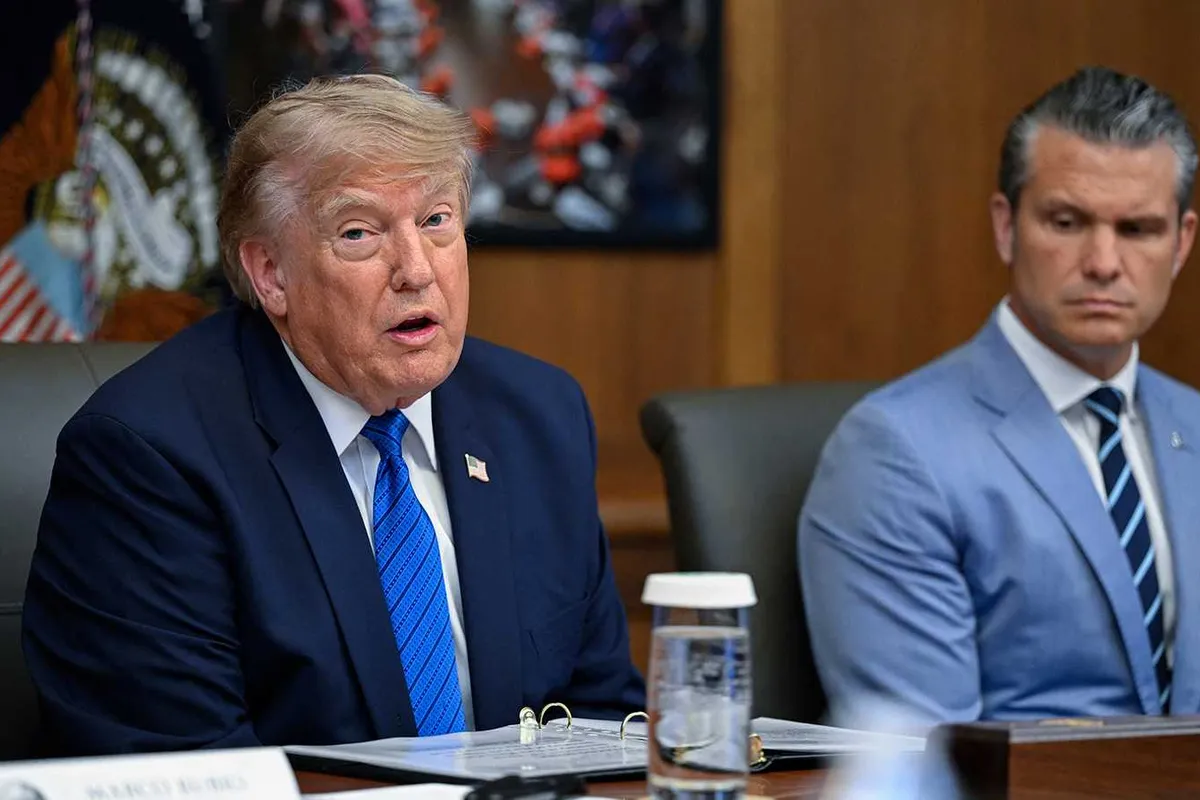
President Donald Trump announced that his new strategy for the Iran war amounts to a return to his earlier approach of deploying sanctions against the country and attempting to isolate it economically — the same "maximum pressure" toolkit he used during his first term, when Iran's oil exports were sharply curtailed by U.S. secondary sanctions on buyers. But when it comes to following his new sanctions rules, Trump appears willing to give his friends a pass. That matters because secondary sanctions only work if trading partners believe the United States will enforce them uniformly; carve-outs for major powers such as Russia and China could open the kind of enforcement gap that Iran has historically exploited to keep oil revenue flowing.
Steve Benen, producer for MSNBC's Rachel Maddow show, argued in a Friday column that Trump weakened his own policy by issuing sweeping threats against countries that assist Tehran, only to then signal that he may not enforce those threats against Russia or China. The contradiction, Benen wrote, ultimately undermines the credibility of Trump's projection of strength at a time when the United States is already struggling to bring its six-month war with Iran to an end.
"It quickly became obvious that the president's threat was largely meaningless, and the administration's new policy amounted to little more than another underwhelming threat," Benen wrote.
During an Oval Office signing on Thursday, Trump was asked whether he intends to enforce the sanctions on all countries, including Russia and China. Given that both countries have been aiding Iran, the question arose of whether Trump would be willing to enforce his own rules on his favorite world leaders.
"Well, it depends, it depends," Trump replied. "So far, I think Russia's behaved quite well having to do with the Strait of Hormuz. And you have to understand, for everything they do, we do also, you know. Somebody was saying about China, 'What about China? We hear they're spying.' We spy on them too; that's the way it goes."
Trump added that it is not as if the United States does not engage in the same kinds of activities, including breaking sanctions.
Benen called the response "pitiful."
Russia has been shipping drone components to Iran, NBC News reported last week. A separate report revealed that Russia has also been sending cash to Iran. Russia and China have both deepened economic ties with Iran in recent years — Moscow through expanded trade and oil-for-goods arrangements since its full-scale invasion of Ukraine, and Beijing as Iran's largest crude oil customer — leaving open the question of whether Washington would target those flows.
"Instead of acting on this, Trump has largely defended Russia, accepted Putin's denials at face value, and as recently as Thursday, praised Russia for having 'behaved quite well,'" Benen said.
In essence, Benen wrote, the president drew a red line and then gave his pals a pass once they stepped over it.
Benen also cited a report from The Washington Post indicating "fresh U.S. intelligence indicating that the Kremlin sees the United States as weakened by the Iran war."
"Trump's willingness to signal abject weakness isn't likely to help," he concluded. How the administration resolves the enforcement question — and whether any sanctions actions follow against Russian or Chinese entities — is likely to shape whether the new strategy changes Tehran's calculus.
Sources: MSNBC Maddow Blog, NBC News, The Washington Post

