Trump’s Remarks on Los Angeles and San Diego Revive Concerns Over Political Uses of Foreign Threats
Key Takeaways
- •Speaking at a Nebraska rally and again the following night in Texas, Donald Trump suggested Iran could strike Los Angeles and San Diego, describing such an outcome as a very small price to pay.
- •The White House said Trump meant a nuclear-armed Iran would have threatened the cities had he not first gone to war with Iran, while Forbes reported it remained unclear whether he was warning of an attack or daring Iran to launch one.
- •California Governor Gavin Newsom called the remarks dangerous if not treasonous, Los Angeles Mayor Karen Bass said they could compromise the city's safety, and Republican congressional candidate Jim Desmond insisted no American city is expendable.
- •With midterm elections approaching, Trump rejected an Iranian proposal to reopen the Strait of Hormuz within seven days, and the Wall Street Journal reported he privately told aides he intended to bomb Iran again after the vote.
- •The FBI unit responsible for tracking Iranian threats lost a dozen agents to firings days before the February war, and Representative Raja Krishnamoorthi warned that up to 40 percent of agents in the largest field offices, including those serving Los Angeles and San Diego, had been reassigned to immigration duties.
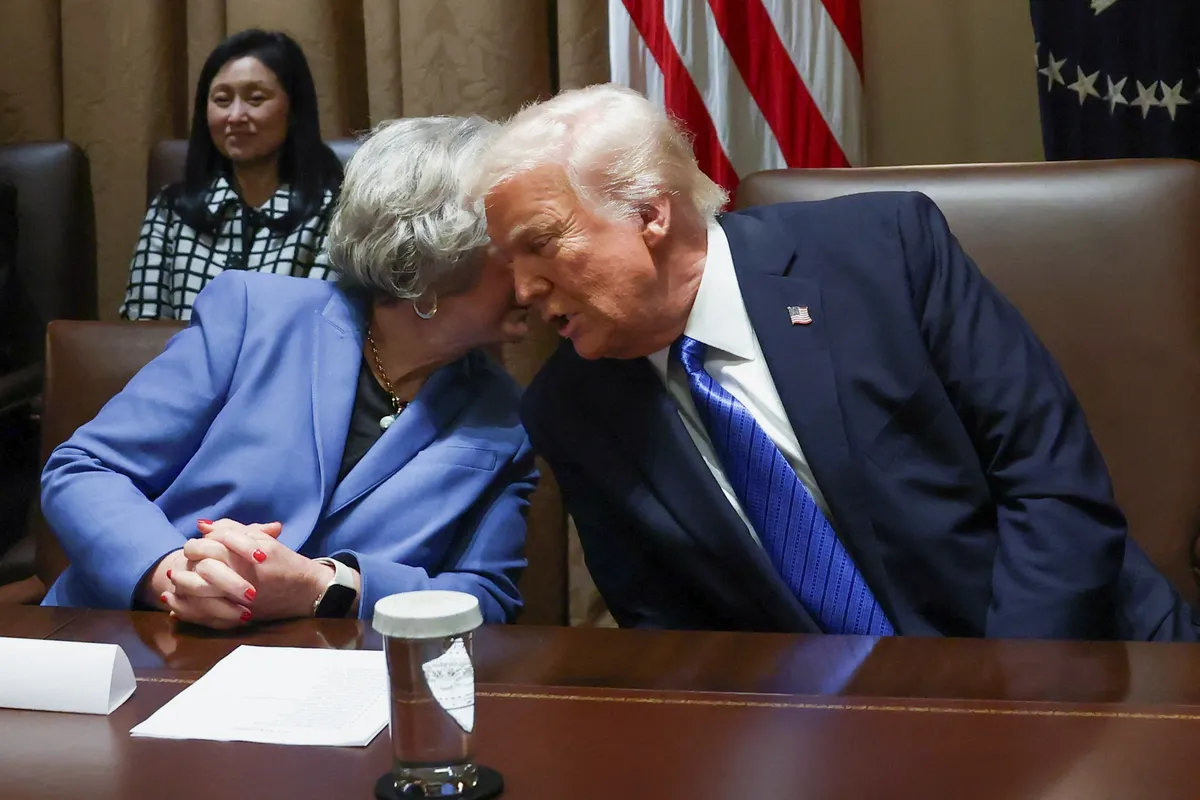
At a Monday night rally in Grand Island, Nebraska, Donald Trump was urging a small crowd to vote Republican when he departed from his prepared remarks and discussed what Iran could do to two American cities. The crowd cheered as he said:
“They can take out a city. Let them take out Los Angeles, let them take out San Diego. This is a very small price to pay and it’s going to be over very soon.”
California Governor Gavin Newsom responded: “Donald Trump’s remarks were dangerous – if not treasonous – putting a target on two of our biggest cities and one of America’s largest naval hubs.” Los Angeles Mayor Karen Bass said the comment could compromise the city’s safety. Jim Desmond, the Republican candidate seeking to represent San Diego in the US House, said: “No American city is expendable, and no American family should ever be treated as collateral damage.”
The White House sought to explain the remarks by saying Trump meant that a nuclear-armed Iran would have threatened the cities if he had not gone to war against Iran first. Forbes reported, however, that it remained unclear whether Trump was warning about an attack or challenging Iran to launch one.
Trump repeated the language the following night in Texas:
“And I said it the other day, let them hit a missile into San Diego or Los Angeles on the way. You want to see a horror show? Let them hit San Diego. Let them hit Los Angeles.”
Assessing Trump’s intentions is difficult, but historical examples show how political leaders have used—or been accused of using—foreign threats and attacks to expand their power or improve their political position. The question is also whether Trump is strengthening or weakening the ability of the United States to prevent such an attack.
In March 2003, as George W. Bush was preparing to invade Iraq, I wrote an essay titled “When Democracy Failed” about Adolf Hitler’s use of the burning of the German parliament, the Reichstag, to consolidate power. Although the history remains disputed, historian Benjamin Carter Hett has made a compelling case that the Nazis either arranged for 24-year-old Dutch communist Marinus van der Lubbe, who may have been mentally ill, to set the fire or started it themselves. Standing before the smoldering building, Hitler told a British reporter, “This is a signal from God.” The next day, the Reichstag Fire Decree was pushed through parliament, suspending civil liberties throughout Germany and creating an immediate police state.
The broader pattern—an alleged or real foreign attack rescuing or expanding a political leader’s power—has appeared repeatedly in American and international politics:
-
President James Polk was deeply unpopular in 1846. He sent US troops into Mexican territory, and after they were fired upon, told Congress that Mexico had “shed American blood upon American soil.” Freshman Congressman Abraham Lincoln introduced his Spot Resolution in an unsuccessful attempt to stop what became the Mexican-American War.
-
When the USS Maine exploded in Havana harbor in 1898, most likely because of a in a coal bunker beside its magazine, newspaper publisher William Randolph Hearst sent a cable to artist Frederic Remington in Havana: “Please remain [in Cuba]. You furnish the pictures and I’ll furnish the war.” The United States went to war with Spain within weeks, boosting President William McKinley’s popularity and helping set the stage for Theodore Roosevelt’s rise to power.
-
In 1962, the Joint Chiefs of Staff proposed Operation Northwoods, a plan for the US military to covertly blow up an American ship and stage terrorist attacks in Miami and Washington, DC. The United States would then blame Fidel Castro and invade Cuba. President John F. Kennedy rejected the proposal.
-
Two years later, President Lyndon Johnson and Defense Secretary Robert McNamara said that American destroyers had been attacked in the Gulf of Tonkin on August 4. The National Security Agency’s own historian later concluded that the attack had not occurred. McNamara wanted the war, and some historians have argued that he misled Johnson about the incident until the Vietnam War was underway.
-
In the summer of 1941, President Franklin Roosevelt froze Japanese assets and cut off Japan’s oil supplies, knowing that he was pushing Tokyo into a corner. Republicans later claimed that Roosevelt knew an attack on Pearl Harbor would result, although the evidence for that claim is sketchy. The attack nevertheless provided a rationale for entering World War II, which Roosevelt had concluded was necessary to save European democracy even though US public opinion was largely opposed to war. A large “America First” movement explicitly embraced Hitler and opposed US entry into the conflict.
-
Two years before the September 11 attacks, George W. Bush told his ghostwriter, Mickey Herskowitz, that if he had the opportunity to invade Iraq, he would not waste the political capital a war could provide in the way his father had. The following year, the Project for the New American Century, whose founding statement had been signed by Bush’s brother Jeb, published a report arguing that invading Iraq and taking its oil was politically impossible without “some catastrophic and catalyzing event” such as “a new Pearl Harbor.”
On August 6, 2001, while President George W. Bush was vacationing in Crawford, Texas, the CIA sent an agent there to deliver a briefing titled “Bin Ladin Determined To Strike in US.” Bush began what was described as the longest vacation in presidential history, refusing to return to Washington and failing to assemble his team to stop the plot. Five weeks later, nearly 3,000 Americans were dead. Bush’s approval rating rose from 51 percent to 90 percent, the highest recorded by Gallup, and he obtained the war he had discussed with Herskowitz.
The same alleged strategy has been identified outside the United States:
-
Vladimir Putin, whom Trump has described as a mentor and called the previous day to wish a happy birthday, was an obscure prime minister in September 1999 when apartment buildings began exploding across Russia, killing approximately 300 people. Local police in Ryazan caught agents from Putin’s secret police, the FSB, placing another bomb in a basement. The Kremlin said it was a “training exercise.” Putin used the terror associated with attacks blamed on Chechen militants to launch a war in Chechnya, which carried him into the presidency.
-
In Israel, the military reportedly had Hamas’s battle plan for the October 7 attack, a document code-named “Jericho Wall,” more than a year before the assault. Prime Minister Benjamin Netanyahu’s poll numbers were falling sharply, but the attack and his subsequent bombing campaign in Gaza increased his popularity and postponed his corruption and bribery trial, allowing him to remain in office.
That history brings the focus back to Trump, who is less than four weeks away from a midterm election that appears likely to be disastrous for Republicans. If Democrats take control of the House or Senate, the source argues, Trump’s political and personal circumstances—including those of Uday, Qusay, and Jared—would become extremely difficult.
On September 26, Trump rejected an Iranian proposal to reopen the Strait of Hormuz—the narrow Persian Gulf waterway that ranks among the world’s most critical oil transit routes—within seven days and resume negotiations. The Wall Street Journal then reported that Trump had privately told aides he intended to retaliate for the humiliation of the war by bombing Iran again after the election. He made a similar statement to Time magazine the following week, prompting some observers to question whether he was deliberately trying to provoke Iran into attacking the United States before the election.
At the same time, US personnel responsible for identifying Iranian operatives inside the country had reportedly been removed from that work. Days before the war began in February, Ka$h Patel fired a dozen agents and staff members from CI-12, the FBI counterintelligence unit specifically responsible for tracking threats from Iran.
Congressman Raja Krishnamoorthi warned that nearly one-quarter of the FBI’s agents—and as many as 40 percent in the largest field offices, including those serving Los Angeles and San Diego—had been reassigned to immigration duties. The reassigned personnel included large numbers of counterintelligence specialists with extensive expertise on Iran. The Intercept reported in May that none had been replaced or returned to monitoring Iran- and terrorism-related threats.
The threat to US assets from Iran is also described as genuine. Ten days earlier, British police arrested five men near RAF Fairford, the base used by American bombers conducting strikes against Iran. British Prime Minister Andy Burnham said there were “strong indications” that Tehran was involved, while noting that the investigation was still developing.
The source raises several questions about Trump’s statements and administration policies:
- Was Trump briefed on a specific threat to Southern California, and if so, what steps were taken in response?
- Why were the FBI’s Iran specialists fired or reassigned on the eve of a war with Iran, and how many senior counterterrorism agents remained assigned to immigration enforcement rather than Iran-related threats?
- Why did Trump reject an offer to reopen the Strait of Hormuz while simultaneously promising more bombing after the election?
For readers tracking those questions, the developments to watch include whether Congress examines the FBI reassignments that Krishnamoorthi flagged and what the British investigation near RAF Fairford—which Prime Minister Andy Burnham described as still developing—ultimately finds.
The source also notes that Trump had previously accused Barack Obama of considering war with Iran for electoral purposes. On November 29, 2011, Trump tweeted: “In order to get elected, BarackObama will start a war with Iran.” Two weeks earlier, he had posted a video saying that starting a war with Iran was “the only way he figures that he’s going to get reelected.”
In July of the following year, Trump said Obama was “preparing a possible attack on Iran right before November.” On October 9, 2012, one month before the election, he told followers that, with Obama’s poll numbers declining, they should “watch for him to launch a strike in Libya or Iran.”
The source concludes that the last thing it would want is for Trump to be encouraging a massive attack on Los Angeles and San Diego to rescue himself and his party politically. But having lived through 9/11, the subsequent Patriot Act and Bush lying us
Source: Alternet

