Haberman Says Trump Is Ignoring His Own Team's Warnings on Voter Anger Ahead of Midterms
Key Takeaways
- •New York Times correspondent Maggie Haberman said on Morning Joe that President Trump's advisers have urged him to address voter concerns ahead of the November midterms, but he has so far shown little interest.
- •Host Joe Scarborough cited polling showing Trump's approval underwater by 31 points in Georgia, 25 points in North Carolina, and 22 points in Texas.
- •Internal polling by Trump's main pollster Tony Fabrizio, obtained by Haberman and co-author Jonathan Swan, warned that the president and Republicans needed to be honest about where voters stand on the economy.
- •Haberman said domestic politicking and economic discussion bore Trump, and that he has told people he is proud Republicans fare worse when he is not on the ballot.
- •All 435 House seats and more than 30 Senate seats are on the ballot this November, with Republicans defending narrow majorities and House control carrying committee gavels and subpoena authority.
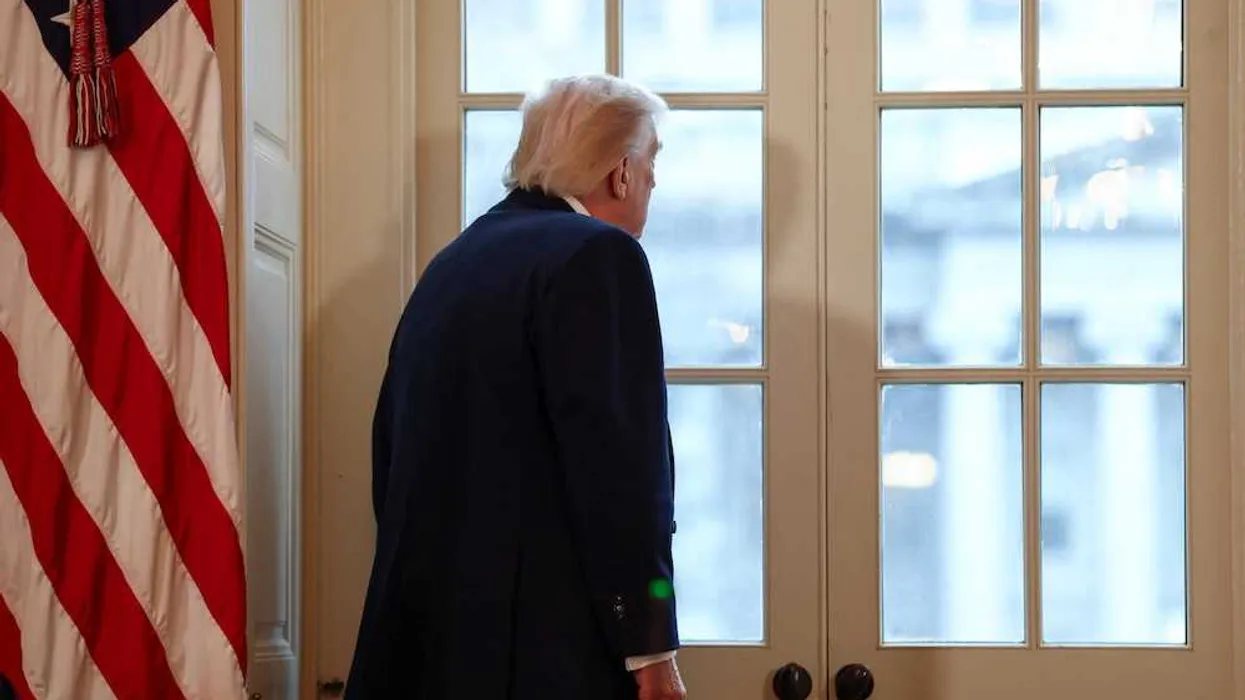
Appearing Monday morning on MS NOW, journalist and author Maggie Haberman said President Donald Trump's own advisers have pleaded with him to address voter anxieties, but that the president has so far seemed content to ignore them as the midterm elections approach — contests that will put all 435 House seats and more than 30 Senate seats on the ballot this November, with Republicans defending narrow majorities in both chambers.
Haberman, a senior political correspondent at The New York Times and fresh off the success of her Trump administration exposé Regime Change, co-written with her Times colleague Jonathan Swan, appeared as a guest on the latest edition of Morning Joe, where host Joe Scarborough pressed her about the president's evident disinterest in engaging with voter concerns — even as polling indicates his approval numbers are cratering in the traditionally conservative South.
"What I don't get is you look at those numbers in the Deep South, -31 in Georgia, -25 in North Carolina, that's just for a guy from the Deep South, that's staggering to me that he's that low, even -22 in Texas. I didn't think I would ever see that," Scarborough said. "And yet the president seems so oddly disinterested. He's, as you said a couple of weeks ago, he's focused on construction projects and vengeance. He never got out and campaigned for the big, beautiful bill, as republicans called it. He doesn't talk about affordability without mocking and ridiculing it. The thing that I mean right now, my big question is why is he so disengaged from the fact there's an election coming up?"
The "big, beautiful bill" Scarborough invoked is the sweeping tax-and-spending law Trump signed in July 2025.
In response, Haberman pointed to internal polling that she and Swan obtained while writing their book. The survey, conducted by Trump's "main pollster" Tony Fabrizio — who also polled for Trump's 2016 and 2020 presidential campaigns — and circulated to many of his advisers, "was very clear on where the voters are on the economy."
"And it was... a warning that Republicans and the president need to be honest, 'HONEST' in all caps, about where things are," Haberman explained. "It's the end of August. I don't think that the president has really turned that honest view around."
Haberman added that, for all Trump likes to tout economic success, discussion about the economy "bores" him — a fact she described as well known to those who have worked around him during his time in Washington, D.C. Despite the midterm difficulties awaiting Republicans — the president's party has lost House seats in nearly every postwar midterm, including the roughly 40 seats Republicans ceded when Democrats flipped the chamber in 2018 — Trump is more interested in doing the things he wants to do rather than what he ought to do, she said.
"This politicking, domestic politicking bores him," Haberman added. "It was more interesting to him when it was rallies that were about him. It was more interesting to him when he was fighting for what he would say was survival, when he was very realistically facing prison time during the first campaign, if he did not win, which he was open about with people in private conversations. And now this is the part where he wants to do what he wants to do. You know, you and I both know, Joe, that often the question with him that people will ask is, why does he do X, Y, Z? And the answer is often because he can."
Haberman continued: "He has told people, and we wrote about this in the book, that he is proud Republicans don't do as well when he's not on the ballot. He doesn't want to get impeached again. They don't want a lot of oversight. He's not looking at this the way they did in 2018 or 2019. In 2018, he was sort of indifferent to the fact that Democrats were probably going to take the House and what that could mean for him. He has made very clear he's going to pardon any number of people who have come within a certain number of feet of the Oval Office. I don't expect we are going to see this government comply with subpoenas in any meaningful way. And so the intensity of it for him is very different than it is, you know, for other people in his government who don't necessarily have the same protections."
Trump was impeached twice during his first term, in 2019 and 2021, both times by a Democratic-controlled House, and control of that chamber — with the committee gavels and subpoena authority that come with it — is among the things November's midterm elections will decide.

