Miles Taylor Says Trump 'Deliberately' Gutted US Cyber Defenses, Warning an Attack Is a Matter of 'When'
Key Takeaways
- •Miles Taylor, Trump's former Deputy Chief of Staff for Homeland Security, published a Substack essay on Tuesday claiming the president deliberately weakened US cyber defenses and warning a major attack is a matter of 'when,' not 'if.'
- •Taylor attributed the vulnerability to two factors: the elimination of AI safety regulations permitting reckless deployment, and the dismantling of cyber defense programs that Trump himself signed into law.
- •According to Taylor, CISA has lost roughly a third of its workforce, has had no Senate-confirmed director since Trump's 2025 return, and faces a proposed $700 million budget cut.
- •Taylor's warning followed a week in which the US experienced significant disruptions across aviation, communications, commerce, and banking systems, with cyberattackers blamed for some of the problems.
- •Taylor said current and former CISA employees describe the agency as a shell of its former self, and argued the government is more unprepared for AI-enabled cyberattacks than it was for the September 11, 2001 attacks.
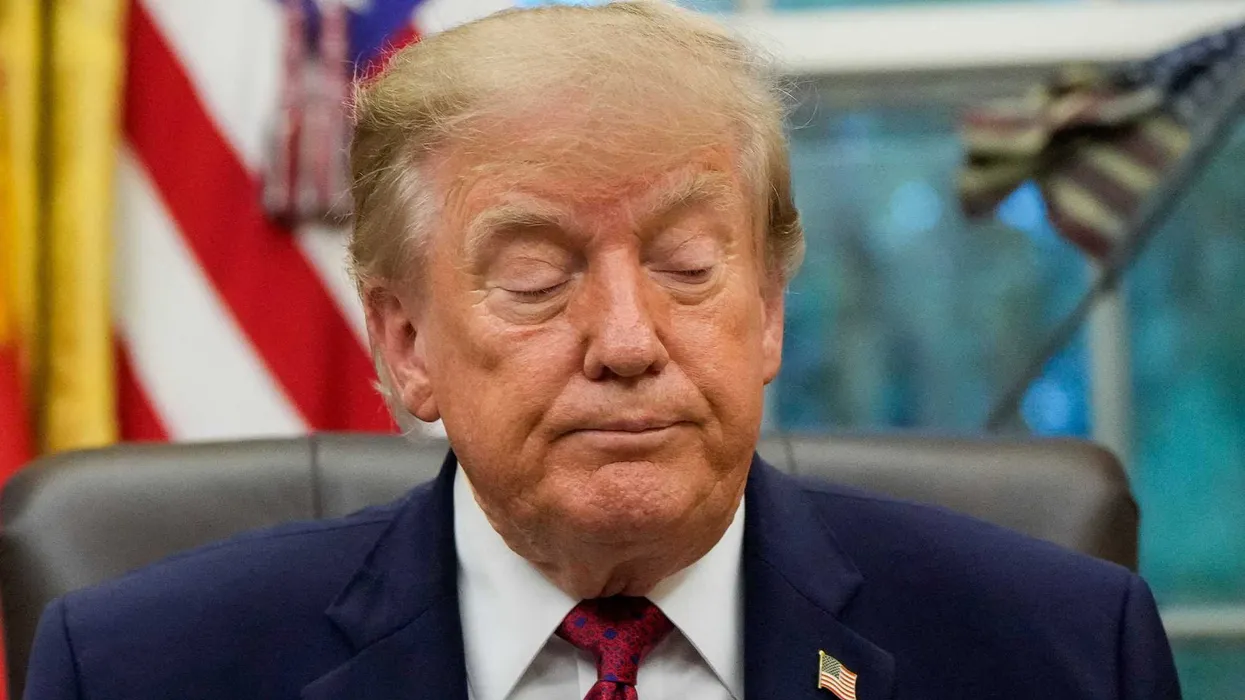
A former senior official from President Donald Trump's first administration said on Tuesday that the president has “deliberately” gutted the United States' defenses against cyberattacks, warning that a major attack is no longer a question of “if” but “when” — and that signs of the danger are already emerging.
Miles Taylor, who served as Trump's Deputy Chief of Staff for Homeland Security and became widely known for exposing internal White House secrets during the first term, laid out the claims in an essay published on Substack. His warning followed a week in which the United States experienced significant disruptions across aviation, communications, commerce, and banking systems, with cyberattackers blamed for some of the problems. Those sectors overlap with the critical infrastructure a domestic cyber defense agency is charged with protecting.
“What's coming will be far worse,” Taylor warned, “and our wayward president has guaranteed it in two ways.”
The first, according to Taylor, is the “hall pass” Trump has given the artificial intelligence industry by eliminating safety regulations and permitting the “reckless” deployment of systems that can easily be used to threaten digital infrastructure. In Taylor's account, tech moguls bought their way into the president's good graces through a combination of money and flattery, and Trump rewarded them by ending virtually all oversight.
The second — and “perhaps worst” — factor, Taylor wrote, is Trump's decision to “deliberately gut” American defenses, tearing apart programs that the president himself established to protect the country from digital threats.
“I know because I helped build them,” Taylor wrote. “On Capitol Hill, I was on the team crafting the law that created the Cybersecurity and Infrastructure Security Agency (CISA), which was meant to be the nation's premier domestic cyber defense arm, especially as we entered the age of AI. Then as a DHS official, I stood over Trump's shoulder as he signed it.”
CISA went on to help ensure the security of the 2020 election. But after the agency's first director described the contest as the most secure in American history — contradicting Trump's claims that it had been “stolen” — the president fired the director via tweet and dismantled the program.
When Trump returned to power in 2025, Taylor wrote, “he shredded the agency. CISA has lost roughly a third of its workforce … it has gone without a Senate-confirmed director since he took office … and the White House proposed cutting another $700 million.” Those specifics also double as markers to watch: whether CISA gains a Senate-confirmed director, and how the proposed $700 million reduction advances, will be visible indicators of the agency's capacity going forward.
In recent weeks, Taylor said, current and former CISA employees have told him the agency is “a shell of its former self at the most important moment in cybersecurity history.” As one explained, “The staff is threadbare. Only a handful actually understand advanced AI developments. Even if we wanted to do something, there's no one at the White House who will listen.”
In light of these and other moves, Taylor warned that Americans can no longer rely on the Trump administration at a fundamental level. He noted that former White House press secretary Stephanie Grisham wrote on Monday that she no longer trusts her government.
“For the first time in my life, I don't believe our government,” Grisham wrote. “I literally don't trust the people running our country, and that makes me legitimately sad for all of us.”
Taylor said he agreed, writing, “There's nothing she (or you) should trust less than a statement from the White House, DHS, or any other agency that they have it ‘under control.’ They do not. The U.S. government is woefully unprepared for AI-enabled cyberattacks and the potential ‘loss of control’ of AI. It's vastly worse than the unpreparedness that made us vulnerable to the attacks of September 11, 2001.”
On that basis, Taylor renewed his warning that a cyberattack is a matter of “when,” not “if.”
“Most Americans won't realize how bad our digital defenses are until rolling outages begin from AI-enabled cyberattacks — the kind that leave them for days without access to cash or create shortages on store shelves or disrupt travel and public services for weeks or, God forbid, take the power down,” Taylor wrote. “When that happens, they'll know who to thank.”
“Because of Donald Trump, we're more ‘on our own’ than we realize,” Taylor concluded. This report was published by Alternet.

