Trump Backs Down on Greenland as Europe Mobilized for Potential Conflict with U.S.
Key Takeaways
- •Trump's threats to acquire Greenland through potential military action prompted European nations to prepare for armed confrontation under an initiative called Operation Arctic Endurance.
- •Officials from Denmark, Germany, France, the United Kingdom, Poland, Spain, and other countries warned that any U.S. military strike on Greenland would mean the end of NATO.
- •Speaking at the World Economic Forum in Davos on January 21, Trump stated he would not use force to take Greenland, marking a de-escalation of the standoff.
- •U.S. and Danish officials have held negotiations over American military bases on Greenland, with a deal reportedly appearing closer than at any point since Trump assumed office.
- •Former CIA officer Marc Polymeropoulos argued that the alienation caused by Trump's Greenland posturing was a principal reason the United States was forced to act unilaterally against Iran.
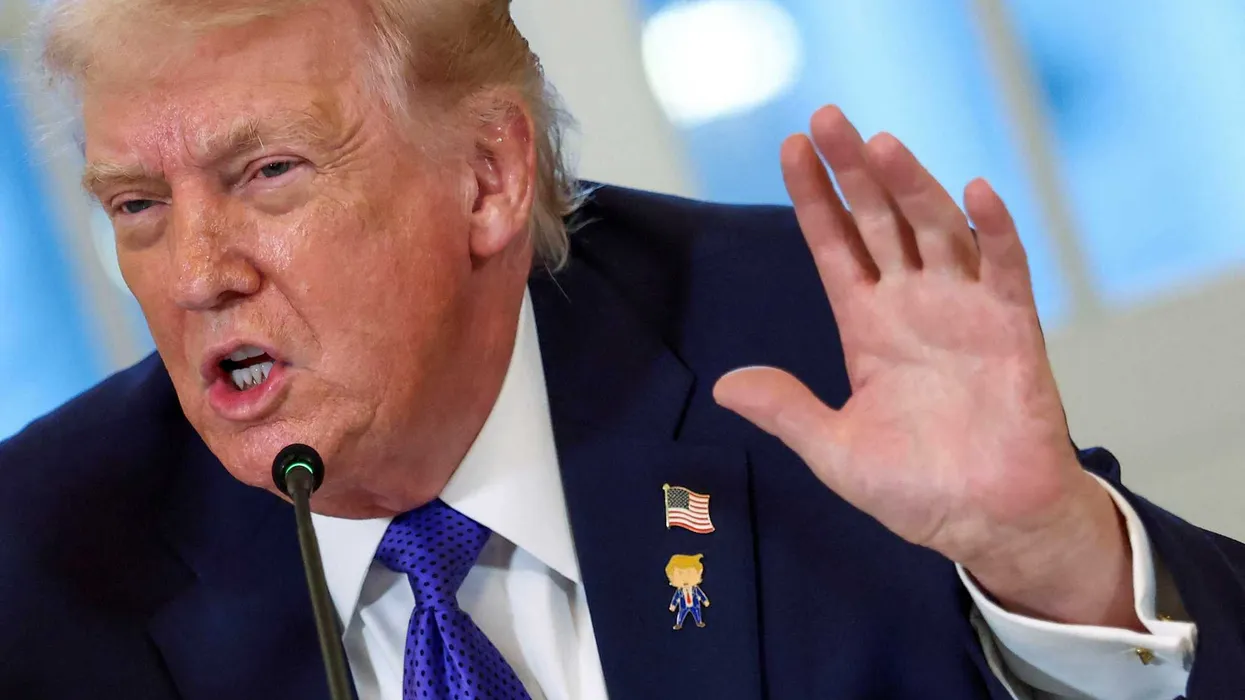
Over the past year, President Donald Trump engaged in what Washington Post columnist David Ignatius described as something that "resembled a game of chicken" — but in the end, only Trump swerved.
Trump's first 18 months in office have been defined by aggressive foreign policy moves, including the arrest of Venezuelan leader Nicolás Maduro and military action against Iran. Those actions, combined with Trump's repeated threats regarding Greenland, pushed European leaders to the point of preparing for a potential armed confrontation with the United States, Ignatius wrote on Friday. (Washington Post)
Greenland, an autonomous territory within the Kingdom of Denmark, has long attracted strategic interest far beyond its roughly 56,000 residents. As Arctic ice recedes, the world's largest island offers growing access to emerging shipping lanes, rare-earth mineral deposits, and a critical geopolitical position between North America and Europe — a region where both Russia and China have expanded their presence in recent years. The United States has maintained a military installation on the island since World War II, currently operating Pituffik Space Base (formerly Thule Air Base) as part of its missile-warning and space-surveillance network.
By tying Greenland to U.S. national security imperatives, Trump and his aides signaled that "all options" remained on the table — including military action. In response, officials from Denmark, Germany, France, the United Kingdom, Poland, Spain, and other nations issued statements insisting that only Greenland can determine its own future. Several warned that any U.S. military strike on Greenland would spell "the end of NATO" and dismantle the post-WWII transatlantic alliance.
According to Ignatius, U.S. and Danish officials have since held meetings to negotiate terms for American military bases on Greenland, and a deal now appears closer than at any point since Trump assumed office. The path to that point, however, was fraught.
"Trump hates to back down. But taking Greenland by force, against European armed resistance, appears to be a bridge too far," Ignatius wrote. "The question is whether he can find an exit ramp soon, at a moment when his other foreign policy problems are compounding."
The Greenland initiative dates back to Trump's first term, when advisers and subject-matter experts largely managed to contain his most ambitious proposals. In 2018, John Bolton's team was tasked with drafting a memo outlining how the United States could expand its footprint in Greenland short of a military takeover. (New York Times)
That plan became public in 2019, prompting Danish Prime Minister Mette Frederiksen to dismiss it as "absurd." Ignatius likened the remark to waving a red flag at a bull. Trump lashed out, calling the Danish leader "nasty," and complained to reporters that Denmark was treating him "the way they treated us under President Obama." (NBC News)
"Trump now had a grudge, and the island was in play, in his mind at least," Ignatius wrote.
In his new administration, the effort accelerated dramatically — particularly following the capture of Maduro. The White House reiterated that all options, including a military takeover, were under consideration. European nations responded by initiating preparations for what they dubbed Operation Arctic Endurance. The standoff continued to intensify until Trump ultimately began stepping back.
"Having climbed the ladder of escalation to the point of military mobilization, Trump finally decided to climb down," Ignatius observed.
Speaking at the World Economic Forum in Davos on January 21, Trump struck a defiant but conciliatory tone: "We probably won't get anything unless I decide to use excessive strength and force where we would be, frankly, unstoppable. But I won't do that ... I won't use force." (World Economic Forum)
Ignatius concluded with a measured caveat: "Has the Greenland war been averted? Probably, but with Trump it's never over until it's over — and even then it's not over."
Former CIA intelligence officer Marc Polymeropoulos characterized the episode as "embarrassing behavior on the Greenland issue." He argued that the principal reason the United States was forced to act unilaterally against Iran was directly tied to the alienation caused by Trump's Greenland posturing.
"We treat allies like total garbage; they eventually give us the middle finger (when we actually need them)," Polymeropoulos wrote on X.

