Economist: Europeans Are Moving Gold From the U.S. Over Trump’s Greenland Threats
Key Takeaways
- •Economist Catherine Rampell said concerns over President Trump's threatened annexation of Greenland may be prompting European governments to move gold out of the United States, a trend she warned could harm the U.S. economy over time.
- •Many European central banks hold their official gold reserves at the Federal Reserve Bank of New York, which has long served as a custodian for foreign governments.
- •Rampell pointed to the precedent of the United States and its allies immobilizing roughly $300 billion of Russian central bank reserves after the 2022 invasion of Ukraine, most of which remain frozen.
- •Germany's Bundesbank previously repatriated hundreds of tonnes of gold from New York to Frankfurt between 2013 and 2017, completing the program three years ahead of schedule.
- •Danish and Icelandic prime ministers have publicly vowed to defend Greenland, with Denmark's Mette Frederiksen committing to protect every inch of NATO territory and Iceland's Kristrún Frostadóttir stating Greenland belongs to its people.
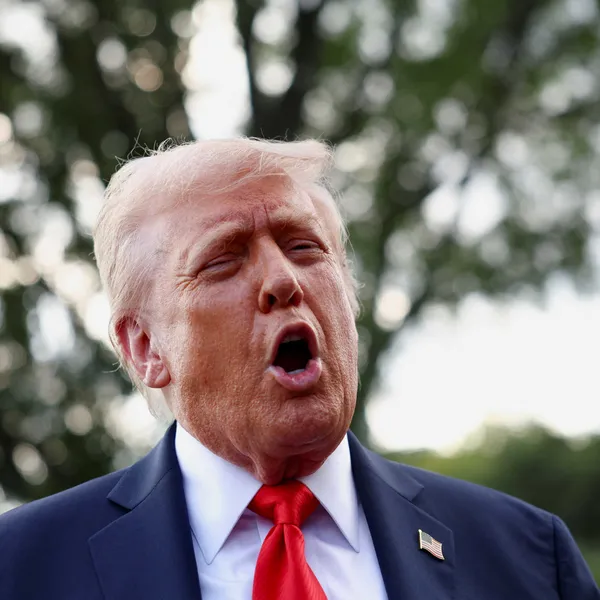
President Donald Trump's repeated calls to annex Greenland, despite strong opposition on Danish territory and across the European Union (EU), may be prompting European governments to move gold out of the United States, economist Catherine Rampell said. She argued that the transfers could cause long-term damage to the U.S. economy and are a direct response to Washington's actions toward Greenland. Trump first floated buying the Arctic island in 2019 during his first term, an idea Copenhagen quickly rejected.
“They've done this because they're worried about what Donald Trump might do to use this against them,” Rampell told The Bulwark's Tim Miller on Wednesday. In the interview, she said European officials were concerned that the United States could restrict their access to assets held in the country. For many European central banks, those assets sit in the Federal Reserve Bank of New York, a longtime custodian of foreign official gold reserves.
Rampell said she did not believe Trump was likely to “tunnel underground a la Die Hard with a Vengeance and, like, literally steal the gold in dump trucks,” but added that “you don't know.” She noted that Trump had repeatedly discussed visiting Fort Knox and knocking on the door to verify that the gold was still there, “in case somebody else had stolen it.”
The more likely concern, she said, was that the United States could treat the EU as it has treated Russia by denying it access to assets. “We've frozen Russia's foreign exchange reserves, for example,” Rampell said. “They might well do the same thing.” The United States and its allies immobilized roughly $300 billion of Russian central bank reserves after Russia's full-scale invasion of Ukraine in 2022, and most of those assets remain frozen.
Rampell also said Germany was considering bringing its gold back. She explained that Germany had stored gold in the United States partly for Cold War-era security reasons, to prevent the Soviet Union from seizing it, rather than because it was fleeing the Nazis. Germany's Bundesbank has repatriated bullion from New York before, moving hundreds of tonnes of gold back to Frankfurt between 2013 and 2017 in a program completed three years ahead of schedule.
“What they're worried about is like, look, there's the whole Liberace stuff within the White House,” Rampell said. She concluded that the concern was not necessarily an imminent gold shortage, but that Europeans were “freaked out about the invasion of Greenland or the threatened invasion of Greenland.”
The issue, she said, received far more attention in Europe than in U.S. media coverage. European officials were asking why the United States would not expropriate their assets if Trump was threatening to invade a NATO ally. Rampell also pointed to Trump's repeated statements about taking oil, saying that the United States had taken Venezuela's oil and other assets.
When Miller responded, “Gold? They said they took the gold in Venezuela,” Rampell confirmed that this was the case.
In an interview with AlterNet earlier in September, Dr. Richard D. Wolff, professor emeritus of economics at the University of Massachusetts Amherst, said he was not surprised that European, Canadian and other governments threatened by the United States were responding this way.
“I am not surprised that our government is surprised,” Wolff wrote. “Our government is busy strong-arming people around the world in every way that it can, militarily, economically, politically, and discovering time after time to their amazement, if you take them seriously, that the folks are going to resist. And that's what's going to happen.”
European officials have also vowed to defend Greenland. “We are ready to defend every inch of NATO, including our own territory,” Danish Prime Minister Mette Frederiksen told reporters at a NATO summit over the summer. “One of the reasons why we built NATO many, many years ago is if anything happens to one of us then everybody should stand up for each other.”
At the same summit, Icelandic Prime Minister Kristrún Frostadóttir said, “the lines in the sand are clear: Greenland belongs to the people of Greenland.” Rampell's interview with The Bulwark is available here.

