Trump's 'Princess of Darkness' Facilitates Donor Access for Pet Project Funding, WSJ Reports
Key Takeaways
- •The Wall Street Journal reported that Trump operative Meredith O'Rourke solicits donations ranging from $5 million to $50 million from major corporations for projects personally tied to the president, including a presidential library and a White House ballroom.
- •SoftBank donated $50 million toward Trump's presidential library, while Apple contributed approximately $25 million, Microsoft around $10 million, and Amazon around $5 million toward the ballroom project.
- •Many corporate donors contributing to Trump's projects are simultaneously navigating significant federal regulatory matters, including antitrust cases, AI policy discussions, and federal contract competitions.
- •Contributors reportedly receive extensive and unprecedented access to the president, with Trump attending lengthy fundraising events and personally engaging with corporate leaders on their concerns.
- •Historian Thom Hartmann and former Clinton adviser Dr. Robert J. Shapiro have separately described the arrangement as corrupt and indicative of crony capitalism.
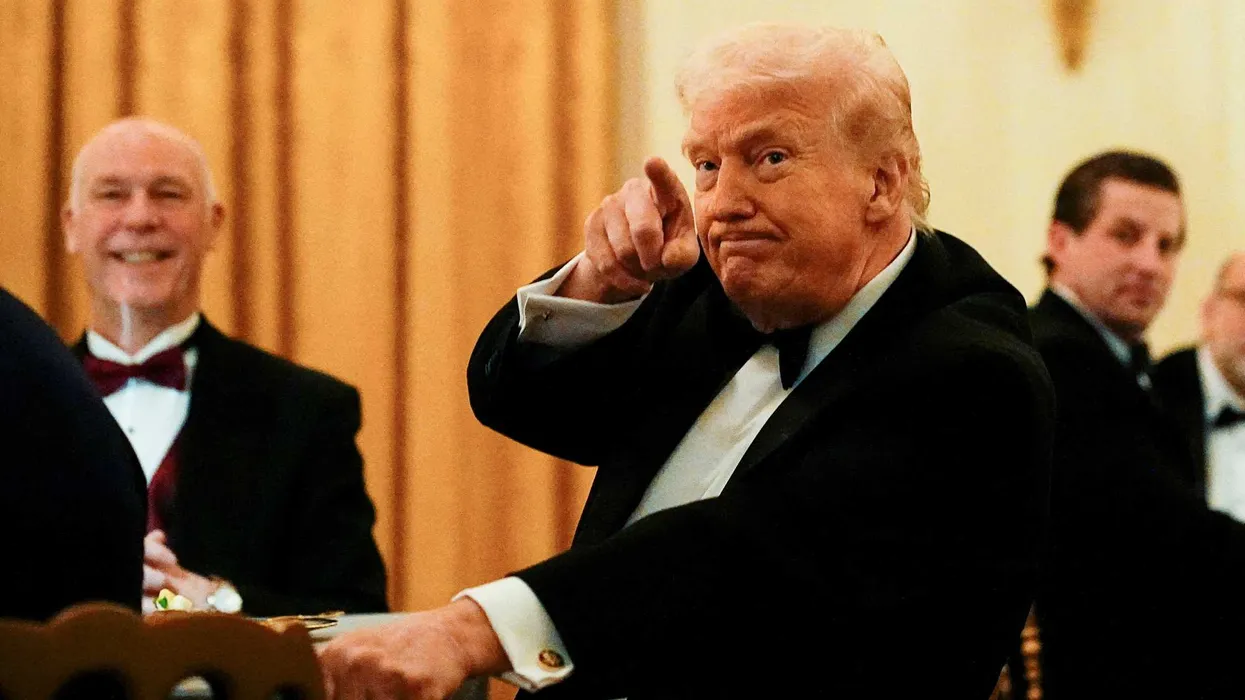
President Donald Trump has built a fundraising operation of such scale that some Republicans have expressed concern it could divert resources away from critical midterm election efforts. Beyond traditional political fundraising, a detailed report from The Wall Street Journal reveals that Trump employs a dedicated operative—nicknamed the "princess of darkness"—who directly solicits major donors to fund the president's personal projects in exchange for access to the White House. The arrangement extends beyond traditional campaign fundraising into direct solicitations for entities personally associated with Trump, including a presidential library and a White House ballroom—projects that have historically been funded through private foundations rather than through a sitting president's active donor outreach.
According to the Journal's reporting by Josh Dawsey, Dana Mattioli, Annie Linskey, and Emily Glazer, published Thursday, Meredith O'Rourke, referred to as the "princess of darkness," has become a significant power player in Washington under the Trump administration.
"Trump asks O'Rourke which companies and donors have cut checks and which haven't, and for how much," the Journal reporters wrote. "He often asks her to make much larger financial requests than she was planning—for some donors the ask is $5 million, for others it is $50 million. And the president gives her names to call, often including people who have recently met with him, according to people with knowledge of the calls."
The report detailed several notable corporate contributions. "SoftBank donated $50 million toward Trump's presidential library," the journalists wrote. "Apple cut a check for around $25 million toward his White House ballroom project, while Microsoft gave around $10 million and Amazon chipped in around $5 million, according to people familiar with the contributions. Meta Platforms recently gave $10 million to a Trump-aligned political committee, people familiar said, on top of a multimillion donation to the ballroom and a prior $22 million payment to the planned presidential library." Many of these companies are simultaneously navigating significant federal regulatory matters, including pending antitrust cases, AI policy discussions, and federal contract competitions overseen by agencies within the administration.
In return for these contributions, donors reportedly receive extensive and unprecedented access to the president.
"The president is often solicitous and warm at these fundraisers, asking each CEO to introduce themself," the Journal noted. "There are regular guests, such as OpenAI's Sam Altman. Last year, OpenAI co-founder and president Greg Brockman and his wife personally contributed $25 million to Trump's super PAC."
The reporters also documented striking examples of Trump's engagement with donors. "Trump has surprised donors at how long he will stay and talk," they wrote. "Within 24 hours of launching the war in Iran, he attended a lengthy $1 million-a-plate fundraiser in Florida. Many expected he would cancel, and the event was interrupted at one point for him to learn that Iran's Supreme Leader Ali Khamenei had been killed. After that, Trump listened to a range of corporate concerns and even engaged in a lengthy back-and-forth with Verizon's CEO about what kind of cable was best."
In an interview with AlterNet earlier in July, historian Thom Hartmann characterized this system of corporate access as corrupt. He agreed with a comparison to President Grover Cleveland's 1894 warning about large corporations fostering a "communism of pelf."
"He talked about how we now see trusts and combinations that have arisen," Hartmann explained. "I'm paraphrasing terribly here, but from memory, that have arisen and threaten to crush the average person — you know, corporations, which should be the carefully constrained servants of the people, have become their masters, and the average person is thus under the iron heel of these corporations."
Dr. Robert J. Shapiro, an economist who served as a top adviser to President Bill Clinton, offered a similar assessment, describing the dynamic as "crony capitalism."
"Trump operates with a form of crony capitalism," Shapiro told AlterNet in July. "The people who get US contracts, the people who get preferences on tariffs, are those who have influence with him. It ranges from the absurd — where the guy who did the coating for the swimming pool gets a no-bid contract to do the reflecting pool — to all the other no-bid contracts. That's all crony capitalism. And certainly, opening this up could create more opportunities for that."

