Trump Hints at National Emergency Declaration to Influence Federal Election Rules
Key Takeaways
- •President Trump signaled openness to using executive emergency powers to federalize midterm election administration, a step no president has previously attempted.
- •Conservative commentator Wayne Allyn Root proposed the idea by citing INS v. Chadha, a 1983 Supreme Court ruling that legal scholars say does not grant presidents unilateral election authority.
- •The Constitution's Elections Clause assigns regulation of congressional elections to state legislatures and Congress, not the president.
- •Trump has separately urged the GOP-controlled Senate to pass the House-approved SAVE America Act, which would impose new voting restrictions but has not advanced.
- •Any presidential attempt to federalize elections through an emergency declaration would be subject to judicial review and face immediate legal challenges, according to election law experts.
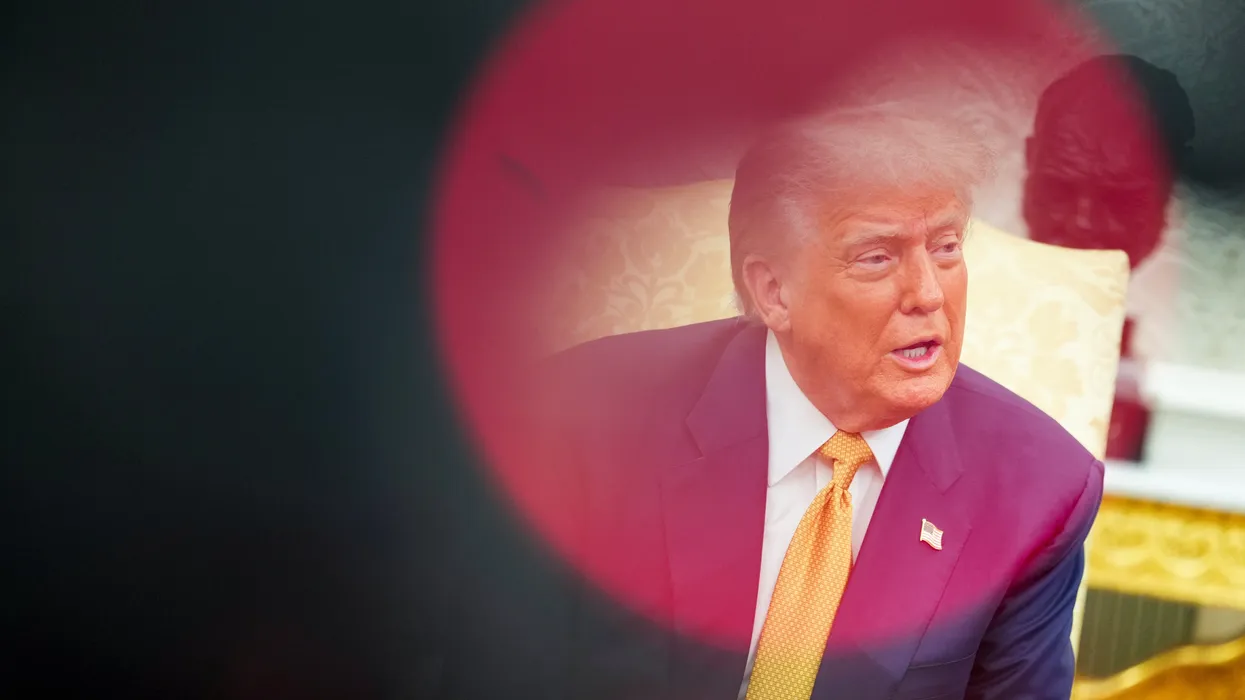
President Donald Trump signaled openness to an unprecedented use of executive power to impose federal control over midterm election procedures, after a conservative media personality pitched the idea during a radio appearance — a prospect that would break with the long-standing constitutional framework under which states administer elections and Congress, not the president, sets any federal rules.
Wayne Allyn Root, host on Real America's Voice, presented Trump with a fringe legal theory during a Tuesday broadcast, arguing the president could bypass Congress by declaring a national security emergency related to elections. Root and other right-wing commentators who have challenged the legitimacy of recent elections have been promoting the idea as a way to ensure Republican advantages in the November contests.
"So let me put an idea in your head, okay, because it's so hard to get the Senate to do anything," Root said. "Now they're on recess; they don't get anything done. If they never get the SAVE America Act done, you have the right to declare a national security emergency for elections, and the Supreme Court ruled in 1983 under Reagan, in INS v. Chadha, if you declare a national security emergency as the president of the United States, they can't challenge it. It can only be overturned by a two-thirds vote of both houses of Congress."
Root asserted that acting within the next month would result in mandates for photo identification, proof of citizenship, and restrictions on mail-in ballots at the federal level.
Trump appeared receptive to the proposal.
"Let me just say stranger things have happened," Trump said. "I'll leave it at that."
Trump has reportedly rejected similar proposals from allies in the past. However, he has been pressing the GOP-controlled Senate to pass the House-approved SAVE America Act, legislation that would introduce new voting restrictions widely viewed as electorally advantageous to Republicans. The Senate has not advanced the bill.
The legal theory Root referenced centers on INS v. Chadha, a 1983 U.S. Supreme Court decision. However, the ruling primarily addressed the constitutionality of the legislative veto and separation of powers between Congress and the executive branch, not presidential emergency authority over elections. Legal scholars have broadly disputed the idea that the case grants a president unchecked power to unilaterally impose election rules, and the U.S. Constitution delegates authority over election administration primarily to states and Congress.
Under the National Emergencies Act of 1976, presidents have declared more than 70 national emergencies, most commonly to impose foreign sanctions or respond to natural disasters. No president has previously invoked emergency powers to federalize election administration. The statute requires the president to cite specific statutory authorities being activated, and declarations remain subject to judicial review.
Election law experts have noted that any presidential attempt to federalize election procedures through emergency declaration would face immediate legal challenges, as the Constitution's Elections Clause assigns regulation of congressional elections to state legislatures, with Congress holding the power to "make or alter" such regulations — not the president. Federal involvement in elections has historically come through congressional legislation such as the Voting Rights Act and the Help America Vote Act of 2002, rather than through executive action.
Coverage and discussion of the exchange has circulated on social media and across political media outlets.
See also: Media Matters | The Hill | X post via @atrupar

