GOP Insiders Fear Midterms Will Be 'Worse Than 2018' as Trump Support Slips Among Key Voter Groups
Key Takeaways
- •Trump is showing signs of concern that Democrats could capture the House, the Senate, or both in the 2026 midterms.
- •A Democratic takeover of either chamber would give the party subpoena power, committee gavels and the ability to block legislation.
- •Election analysts cited in the article said Trump’s support has fallen most among independents, Hispanic voters and white voters without a college degree.
- •Several observers said the shift away from Trump and Republicans is being driven mainly by economic frustration, especially inflation.
- •Analysts said the Senate map is challenging because Texas, Ohio, Iowa and Alaska are deeply Republican states, though Democrats still have a credible chance to win control.
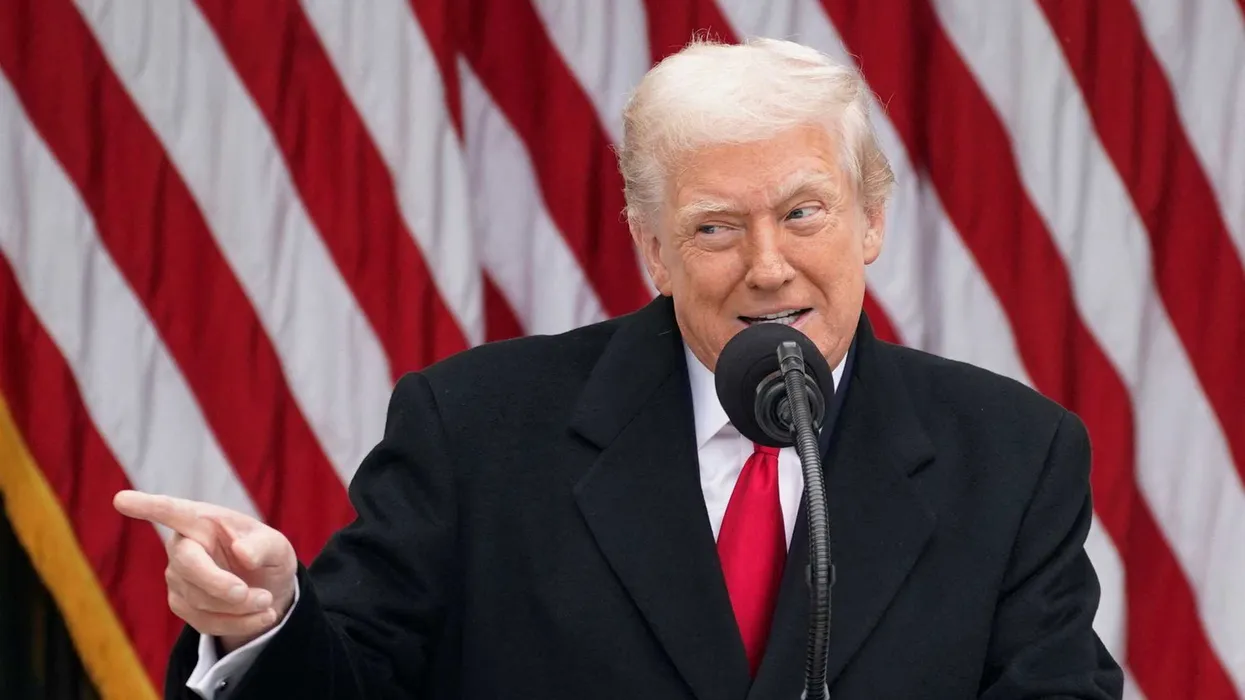
President Donald Trump has shown multiple signs of concern that Democrats could take one or both chambers of Congress in the November 2026 midterms, when all 435 House seats and roughly a third of the Senate will be on the ballot. From his son-in-law Jared Kushner meeting with House Minority Leader Hakeem Jeffries to his various efforts at meddling in the elections, Trump has made clear that he fears Republicans will lose their grip on the legislature. A Democratic takeover of either chamber would hand the party committee gavels, subpoena power and the ability to block legislation through the end of Trump's term.
The depth of the alarm inside the party was laid out Monday by The Dispatch's John McCormack. "David Wasserman, elections analyst for The Cook Political Report With Amy Walter, noted that the groups in which the decline in support for Trump has been most pronounced are independents, Hispanic voters, and white voters without a college degree," McCormack wrote.
"We've seen bigger declines in Trump support and Republican support among those groups because they're where he made the biggest strides and therefore had the most ground to fall," Wasserman told The Dispatch. "These are voters who rehired Trump to the White House because they were nostalgic for what things cost during his first term, but are inclined to either sit out the election or vote for a Democrat."
A GOP campaign strategist quoted by McCormack was blunter still. "I would be betting my life it's going to be worse than 2018," the strategist said, adding that the turn against Trump is "almost entirely economically driven."
"Basically these are women to whom Trump offered an alternative economic vision that was appealing to them, and none of that stuff has, from their perspective, panned out," the strategist said.
The strategist's benchmark is a demanding one. In 2018, Democrats netted 40 House seats and retook the chamber — their largest gain since 1974 — though Republicans added two Senate seats that year. The president's party has lost House seats in nearly every midterm since World War II, with 1998 and 2002 the only exceptions.
Michael Strain, an economist at the conservative-leaning American Enterprise Institute, echoed that assessment. "People really, really don't like inflation. That resolves a lot of the mysteries of trying to interpret what's happening with people's perceptions of the economy," Strain told McCormack.
The Senate map adds another layer of difficulty. "People underestimate just how red Texas, Ohio, Iowa, Alaska are," Sean Trende, elections analyst at RealClear Politics, explained to McCormack. "These are states that are redder than New Jersey and Virginia are blue."
McCormack noted that in 2024, Trump lost those two blue states by about 6 points while carrying the four red states by 11 to 14 points. Even with that tough map, Trende still thinks Democrats have roughly a 2-in-5 chance of taking control of the Senate, while Nate Silver — the election forecaster who founded FiveThirtyEight and now publishes the Silver Bulletin — gives Senate Democrats closer to a 3-in-5 chance in his model.
"We both agree that it could easily happen," Trende told McCormack regarding Silver's model. "He thinks it's a little easier than I do."

