MAGA 'Crackup' Looms as Trump Withdraws FDA Nominee Amid Abortion Policy Rift
Key Takeaways
- •Bulwark White House correspondent Andrew Egger wrote that an internal dispute could fracture President Trump's MAGA coalition no matter which course the president takes.
- •Trump withdrew the FDA Commissioner nomination of Heidi Overton, a longtime health-policy official who had mediated tensions between HHS Secretary Robert F. Kennedy Jr. and Agriculture Secretary Brooke Rollins.
- •MAHA supporters viewed Overton as 'controlled opposition' who might undermine Kennedy's agenda, while skeptics such as Sen. Bill Cassidy worried she would further his vaccine policies.
- •Pro-life senators held back support for Overton because they wanted assurances the next FDA commissioner would restrict mail sales of mifepristone, a drug the agency has regulated since approving it in 2000.
- •The coalition's trajectory now hinges on Trump's replacement FDA nominee, whether that pick clears confirmation before Democrats take the congressional majority, and whether the agency acts on mifepristone mail sales in the meantime.
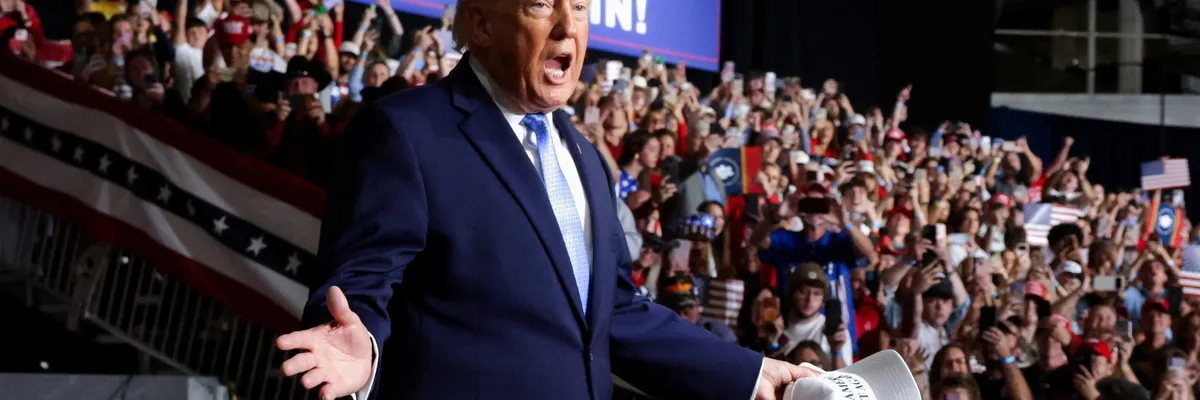
A divisive fight is building within President Donald Trump's MAGA movement that could push it toward a long-speculated "crackup" once and for all, according to Bulwark White House Correspondent Andrew Egger, who wrote on Friday that no matter how Trump handles the matter, it is likely to fracture his coalition.
The immediate flashpoint is the rush to confirm last-minute nominees before a Democratic majority takes control of Congress in just six weeks. Over the past week, a handful of those nominees were slapped down not by Democrats, but by Republican defectors who are leaving office at the end of the term and do not appear to be going quietly. Then Trump himself withdrew the nomination of Heidi Overton for Commissioner of the Food and Drug Administration (FDA), a Senate-confirmed post atop the agency that regulates the country's prescription drugs and medical products. According to Egger, the reason the nominee proved unviable speaks to an issue that is breaking MAGA apart.
"Last year, it was rare to see a figure like Overton go down without even a vote," Egger wrote. "Her MAGA credentials are strong: She's a longtime Trump health-policy official who worked on health care issues at the America First Policy Institute during the president's interregnum and has spent the last two years in a key role on the White House Domestic Policy Council. As tensions between MAGA and MAHA grew over the last year, Overton was as much of an internal peacemaker as any — crucial in mediating fights between HHS Secretary Robert F. Kennedy Jr. and Agriculture Secretary Brooke Rollins."
But in the end, rather than uniting the movement's warring factions, her nomination was torn apart by them. MAHA — the "Make America Healthy Again" movement that has coalesced around Kennedy's health agenda — sat squarely in the middle of the dispute. According to Egger, "The MAHA faithful mistrusted her as 'controlled opposition' who would work to neuter RFK Jr.'s agenda from the inside, while MAHA skeptics like Sen. Bill Cassidy worried she would work to further Kennedy's plans to disrupt childhood vaccines."
Overton's fate also carried implications for a second coalition-shaking controversy: the fight over how the FDA will handle abortion policy. Anti-abortion activists were a key part of Trump's coalition in 2016, but after 2024, Egger explained, many pro-lifers were angered by the president's move to the center on the issue. They are now waiting to see whether Trump's FDA will do anything to restrict the sale of the abortion drug mifepristone by mail, a step that could be taken without congressional legislation. The drug has been under FDA regulation since the agency first approved it in 2000, which is why the identity of the next commissioner carries such weight with both camps. According to Egger, the Trump administration has attempted to play both sides of the debate, but MAGA pro-lifers are getting tired of waiting.
That frustration has played out in the halls of Congress, Sen. Bill Cassidy (R-LA) asserted, as pro-life senators held out on Overton's nomination because they wanted assurances that the next FDA commissioner would move to restrict mifepristone. Cassidy, a Louisiana physician who voted to confirm Kennedy as HHS secretary after securing vaccine-policy commitments from him, sits at the crossroads of both fights.
"Whichever way the FDA rules spells further danger for Trump and his coalition," Egger concluded. "After two cycles where abortion politics proved highly favorable for Democrats, the issue all but dropped out of voters' minds in 2026. But a crackdown on mifepristone would bring it back into the spotlight — while a failure to crack down could prove the final straw for a diminished but highly loyal faction of single-issue Trump voters."
The near-term markers of how the rift develops are concrete: the replacement FDA nominee Trump puts forward, whether that pick can clear confirmation before the Democratic majority is seated, and whether the agency takes any action on mail sales of mifepristone in the meantime.
This article is based on reporting published by Alternet.

