Trump's Inflation Lies Conceal a Dangerous Truth: Analyst
Key Takeaways
- •CNN analyst Daniel Dale says Trump has used false inflation claims throughout the midterm campaign, including assertions that inflation has stopped and prices are falling, despite inflation accelerating again in September.
- •Prices have risen an average of 5.4 percent since Biden left office in January 2025, contradicting Trump's statements that prices are now way down.
- •Dale concludes that neither Biden nor Trump presided over the worst inflation in American history, as Biden's 9.1 percent peak was well below the all-time high of 23.7 percent and Jimmy Carter's 14.8 percent in 1980.
- •Economist Robert Shapiro argues Trump's policies are actively increasing inflation and warns that record expansion-era deficits and a $40 trillion national debt are unsustainable, with the US debt exceeding the combined debts of China, Europe, and Great Britain.
- •Shapiro points to the Clinton administration's tax increases and a sustained 12 percent defense spending cut, which raised inflation-adjusted federal revenues 54 percent over two terms, as evidence that raising revenues and cutting defense spending can address deficits.
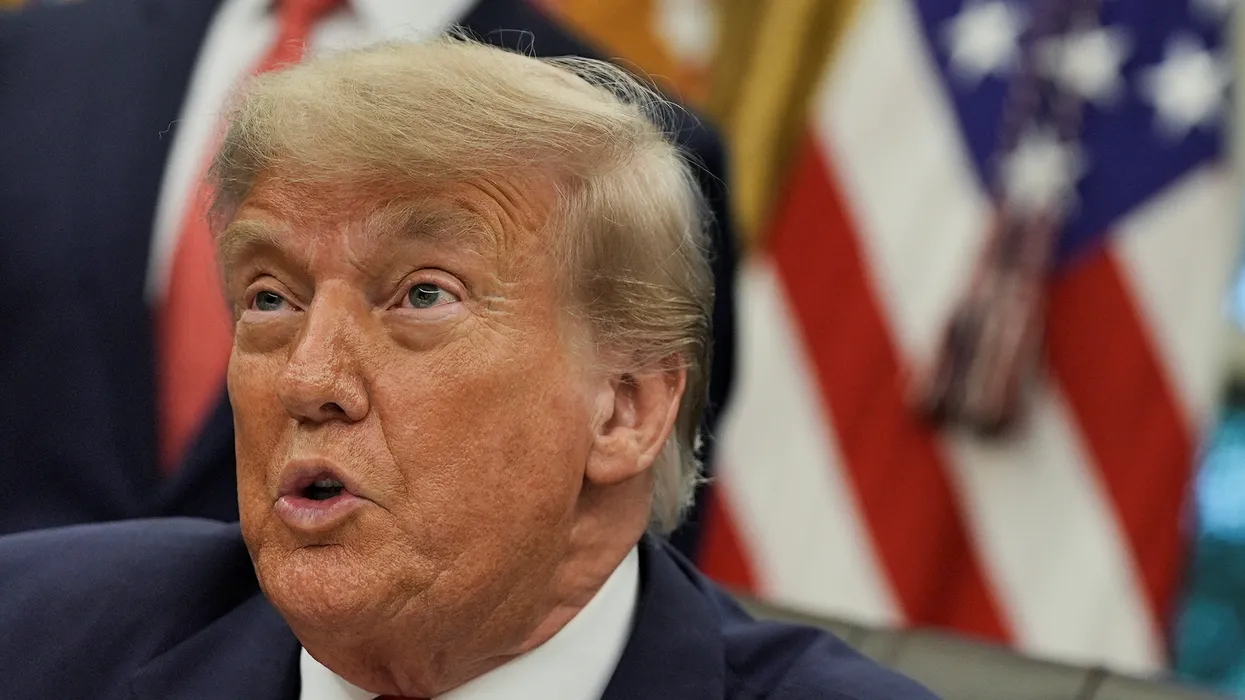
President Donald Trump has repeatedly asserted that his administration has brought inflation down and ushered in a so-called "golden age." Public sentiment, however, indicates that Americans overwhelmingly feel otherwise.
Now, with the midterm election campaign underway, a political analyst explains how Trump is able to spread propaganda that obscures inflation numbers from the very people living through rising prices — and, notably, the dangerous truth he is concealing in his public statements.
"The actual inflation numbers aren't good for President Donald Trump and his party," wrote CNN political analyst Daniel Dale on Thursday. "So Trump has come up with something of a solution: just use fake inflation numbers."
"Trump has been lying about inflation throughout the midterm election campaign," Dale added. "Among other things, he has falsely declared he has 'already stopped the inflation' (it accelerated again in September), that 'prices are now coming way down' (they have continued rising), and that prices are now 'way down' from when former president Joe Biden left office in January 2025 (they are up 5.4 percent on average)."
After reviewing the various ways Trump has mischaracterized inflation figures, Dale pointed out that the president's apparent fixation on arguing that prices are lower under him than under Biden is leaving the public without accurate information about its own economic health. That information gap carries added weight in a midterm campaign, since the year-over-year figures at issue are, as Dale notes, the inflation measures most commonly discussed.
"For years, Trump has invented fictional economic numbers that work better for his purposes than the actual economic numbers," Dale said. "So it's very possible he's just lying about the year-over-year inflation rates that tend to be the most commonly discussed – wildly exaggerating the highest rate under Biden and significantly reducing the most recent rates this year."
Overall, Dale concluded that neither Biden nor Trump presided over the worst inflation in recent American history. "Trump could fairly say the 9.1 percent peak year-over-year inflation under Biden was the highest in more than 40 years," he wrote. "But even that 9.1 percent rate was much lower than the all-time high, 23.7 percent, or the highest point of Jimmy Carter's presidency, 14.8 percent, which was reached in 1980. And the rate then fell significantly before Trump returned to office."
That said, many of Trump's policies are actively increasing inflation, according to economist Dr. Robert J. Shapiro, who served as a top economic adviser to President Bill Clinton.
"The answer to our outsized deficits and debt, of course, is to address the source, by raising revenues and cutting defense spending," Shapiro told AlterNet in August.
Clinton is the only president in recent history to balance the budget, running four surpluses in eight years; Trump has always run deficits, including $40 trillion for the current fiscal year.
"In every respect that affects deficits and debt, the United States has become a global outlier," Shapiro explained. "We have by far the largest deficits we've ever run during an economic expansion. Our national debt held by investors alone is $32 trillion of the $40 trillion total — the other $8 trillion is held by government trust funds, mainly Social Security and the Fed. Our national debt is greater than the combined national debts of China, Europe, and Great Britain. Our defense spending is greater than the combined defense spending of China, Russia, India, Ukraine, and Europe. And our tax burden — all taxes at every level, as a share of GDP — is smaller than that of any other developed nation comparable to the United States. We have become an outlier in all of these ways, and the bond market is beginning to say: you can't sustain this. We are playing with dynamite."
"Clinton convinced Democrats in Congress to double down with larger tax increases for wealthy people, raised the corporate tax rate, increased taxes for wealthy people, and hiked the federal gasoline tax," Shapiro argued. "It worked: Those changes, along with strong economic growth, increased federal revenues 54 percent after inflation over his two terms. Clinton also convinced Democrats to cut defense spending by 12 percent on a sustained basis, another first."
Shapiro also told AlterNet in August that Trump simply refuses to cut spending in crucial areas.
Going forward, monthly inflation readings — which accelerated again in September — and the fiscal picture Shapiro describes will serve as measurable benchmarks for the competing claims in the inflation debate.

