Trump Showing Unusual New Signs of Exhaustion, Veteran White House Correspondent Says
Key Takeaways
- •White House correspondent Paula Reid said President Trump is showing unprecedented signs of exhaustion and depleted stamina as the midterm elections approach.
- •Trump has scaled back his rally schedule and complained in recent days about his voice, tiredness, and heavy travel demands.
- •The president chose the Lincoln Memorial beside the Reflecting Pool as the venue for his final pre-election address, a selection Alexander questioned given the pool's botched renovation has become a symbol of wasteful spending and incompetence.
- •Reid suggested the venue choice allowed Trump to retreat to a familiar 'safe space' of renovation and construction topics when things are not going well.
- •With Trump having governed largely unchecked by Congress, Reid noted the election outcome could determine whether his administration, allies, and family face significant oversight.
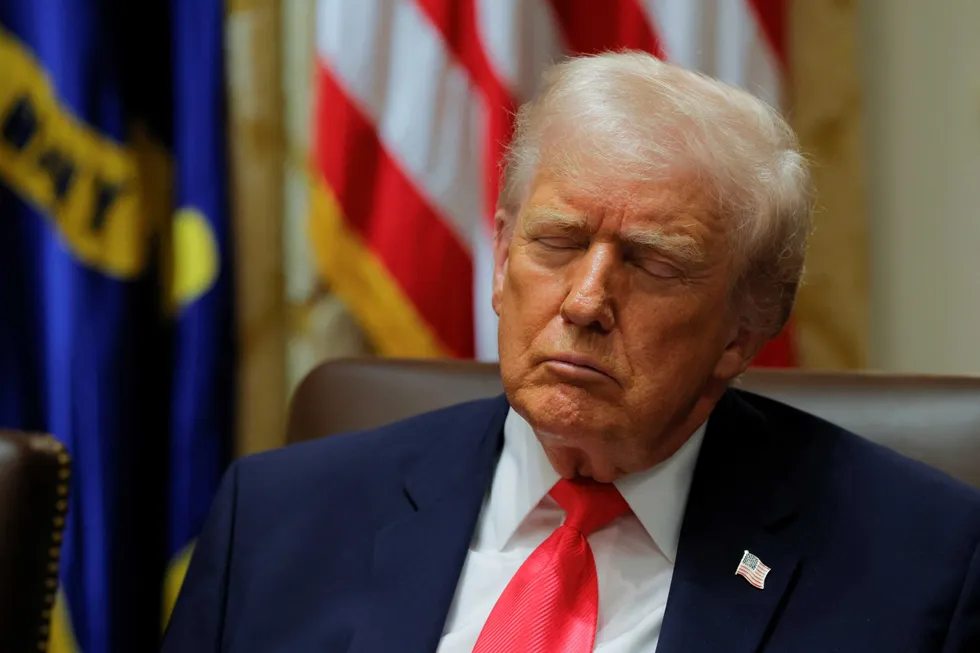
President Donald Trump appears to be showing new signs of exhaustion and depleted stamina that he has not displayed before, according to a veteran White House correspondent, as he scales back his rally schedule ahead of the midterms and chooses a questionable venue for his final pre-election address.
During a Monday broadcast on MS NOW, the network's new chief White House correspondent, Paula Reid — who previously covered the White House for CBS News from the start of Trump's presidency — joined host Peter Alexander to discuss the president's closing argument on the eve of the midterm elections. Midterm elections, held at the midpoint of a president's term, are its first nationwide electoral test and determine the balance of power in Congress for the remainder of it, giving a president's final-day appearance outsized weight for both parties. Drawing on their long shared history of covering Trump, Reid said there has been a notable shift in his energy, with his considerable well of stamina appearing to have dried up.
"Peter, you and I have covered the president for a long time," Reid said. "This is a man that, despite his age, despite the demands of his job, he has a lot of stamina. So, surprising to hear him complain over the past few days about his voice, about how tired he was, about having to do all this travel."
In her assessment, that fatigue most likely explains Trump's decision to stage his final address before the midterms at the Lincoln Memorial, beside the Reflecting Pool.
"So I guess it's not surprising that he would be here," Reid said. "But it's got to be disappointing to his party... even [with] conservative strongholds like Texas hanging in the balance. I think, Peter, we know that there are no voters in the state of Michigan who are going to cast their ballot based on the condition of the grass at the Reflecting Pool."
Elsewhere in the segment, Alexander noted that the venue was a questionable one from which to pitch voters on the administration's ongoing agenda, given how the botched renovation of the Reflecting Pool had become a symbol for Trump's wasteful spending and incompetence. Reid suggested the decision was likely made, in part, to allow Trump to retreat to a "safe space."
"This is, how do you say, not in line with American priorities. What is the thinking behind the scenes?" Alexander asked.
"Arguably it's not in line with his own priorities, right?" Reid replied. "He has so much at stake this week. He has governed largely unchecked by Congress. And depending on how this election goes, he has an administration, his allies, his own family, [who] could face significant oversight. So, it is odd he is choosing to spend this, the last day before tomorrow, at the Reflecting Pool. He went on in that Q&A with reporters to talk quite extensively about the grass and how much it has improved... We have seen the president repeatedly sort of retreat to this space renovation and construction when things aren't going well. That's sort of his safe space. This is the identity he had, of course, before he went into politics."
With polls set to open across the country on Tuesday, the outcome will shape the congressional oversight environment for the final two years of Trump's term — the stakes Reid suggested make the president's low-key venue choice all the more striking.

