Trump Announces 'U.S. Space Academy' Executive Order — But the Fine Print Falls Short of His Rhetoric
Key Takeaways
- •President Trump announced at NASA's Johnson Space Center an executive order to begin creating a U.S. Space Academy comparable to existing service academies.
- •The executive order does not establish the academy itself but creates a Presidential Commission, chaired by the NASA Administrator, to develop a proposal within 120 days.
- •Congress would ultimately need to authorize and fund any new academy, matching how West Point, the Naval Academy, and the Air Force Academy were established.
- •The order specifies that future applicants must meet prerequisites including citizenship status, security clearances, and government or military status.
- •As of the announcement, no appointments to the commission had been made, and Trump said he would pick a location shortly.
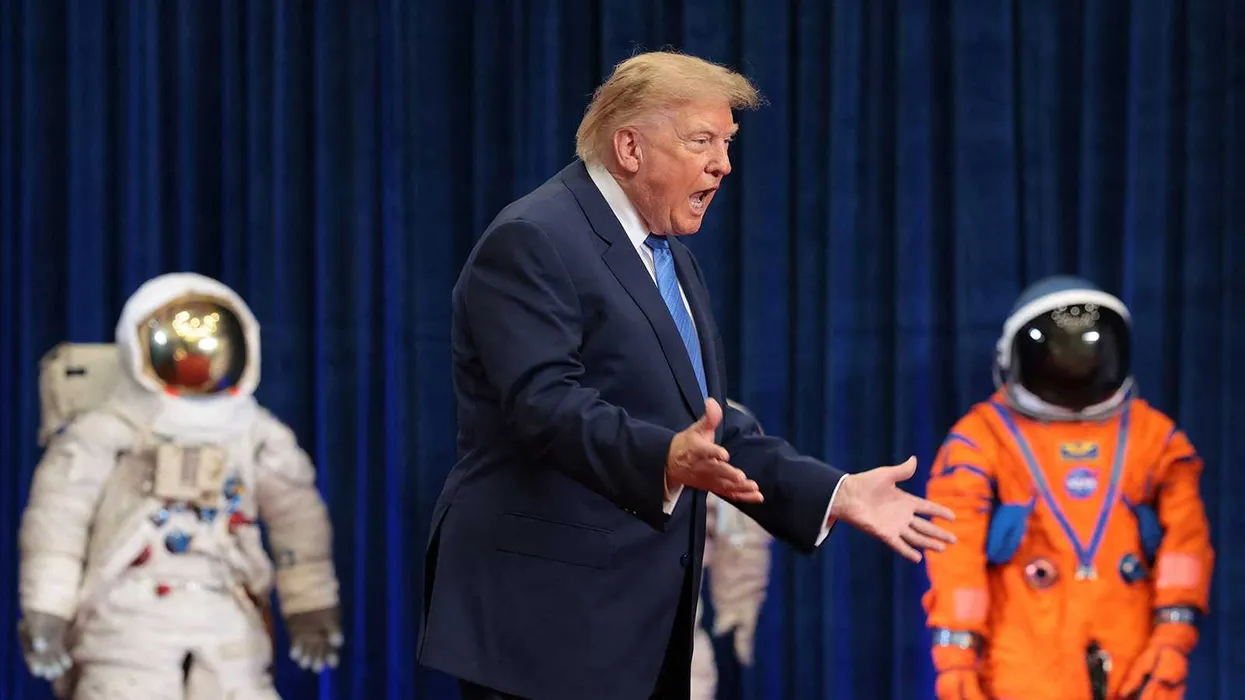
The White House announced that President Donald Trump would sign an executive order to establish a Space Force academy comparable to the Naval Academy and Air Force Academy — though the details come with significant caveats.
Speaking at NASA's Johnson Space Center in Houston, Trump said the new academy was inspired by "the rapid growth of the Space Force and the commercial space industry and the expansion of our ambitions to the moon and far beyond the moon."
"It's clear that we need to educate and train an entire generation of skilled service members, engineers, civil operators and everything else to do what we have to do," he continued.
He then made the announcement itself.
"And we'll continue, and I think by leaps and bounds. And that's why in a few moments I will sign an executive order to begin the process of creating a new national academy. It's called the US Space Academy. That's a big deal. So you think of West Point and you think of Annapolis and you think of the Air Force Academy and you think of the Coast Guard Academy is great. They're all great. But uh, we're going to have the Space Force now. We're going to have an academy for what the people in this room love the most. That's exciting. That's really exciting. And I'm going to be choosing a location very shortly," said Trump.
However, the president's framing does not fully match what the executive order actually does. While Trump may choose his preferred location, the order does not establish the academy. In fact, it does not even make specific demands of Congress.
Reuters reporter Patricia Zengerle explained on X: "The order creates a commission to create a proposal for an academy, and, in theory, at least, an academy would have to be authorized/funded by Congress."
That congressional step is consistent with how the existing service academies were created: the U.S. Military Academy at West Point, the Naval Academy at Annapolis, and the Air Force Academy were all established and funded through legislation, and any new federal service academy would follow the same path.
The text of the order reads: "Sec. 2. Establishment and Composition of the Presidential Commission on the United States Space Academy. (a) There is hereby established the Presidential Commission on the United States Space Academy (Commission). The Administrator of the National Aeronautics and Space Administration (NASA) shall serve as Chair of the Commission. The Assistant to the President for Science and Technology (APST) and the Assistant to the President for Economic Policy (APEP) shall serve as Vice Chairs of the Commission. The Deputy Administrator of NASA shall serve as Executive Director."
The order further states that the commission must submit its proposal within 120 days of the order being issued. As of the announcement, Trump did not appear to have made appointments to the commission.
The order also specifies that applicants to the future academy must meet certain "prerequisites ... including citizenship status, security clearances, and government employment or military status."
Only at the end of Subsection 3 does the order acknowledge that congressional action is still required, referring to "legislative actions necessary to implement the Commission's recommendations" — language indicating that Congress would ultimately need to authorize and fund the academy.
The announcement comes as the Space Force, established in December 2019 as the sixth branch of the U.S. armed forces, continues to define its training and personnel pipeline; what to watch next is whether Congress takes up any authorizing legislation following the commission's 120-day proposal.

