Trump Signs Executive Order Designating the Oval Office a National Monument
Key Takeaways
- •Trump signed an executive order Thursday designating the Oval Office a national monument, a step intended to prevent future occupants from removing the gold-accented decor he installed.
- •The signing took place two days after the president's party suffered a striking midterm election defeat attributed largely to perceptions that he prioritizes vanity projects over the country's needs.
- •Trump told reporters the order would be sent to Congress for ratification, although executive orders take effect upon a president's signature and involve no constitutional ratification step.
- •The White House already carries formal historic protections, including a National Historic Landmark designation in 1960 and a preservation committee established by executive order in 1964.
- •Executive orders can be overturned by subsequent presidents, meaning a future Democratic administration could simply countermand the Oval Office designation.
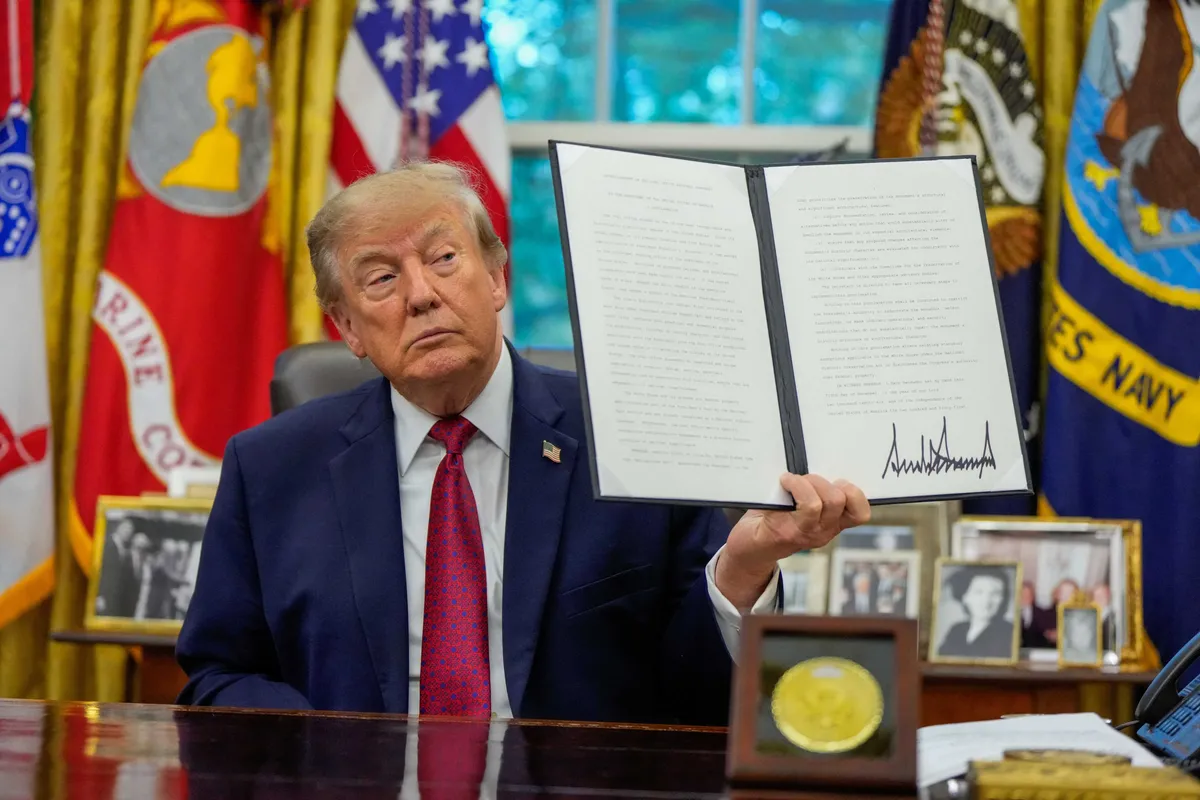
President Donald Trump signed an executive order on Thursday designating the Oval Office a national monument, a move intended to prevent future White House occupants from tearing out the gold-accented decor he has installed throughout the room. The action came two days after voters handed his party a striking defeat in the midterm elections, an outcome largely tied to perceptions that the president prioritizes vanity projects over the needs of the country. The Independent also reported on the designation.
Jennifer Bendery, a White House reporter for HuffPost, described the scene on X in real time. "Trump is sitting at his desk, with his 'VETO' hat sitting on a stack books, signing an order making the Oval Office a historic landmark, per pool report," she posted. "This weirdness is being live-streamed." Trump, for his part, complimented his own penmanship, noting, "It's important to have a good one for this. Very artistic."
"We're going to send it over to Congress to have it ratified," the president told reporters, referring to the order resting on the Resolute Desk. Under the Constitution, executive orders take effect upon a president's signature and involve no congressional ratification step, so whether Congress engages with the request remains to be seen. "It will not be allowed to be touched by anybody, destroyed, ripped down by stupid people in order to build something in a slightly different shape." As an example, he suggested that a future White House occupant could decide: "Let's not have an oval anymore, let's make it square." Trump has previously floated giving the office monument status, though it has been widely assumed the goal was to protect his signature gold decor choices rather than the shape of the room itself. National monuments are typically created by presidential proclamation under the Antiquities Act of 1906, and the White House already carries formal historic protections: the building was designated a National Historic Landmark in 1960, and the Committee for the Preservation of the White House, established by executive order in 1964, advises on changes to the mansion's historic state rooms.
The designation is unlikely to ease criticism that Trump is ignoring the struggles of Americans in order to focus on vanity projects. On Wednesday, the day after Election Day, he gave reporters a tour of the White House ballroom site — a project that followed the demolition of the building's East Wing — with a breezy demeanor that many slammed as "tone deaf." And the day before the midterm vote, he delivered his closing message by standing in front of the Reflecting Pool and speaking at length about algae, marble, grass, and the threat of vandals.
Following Thursday's Oval Office event, commentators on X were quick to react in light of the president's midterm defeat. "Americans rejected Trump's vanity projects," one noted. "Among his first actions since those elections? Try & protect his vanity projects." Another mused, "The guy who knocked down part of the White House without the approval of Congress, wants to protect parts of the White House so they can't be knocked down without the approval of Congress. Looney Tunes." And a third pointed out, "It's been 10 years and this stupid f---still doesn't understand how EO's work."
Executive orders can be overturned by subsequent presidents, meaning a future Democratic president could simply countermand the designation.

