Trump Envoy Tom Barrack Breaks With U.S. Policy on Golan Heights, Sparking MAGA Calls to Resign
Key Takeaways
- •Tom Barrack said Israel still occupies the Golan Heights against U.N. resolutions and international order.
- •Laura Loomer criticized Barrack’s remarks and said he should resign, while urging Secretary of State Marco Rubio to correct him.
- •Trump recognized the Golan Heights as part of Israel in a 2019 proclamation, reversing prior U.S. policy.
- •Israel captured the Golan Heights from Syria in 1967 and annexed it under Israeli law in 1981, but the annexation lacks international recognition.
- •Colombia became the second country to formally recognize Israeli control of the Golan Heights on Aug. 10.
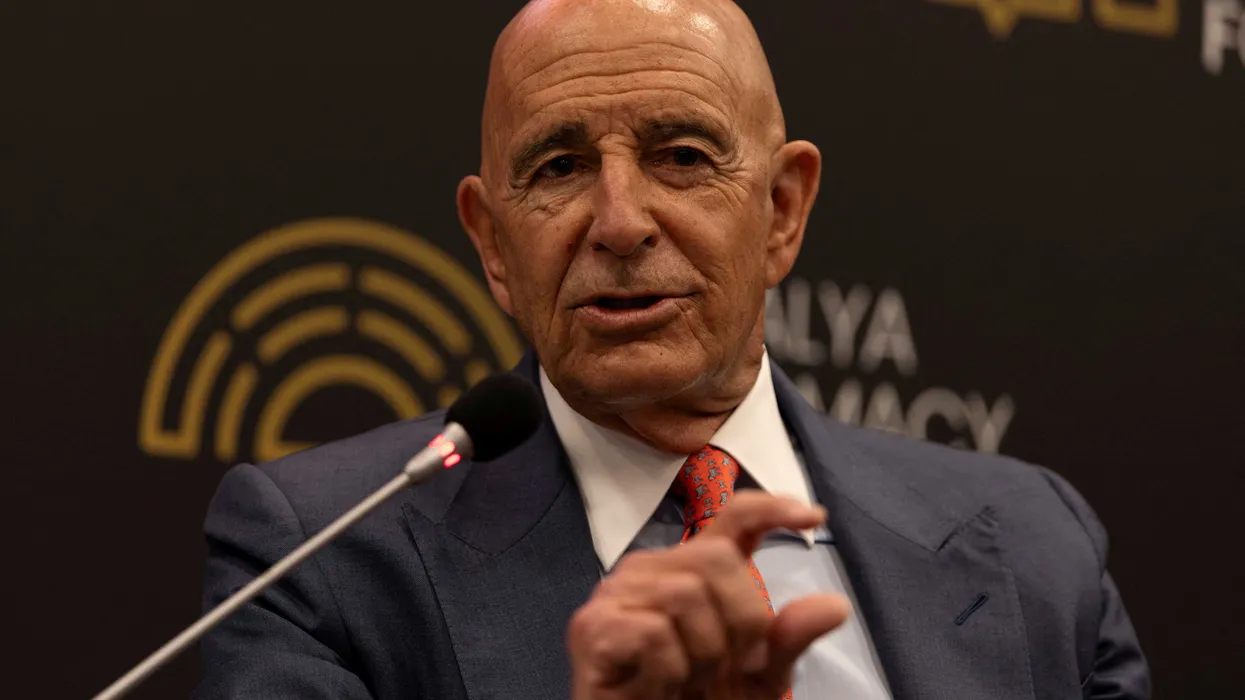
President Donald Trump's ambassador to Turkey has publicly contradicted official U.S. policy on the Golan Heights, asserting that Israel holds the territory in defiance of United Nations resolutions and drawing a backlash from within the president's own movement.
Tom Barrack, who also serves as Trump's special envoy for Syria and Iraq, made the remarks during an interview Friday with Lebanese-Australian entrepreneur Mario Nawfal. His comments place him directly at odds with one of the signature foreign policy moves of the administration he serves, and they landed in a region where the legal status of the Golan remains a long-running point of dispute in diplomacy.
"In the Golan with Syria, they still occupy the Golan against the UN resolutions, against all of the international order, which has said the Golan is Syria's," Barrack said, according to Middle East Eye.
The pushback was swift. Far-right activist Laura Loomer, a close Trump ally, posted on X that Barrack "should resign for his lack of understanding of U.S. foreign policy." She called on Secretary of State Marco Rubio to correct the ambassador and claimed, without evidence, that Barrack was "compromised by Arab money."
The rupture is jarring given Trump's own record on the issue. On March 25, 2019, Trump signed a proclamation declaring that "the United States recognizes that the Golan Heights are part of the State of Israel," reversing decades of American policy alongside a beaming Prime Minister Benjamin Netanyahu.
Israel seized the strategic plateau from Syria during the 1967 war, then formally absorbed it under Israeli law in 1981. That annexation has never won international recognition, and U.N. resolutions continue to demand an Israeli pullback to the June 4, 1967, line.
Washington had stood alone in endorsing the annexation until this month, when Colombia became the second nation to formally acknowledge Israeli control of the Golan on Aug. 10, The Media Line reported.
Barrack's contradiction landed as the Trump administration escalates pressure elsewhere in the region. Trump announced an "unprecedented" economic warfare campaign against Iran this week, promising an "economic D-Day" aimed at forcing Tehran to abandon its nuclear program and reopen the Strait of Hormuz. That broader regional messaging makes the gap between Barrack's remarks and the administration's stated line especially visible, even as the White House continues to project a hard stance on Iran.
Iranian President Masoud Pezeshkian, meanwhile, told state media that "the entire world approved our victory and the U.S. is hated," according to the Seattle Times.
