Trump Declares National Emergency Targeting Imported Energy Distribution Technologies
Key Takeaways
- •The executive order bans importing and installing bulk-power transmission technologies from 24 ITAR-listed countries, including China, Russia, and North Korea, effective for future projects.
- •Covered components include transmission lines rated at 69 kV or higher, substation transformers, grid-connected inverters, battery energy storage systems, and their operating software.
- •Energy Secretary Chris Wright can designate existing bulk-power systems as security risks and retroactively require component updates on operating grids, raising cost and logistics concerns for utilities.
- •Because Chinese manufacturers supply a large share of the global inverter market, solar and storage developers may need to requalify suppliers and adjust procurement timelines.
- •The order echoes a May 2020 Trump-era directive that was revoked by President Biden in January 2021, but goes further by naming specific countries and adding retroactive authority.
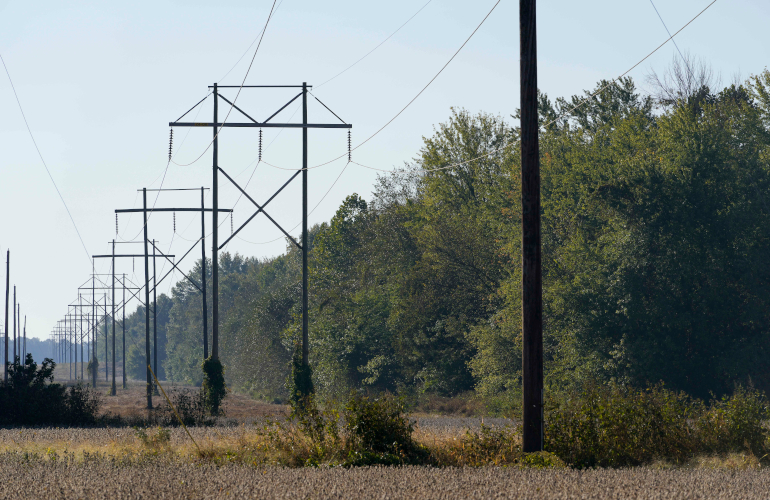
President Donald Trump has declared a national emergency that prohibits the use of energy transmission technologies produced in a select group of countries, citing national security risks to American infrastructure.
The executive order, issued yesterday, bans the import and installation of "bulk-power" technologies used in electrical distribution going forward. Under the order, bulk-power technologies are defined as "facilities and control systems necessary for operating an interconnected electric energy transmission network," and include transmission lines rated at 69 kV or higher (executive order).
The move echoes a May 2020 executive order by the first Trump administration that similarly barred foreign adversaries' bulk-power system equipment on national security grounds; that earlier order was revoked by President Biden in January 2021. The new order goes further by naming a specific list of affected countries and granting retroactive authority over installed equipment.
The order states that it will not affect systems distributing energy locally, but its impact on utility-scale renewable energy projects remains unclear. The ban covers a long list of electrical power system components, including several that may be used in renewable energy projects: substation transformers, "utility-scale and other grid-connected inverters," and battery energy storage systems. Software necessary for operating these components is also covered. The inclusion of grid-connected inverters is notable because China-based manufacturers supply a large share of the global inverter market, meaning developers of solar and storage projects may need to requalify suppliers and adjust procurement timelines.
Although the order is primarily aimed at future imports, it empowers Secretary of Energy Chris Wright to designate existing "bulk-power" systems as security risks and to retroactively require the updating of components on operating energy distribution systems. How aggressively that retroactive authority is exercised is a key question for utilities and grid operators, since replacing transformers and control systems on live transmission networks can be costly and logistically complex.
The order asserts that using these technologies from the listed countries poses a cybersecurity risk, stating that "such equipment might have digital backdoors built into their systems that allow a foreign country to access that equipment remotely."
The countries affected are those under a national arms embargo and listed on the International Traffic in Arms Regulation (ITAR), which prohibits imports of defense-related materials. In effect, the order classifies these energy transmission technologies as defense materials. The affected countries are: Afghanistan, Belarus, Congo, the Central African Republic, China, Cuba, Cyprus, Eritrea, Ethiopia, Haiti, Iran, Iraq, Lebanon, Libya, Myanmar, Nicaragua, North Korea, Russia, Somalia, South Sudan, Sudan, Syria, Venezuela, and Zimbabwe (ITAR country list).
Trump justified the national emergency under the International Emergency Economic Powers Act (IEEPA) and the National Emergencies Act. The IEEPA has historically been used for more direct economic concerns, but according to past filings this is the second time Trump has invoked the act for an energy-related national emergency. The first also centered on energy security and ordered the expansion of United States production of other energy sources, namely fossil fuels (prior energy emergency declaration). Watchers of grid policy will be looking at whether the Energy Department issues implementing rules or country-of-origin guidance, and how US allies with large electrical equipment manufacturing bases respond to the new procurement restrictions.

