Trump Can No Longer Deflect Responsibility for Economic Disasters, MS NOW Says
Key Takeaways
- •The article argues that Trump’s economic troubles are largely self-inflicted rather than caused by factors outside his control.
- •The U.S. national debt has exceeded $40 trillion, which the piece connects to tax cuts backed by Trump and former President George W. Bush.
- •Trump’s decision to permit 300,000 tons of ground beef into the country without tariffs is presented as an acknowledgment that tariffs raise costs for U.S. consumers.
- •The administration’s Iran strategy relies on new sanctions while oil prices remain high and supply-chain costs continue to affect consumer prices.
- •The White House has resumed its trade war with Canada, and the article says new tariffs will make goods more expensive on both sides of the border.
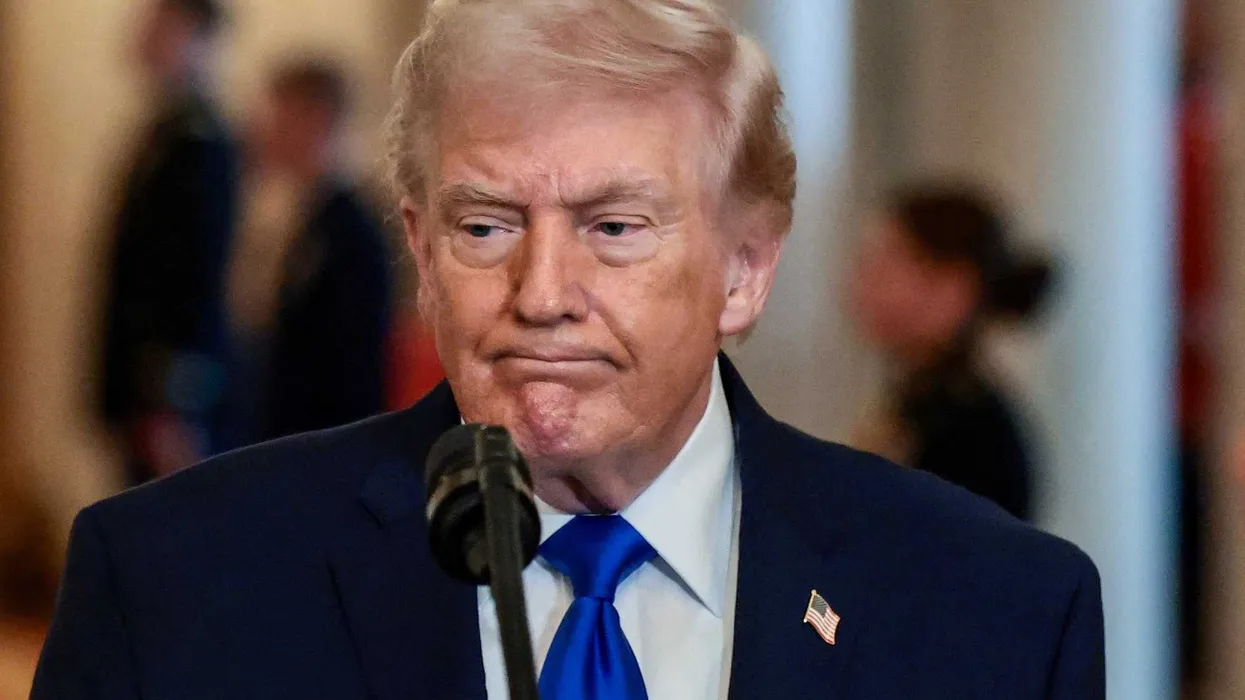
President Donald Trump and his administration can no longer cling to the idea that their biggest disasters were beyond their control, according to a new MS NOW piece arguing that, unlike presidents in the past, Trump’s economic troubles are largely "self-inflicted."
Writing for the outlet on Wednesday morning, reporter James Downie pointed to a recent comment from Trump’s Treasury Secretary Scott Bessent during the rollout of a new round of sanctions against Iran: "Why would I want to blow up the global financial system?"
"Bessent may think that’s still a self-evidently ridiculous question," Downie wrote. "George W. Bush didn’t want a Great Financial Crisis, nor did Herbert Hoover seek to start a Great Depression. Surely no White House would deliberately hurt the global economy. Yet for the first time ever, that’s not the case. At home and abroad, the past few days have laid bare the extent to which President Trump’s troubles on the economy are self-inflicted."
Downie said the latest bond market scare, triggered by the national debt passing $40 trillion, underscored that point. He wrote that the milestone is the result of sweeping tax cuts Trump pushed for in both of his terms, with help from one of his Republican predecessors. In another recent MS NOW piece, tax expert Bobby Kogan argued that "it is a mathematical truth that had the [George W.] Bush and Trump tax cuts never been enacted, the U.S. debt ratio would be declining indefinitely."
Trump’s recent announcement that he would allow 300,000 tons of ground beef into the country without tariffs, Downie continued, also amounted to an admission about the reality of his tariff policy: American consumers pay the cost, not the countries exporting goods to the U.S. That matters because the tariff debate has become central to how the administration is framing inflation and supply costs, even as the White House is now making exceptions that acknowledge the pressure tariffs can put on prices.
On two of the administration’s biggest problems, Iran and the Canada trade war, Downie wrote, the White House cannot even claim it is trying to "mitigate the damage."
"The human toll of the Iran war is terrible enough: tens of thousands of Iranians and nearly 800 U.S. service members killed or wounded," Downie explained. "With the president bored and frustrated at being unable to bomb his way to peace, the administration is betting on new sanctions – and threats of new sanctions against other countries – to secure Tehran’s capitulation. But the Strait of Hormuz is not open, oil prices are still high, and the knock-on effects are spreading beyond the gas pump. 'Companies say they are raising prices on products ranging from french fries and beer to paint and packaging to offset their own rising commodity and freight costs,' the Wall Street Journal reported last month."
He added: "At the same time, the White House has restarted its trade war with Canada. The two countries announced billions in new tariffs, which will make products more expensive on both sides of the border. Though the U.S. may be far larger, as economist Paul Krugman wrote, 'the U.S. economy is far more dependent on Canadian goods than most Americans realize.' For instance, Canada exports millions of barrels a day of oil to the upper Midwest and enough electricity to power some two million homes in Maine – to pick but two examples that may affect key Senate races."

