South Korea, US Must Address Drill-Cut Fallout for Productive Engagement with Kim: Expert
Key Takeaways
- •Ankit Panda said the reduced joint exercises have created a political problem that Washington and Seoul must address before productive talks with Pyongyang can resume.
- •Trump announced on Sunday that he had ordered the Pentagon to substantially reduce South Korea-U.S. military drills, calling his relationship with Kim Jong-un very good.
- •The move was viewed as a conciliatory gesture toward North Korea but also raised concerns about weakening deterrence against North Korean threats.
- •Panda argued that Trump should prioritize coexistence and stability with North Korea, since Kim has rejected giving up nuclear weapons since 2022.
- •Trump met Kim three times during his first term, and no summit between the two countries has taken place since June 2019.
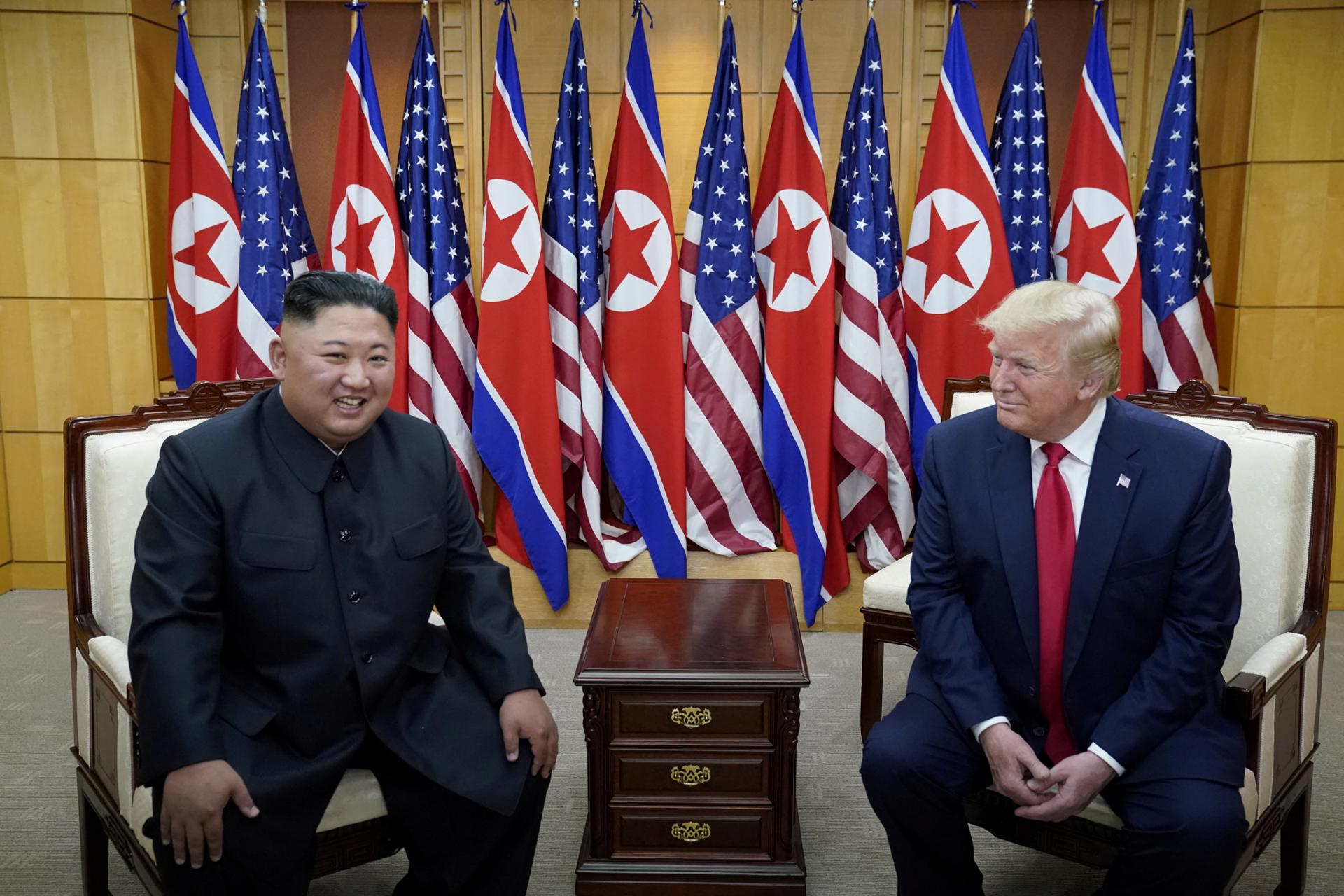
WASHINGTON — South Korea and the United States must address the "political fallout" of President Donald Trump's decision to scale back their joint military exercises before any new diplomacy with Pyongyang can succeed, an expert warned Friday.
Ankit Panda, a senior fellow in the nuclear policy program at the Carnegie Endowment for International Peace, made the case in an article released by the Bulletin of the Atomic Scientists, a nonprofit research group. He argued that the "unnecessary crisis" between the allies has created a roadblock to a coordinated approach toward North Korea, and that Trump should focus on "coexistence" with the North rather than denuclearization should diplomacy with North Korean leader Kim Jong-un materialize.
"The unnecessary crisis with South Korea caused by the president's instincts to both seek engagement with Kim without understanding North Korea's position — and to punish Seoul for its perceived distance on U.S. policy toward Iran — has created a roadblock to a coordinated approach between the two allies," Panda said.
"If there is to be any productive engagement with Kim, it will require Washington and Seoul to immediately address the political fallout of the president's impulsive decision to scale back exercises," he added.
Panda noted that given South Korean President Lee Jae Myung's own interest in engaging Pyongyang — Lee took office in June and has pledged to improve inter-Korean ties — Trump's bid to meet Kim might have received greater support had the crisis not affected the alliance.
Trump announced the reduction in a social media post on Sunday, saying he had ordered the Pentagon to "substantially reduce" South Korea-U.S. military drills. He cited his "very good" relationship with Kim while expressing frustration with South Korea, which he said had rejected his request for assistance in the U.S. war against Iran.
The decision was seen as a conciliatory gesture toward Pyongyang, which has long decried the allied exercises, including the summertime Ulchi Freedom Shield drills, as rehearsals for war. But the move has also raised concerns that it could undermine efforts to sharpen deterrence against growing North Korean threats. The United States stations about 28,500 troops in South Korea, and combined training with South Korean forces has long been a core element of the allies' defense posture.
Panda underscored the need for Trump to focus on "coexistence" with North Korea rather than denuclearization, noting that Kim has categorically ruled out giving up his nuclear weapons since 2022, when North Korea enacted a law enshrining its status as a nuclear weapons state, though he previously maintained the possibility of conditional denuclearization.
In particular, Panda pointed out that amid multiple U.S. military campaigns to remove leaders in Iran and Venezuela over the past year, the North Korean leader's interest in the survival of his regime is "more, not less, tied to his growing nuclear capabilities."
"The overarching goal of such engagement should be to work toward stability and to recognize that the United States will have to coexist with a nuclear-armed North Korea for some time," he said.
"In private, Washington and its allies can still maintain their long-term objective of denuclearizing North Korea. But they will need to recognize that this would require a fundamental transformation of the Northeast Asian security environment."
His remarks came amid speculation that Trump could pivot toward short-term goals short of North Korea's denuclearization — such as arms control, tension reduction and risk management — given that Pyongyang's full nuclear disarmament remains elusive.
Trump held three in-person meetings with Kim during his first term: the first in Singapore in June 2018, the second in Hanoi in February 2019 — which ended without a deal after the two sides failed to bridge differences over sanctions relief and the scope of disarmament — and the last at the inter-Korean border village of Panmunjom in June 2019. No meeting between the countries' leaders has taken place since.
