Constitutional Scholar: Trump's 'Donroe Doctrine' Distorts the Historical Monroe Doctrine
Key Takeaways
- •Trump has repeatedly suggested a possible invasion of Cuba while citing the Monroe Doctrine as legal justification.
- •Katherine Yon Ebright argued that the Monroe Doctrine was intended to oppose European intervention, not support U.S. dominance in Latin America.
- •Ebright said the doctrine does not diminish Congress’s constitutional authority over decisions to declare war.
- •The article notes that the War Powers Resolution requires presidential notification to Congress within 48 hours of hostilities and withdrawal within 60 days without authorization.
- •Ebright said Trump’s approach has strained relations with Congress, U.S. allies and regional partners.
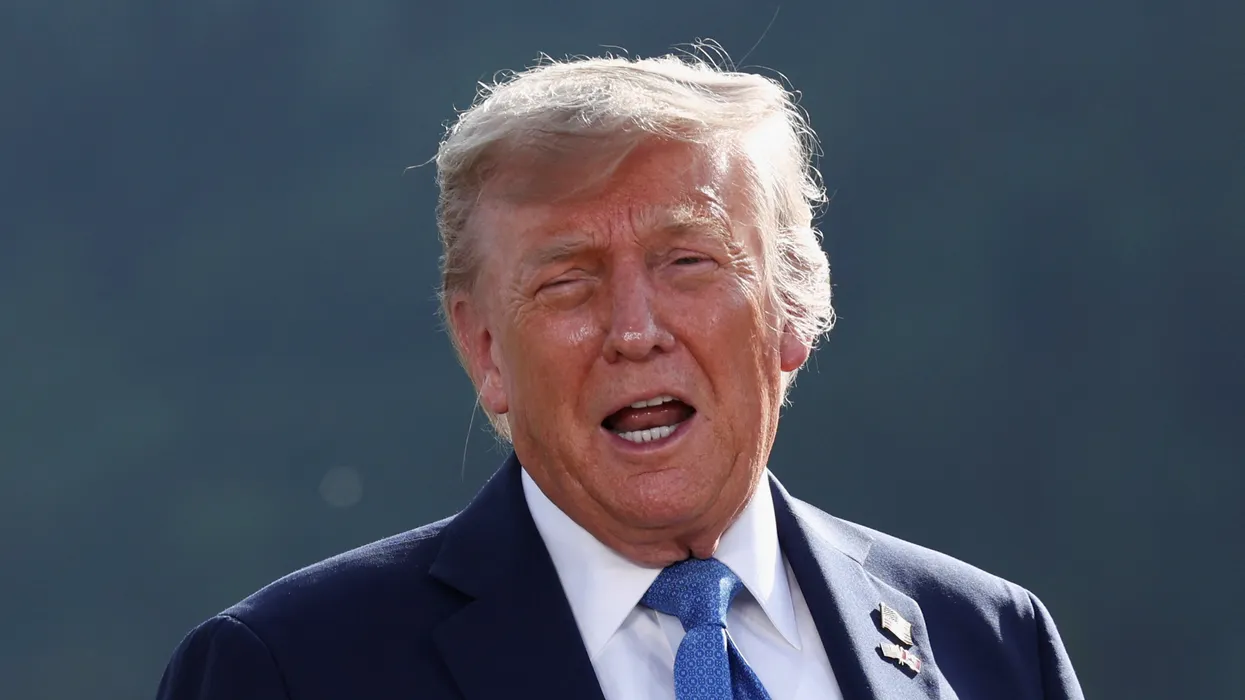
President Donald Trump has repeatedly suggested that he may invade Cuba, asserting that the 1823 foreign policy framework known as the Monroe Doctrine grants him the authority to do so. However, a constitutional law and foreign policy expert argues that his self-styled "Donroe Doctrine" fundamentally distorts President James Monroe's historic policy.
Katherine Yon Ebright, counsel in the Brennan Center for Justice's Liberty and National Security Program—a nonpartisan law and policy institute at NYU School of Law—laid out her analysis in an article for Lawfare. "In Trump's view, and that of the Monroe Doctrine's detractors on the progressive left, the long-standing policy supports U.S. dominance over Latin America and the use of military force to achieve political and economic goals," Ebright wrote. "That view, however, misreads the Monroe Doctrine's purpose and ignores its history. The historical record instead supplies strong precedents for war powers constraints, not presidential aggrandizement in matters of war."
Ebright explained that Monroe articulated the doctrine during an 1823 message to Congress aimed at protecting Western Hemisphere nations from European imperial powers such as Austria, Prussia, and Russia. Throughout its history, the Monroe Doctrine was invoked to liberate Cuba from Spain and to prevent Venezuela from falling under British control. It was never intended, she emphasized, to legitimize American imperial expansion. Even when presidents such as William McKinley waged war to liberate Cuba and the Philippines, they generally sought to guide those nations toward self-governance. Nor did the doctrine commit the United States to military action against Western Hemisphere nations at a president's discretion. The doctrine's most controversial expansion came decades later, when President Theodore Roosevelt appended his 1904 Corollary asserting a U.S. right to intervene in Latin American affairs—a reinterpretation that drew the very kind of criticism Ebright says is now being misapplied to Monroe's original text.
"Those who seek to aggrandize presidential power or to critique the Monroe Doctrine often note that the message does not foreclose U.S. intervention, as opposed to European intervention, in Latin America," Ebright wrote. "But this glosses over the message's disavowal of U.S. adventurism and its recognition of Latin American independence based 'on just principles.'"
She further noted that this interpretation disregards the stance of Monroe's secretary of state and the doctrine's principal architect, John Quincy Adams. Two years before the doctrine was proclaimed, Adams famously declared that the United States "goes not abroad in search of monsters to destroy." Adams championed a policy of nonintervention, crediting it with keeping the nation out of wars that would "usurp the standard of freedom," "insensibly change [U.S. policy] from liberty to force," and transform America into "the dictatress of the world."
Regarding constitutional war powers, Ebright added: "Moreover, the Monroe Doctrine had no bearing on the distribution of war powers between Congress and the president. Nowhere in his message did Monroe cast doubt on Congress's constitutional primacy in matters of war or on the founders' concern that the president was 'not safely to be trusted' with the power of war." The Constitution vests the power to declare war in Congress, and the 1973 War Powers Resolution was enacted specifically to reassert that authority by requiring presidents to notify Congress within 48 hours of introducing armed forces into hostilities and to withdraw them within 60 days absent congressional authorization.
After examining the doctrine's history and its legal implications for U.S. foreign policy, Ebright concluded that the so-called Donroe Doctrine produces outcomes diametrically opposed to those the Monroe Doctrine was designed to achieve.
"Trump's contrary approach has led to half a dozen War Powers Resolution votes; dissent among military lawyers; the unprecedented departure of a top military commander; regional condemnation of U.S. military operations; and allies' withdrawal from long-standing intelligence-sharing and military cooperation arrangements," Ebright wrote. "Far from reviving Monroe's 'Era of Good Feelings'—the period of relative national unity and diminished partisan strife that characterized Monroe's presidency—Trump's uses of military force have strained relations with Congress and U.S. allies alike, the very outcomes the Monroe Doctrine's framers, and a century of practice under it, were designed to avoid."

