Report Details Trump DOJ Pressure on Veteran Immigration Judge Amid Staffing Crisis
Key Takeaways
- •The Justice Department fired about 100 of the country's roughly 700 immigration judges during the first year of Trump's second term and began replacing them with appointees the administration called 'deportation judges.'
- •Donoso Stevens, 53, was Annandale's most tenured detained judge, a former Homeland Security prosecutor who joined the bench in 2016 and consistently decided cases in line with national averages.
- •Stevens alleges that a supervisor ordered her to reverse four rulings at the direction of unidentified 'higher-ups,' and that such interference escalated over time.
- •She was told by acting assistant chief immigration judge Robert K. Lundberg that she would remain on the bench but would no longer oversee cases involving migrants in detention.
- •Her allegations, corroborated by contemporaneous notes and interviews with colleagues, family, and attorneys, contradict officials' claims that immigration judges serve as independent arbiters of justice as the law requires.
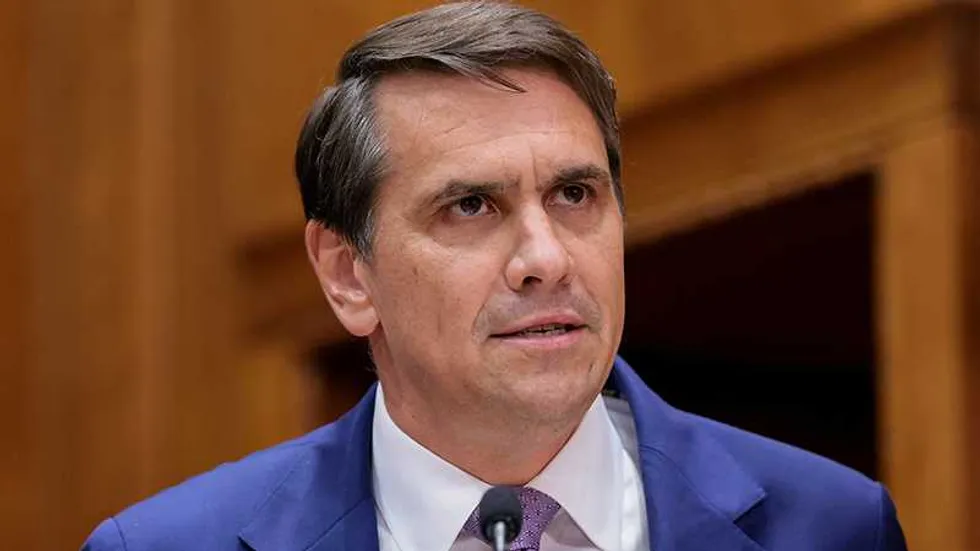
President Donald Trump's Justice Department has been losing staff at a rapid pace — through mass firings and through departures driven by plummeting morale. Yet according to a new report, the department has not only failed to reverse the trends behind its staffing crisis; it has also pressured one of its top immigration judges into leaving her job, at a time when the administration's immigration policies are already widely criticized as cruel.
Immigration judges — Justice Department employees who rule on asylum claims and decide the cases of migrants in custody — hold a role in which those decisions can determine whether someone is granted asylum or deported.
John Woodrow Cox of The Washington Post reported on Sunday that the department had moved against even its most established immigration judges.
"And yet, in the first year of Trump's second term, the Justice Department fired some 100 of the country's roughly 700 immigration judges and began to replace them with what the administration called 'deportation judges,'" Cox wrote. The firings he described amount to roughly one in seven of the nation's immigration judges — turnover that, together with the new appointments, is changing the makeup of the bench deciding those cases.
Cox added, "Donoso Stevens, 53, should have been insulated from the institutional chaos, according to fellow judges and attorneys whose cases she oversaw. Before joining the bench in 2016, she'd spent a decade at Homeland Security, earning a reputation as a formidable prosecutor. She was Annandale's most tenured 'detained judge,' one of three who decided what to do with migrants in custody, the court's highest-stakes cases."
The Post journalist went on, "Every year, Donoso Stevens had denied asylum in more than half the applications that came before her, a record consistently in line with national averages. She hadn't resisted case quotas imposed by the first Trump administration and seldom took sick leave. She never fell behind on her docket."
He continued, "But on that morning in Northern Virginia, she feared none of it mattered. By then, Donoso Stevens said, another supervisor had already ordered her to reverse four rulings at the direction of unidentified 'higher-ups,' a violation of judicial authority she once considered inconceivable. The interference, she said, had only escalated since."
Cox explained that the allegations are being made public now, for the first time, to illuminate the Trump administration's actions.
"The allegations, which she's sharing publicly for the first time because of her deep concern for the court's integrity, were corroborated by her extensive contemporaneous notes as well as colleagues, family and private attorneys interviewed by The Washington Post," Cox wrote. "They contradict Trump officials' insistence to the public and to The Post that — as required by law — immigration judges serve under the administration as independent arbiters of justice." Her allegations thus reach beyond a single courtroom, touching the independence that — as officials themselves emphasized to The Post — the law requires of immigration judges.
Cox then wrote, "Outside her courtroom, Donoso Stevens tried to make sense of what was happening. She would remain on the bench but no longer oversee cases for migrants in detention, she was told by Robert K. Lundberg, Annandale's acting assistant chief immigration judge, a largely administrative role he'd been moved into a week earlier."

