Trump Defense Expansion Tied to Critical Minerals Push, Military AI and Inner-Circle Deals
Key Takeaways
- •Trump’s proposed 2027 defense budget is US$1.5 trillion, nearly double the 2023 level, according to the cited White House fact sheet.
- •The article says U.S. operations in Iran and other countries have drawn down major munitions stockpiles, increasing demand for critical minerals used in weapons systems.
- •The Pentagon has awarded major contracts for cloud computing, AI programs and data centers, with firms such as Palantir and Anduril seeing rapid growth in defense work.
- •The article alleges that Trump family members and associates have gained access to Pentagon contracts and mineral-related investments during the administration’s military expansion.
- •The source says critical mineral extraction is associated with environmental harm, human rights abuses and risks for Indigenous communities.
A proposed US$1.5 trillion defense budget and a widening hunt for critical minerals have become central features of President Donald Trump’s second-term military agenda, according to the source article and a recently released Oakland Institute report. The article argues that the United States is pursuing critical minerals with an urgency once associated with oil, while military decisions are creating financial opportunities for Trump’s allies, friends and family members.
On February 28, the United States and Israel began a bombing campaign in Iran that killed more than 3,000 people in 39 days, the majority of them civilians, according to the source. Trump campaigned on “ending wars,” but the article says he has expanded military interventions and escalated new conflicts. In the first 11 months of his second term, Trump has bombed seven countries: Iran, Iraq, Nigeria, Somalia, Syria, Venezuela and Yemen. He also threatened to take over Greenland by force to build missile defense bases and mine for minerals, a move that drew concern from allies, according to PBS NewsHour.
The article says the administration’s military operations have increased pressure on weapons inventories. Military action in West Asia, particularly the war with Iran, has depleted munitions faster than defense manufacturers can replace them. The United States used more than 45% of its Precision Strike Missiles, about half of its THAAD and Patriot PAC-3 interceptors, nearly one-third of its Tomahawks and more than one-fifth of its JASSMs in the war with Iran, according to reporting cited by the source. Those weapons rely heavily on critical minerals, increasing the demand for supplies to rebuild stockpiles.
The Oakland Institute report identifies the military-industrial complex as a key driver of the current race for critical minerals. U.S. military spending is rising quickly, and the demand for critical minerals is rising with it. Trump’s proposed 2027 defense budget is US$1.5 trillion, almost twice the 2023 level, according to a White House fiscal year 2027 topline fact sheet. The article says a budget of that size indicates plans for additional military expansion and campaigns. To support that growth, up to US$100 billion was allocated to the Department of War by Trump’s “One Big Beautiful Bill Act” for critical minerals production, related industries and associated projects.
The record-high military budget is also tied to a shift toward advanced technology. The military is expanding its capabilities under a plan for an “AI-first warfighting force.” The Trump administration has said its priority is to secure critical minerals for “vital national security and economic activities, including rising military threats and growing high-tech industries, such as artificial intelligence, data centers, nuclear energy, and new energy technologies,” according to a White House presidential action. In that framing, mineral access, weapons production, AI infrastructure and energy systems are being treated as connected national-security priorities rather than separate policy areas.
The source describes an emerging network linking government agencies, technology and AI companies, mining firms, venture capital funds and military institutions around the shared goal of securing critical minerals and advancing the use of AI in warfare.
In 2022, the Pentagon awarded US$9 billion in contracts to Google, Oracle, Microsoft and Amazon to develop and manage the U.S. military’s cloud computing infrastructure. Since 2016, the Department of War has administered US$75 billion to AI-driven programs and another US$9 billion to data centers, according to the source. Since 2020, Pentagon contracts with AI firms have grown sharply, with Palantir Technologies and Anduril Industries recording the fastest growth.
Palantir was the lead contractor on the Maven Smart System, which enabled the U.S. military to process large volumes of data and rapidly select targets on the battlefield. The United States used Maven in Iran, Iraq, Syria, Ukraine and Yemen despite serious concerns about the system’s accuracy, according to the article. The Pentagon has not answered whether AI systems such as Maven played a role in the massacre at Shajareh Tayyebeh Girls School in Iran, where the United States bombed the site and killed 156 people, most of them young schoolgirls, according to the source and reporting cited by it.
The expansion of the military-industrial complex has also created opportunities for people close to Trump to profit, the article says. Business partners, family members, close friends and associates have obtained government contracts and preferential access to military and mineral ventures. The overlap matters because the article presents defense procurement, mining access and private investment as moving through the same policy environment, where public spending and strategic resource decisions can shape commercial opportunities.
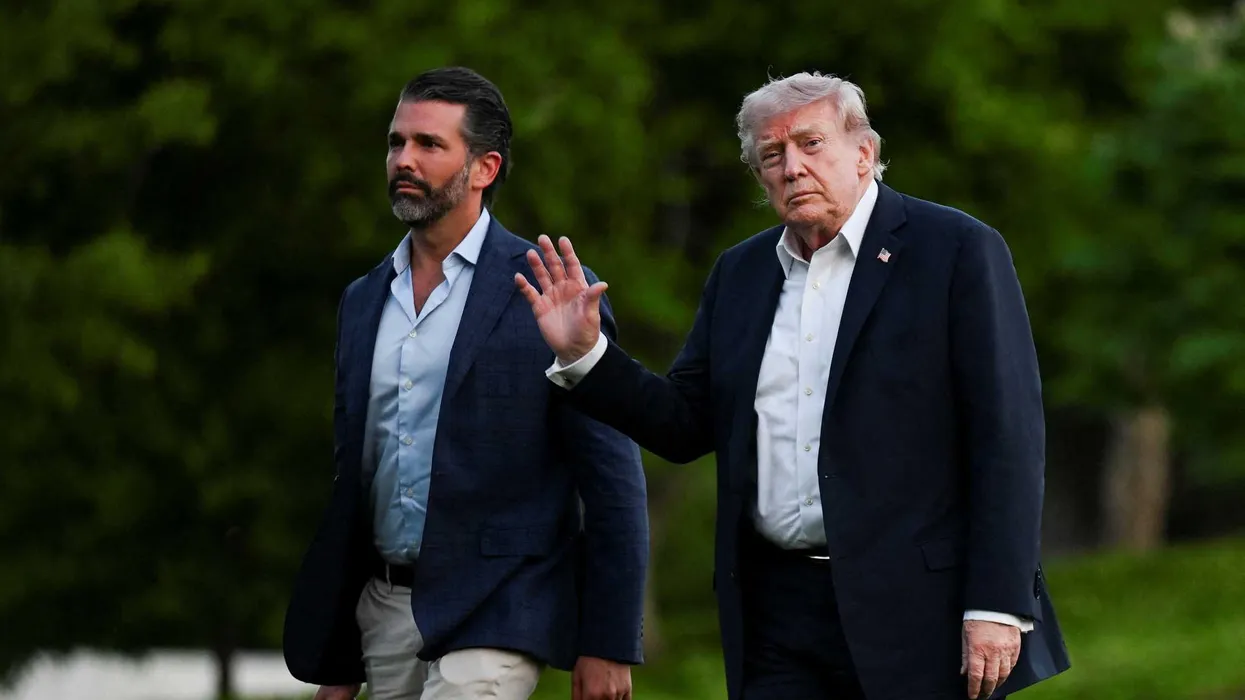
Donald Trump Jr. was heavily involved in selecting candidates for Pentagon jobs in 2025, according to the source. Soon afterward, companies in which his firm, 1789 Capital, had invested — including Vulcan Elements, Firehawk Aerospace, SpaceX and Anduril — secured Pentagon contracts, according to ProPublica. Trump’s sons are also proprietors of a shell corporation that invested in Cove Capital, a New York-based mining investment group working on a US$1.6 billion tungsten project in Kazakhstan that was granted by the Trump administration. U.S. Sen. Elizabeth Warren (D-Mass.) called the arrangement “corruption in plain sight.”
The source argues that increased access to critical minerals allows Trump to expand the war machine while creating avenues for profit. A leaked March 2026 U.S. State Department memo included a proposal to withhold lifesaving HIV assistance to Zambia if its government denied access to the country’s critical minerals, according to The New York Times.
The article also says the U.S. pursuit of critical minerals carries serious consequences for land and Indigenous communities. The Intergovernmental Panel on Climate Change, or IPCC, has warned that mining has “severe environmental impacts” and “often […] few if any redistributive benefits for communities in regions where extraction takes place.” Rather than producing local development, the extraction of strategic minerals has been linked to violence, human rights abuses and conflict. The source says these consequences have not been a priority for the Trump administration, and that conflict and destabilization can help secure access to and control over critical minerals, as seen in Congo.
The article concludes that the alignment among government, technology and AI companies, mining firms, venture capital and military institutions should be treated as an urgent global concern. It says the hunt for critical minerals will deepen extractivism, militarization and geopolitical competition at a time when governments should be focused on ending conflicts, securing peace and cooperating internationally to address climate change. The source also says the administration has reduced funding for sectors including education, climate change, healthcare and science while pursuing critical minerals and strengthening the war machine.

