Trump's Air Force One Decoy Revelation Undercuts Administration Claims of Air Dominance Over Iran
Key Takeaways
- •The Trump administration claimed in March 2026 that the United States had established 'uncontested airspace' over Iran, with President Trump asserting Iran possessed no anti-aircraft systems, radar, or military spotters.
- •Iran successfully shot down two distinct American aircraft — an F-15E fighter jet and an A-10 Thunderbolt — within hours of each other, indicating that Iranian air-defense capabilities remained operational.
- •The Strait of Hormuz, through which approximately one-fifth of global oil consumption normally transits, remains closed despite the U.S. deploying more than 20 warships to maintain a regional naval presence.
- •Trump's reported decision to use a decoy Air Force One aircraft suggests ongoing concerns about Iran's ability to threaten U.S. assets, contradicting earlier claims of Iranian military weakness.
- •Commentators including CNN's Aaron Blake and former Naval War College professor Tom Nichols have accused the administration of deliberately misleading the public about the conduct and trajectory of the Iran war.
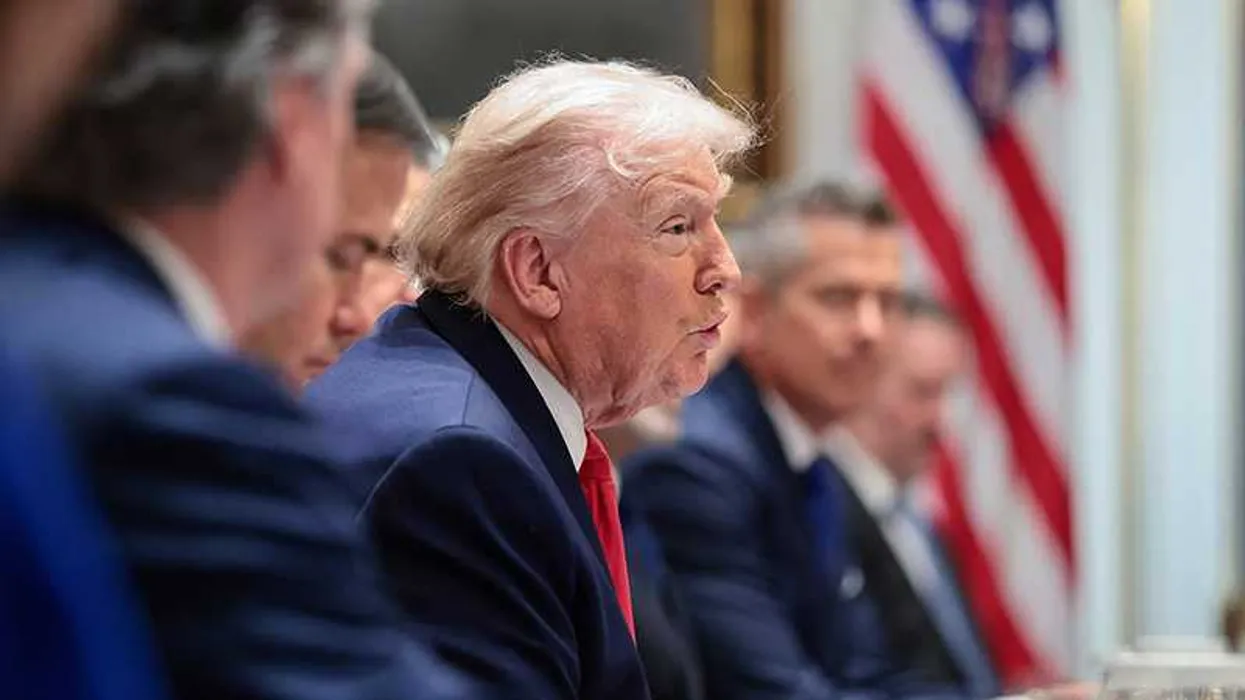
A recent report regarding President Donald Trump's use of a decoy Air Force One aircraft has inadvertently exposed a discrepancy in the administration's prior assertions about Iran's military capabilities and the degree of U.S. control over Iranian airspace. The disclosure adds to a growing body of evidence that the official portrayal of the Iran conflict may diverge materially from conditions on the ground, raising questions about public accountability in an active military campaign.
In March 2026, the administration, including Secretary of Defense Pete Hegseth, asserted that the United States had rapidly established "uncontested airspace" over Iran and achieved total aerial dominance.
"This is not [an] endless nation-building ... quagmire — it's not even close," Hegseth stated during a March 10 briefing. "Our generation of soldiers will not let that happen again, and nor will this president — who very clearly ran against ... never-ending, nebulously scoped missions; those days are dead. Instead, we're winning decisively with brutal efficiency, total air dominance and an unbreakable will to accomplish the president's objectives on our timeline."
"We literally have planes flying over Tehran and other parts of their country; they can't do a thing about it," Trump claimed on March 24.
As TIME reported in April, Trump stated that Iran doesn't "have any spotters, they don't have anti-aircraft, they don't have radar." He added that U.S. aircraft were "just floating over the top looking for whatever we want, and we're hitting it."
However, two American aircraft were downed within hours of each other. An F-15E fighter jet — a precision-strike platform designed to operate in contested airspace — was shot down over southern Iran on the same day that the Iranian military claimed it had brought down an A-10 Thunderbolt, a heavily armored ground-attack aircraft, with a surface-to-air missile near the Strait of Hormuz. The loss of two such distinct platforms in a single day suggested that Iranian air-defense systems remained operational at a level inconsistent with the administration's characterizations. The U.S. subsequently launched an urgent search and rescue mission.
CNN's Aaron Blake noted on X that Trump's recent disclosures about Air Force One provide further evidence that the United States lacks control over Iran or its airspace.
"It sharply undercuts what Trump and Hegseth claimed about Iran's capabilities. They have said Iran had no ability to shoot down aircraft, citing 'uncontested airspace.' That's a far cry from fearing Iran could take down AF1 over Turkey," Blake wrote.
Trump has previously claimed that Iran has "no navy," "no military," "no air force," and "no anti-aircraft systems." Yet Iran has reportedly been able to prompt Trump to fly in a decoy plane, and the Strait of Hormuz remains closed. The strait is one of the world's most critical maritime chokepoints, through which roughly a fifth of global oil consumption normally transits, making its continued closure a significant disruption to international energy shipping lanes. This persists despite the U.S. deploying more than 20 warships to the Middle East region to maintain a naval presence, as U.S. Central Command posted on X in July.
Former Naval War College Professor Tom Nichols, writing in The Atlantic in July, argued that the American public deserves to know the truth about the conduct of the war, and that these inconsistencies are part of a broader effort by the administration to conceal its missteps.
"This opacity seems to be by design: The president and his lieutenants appear unwilling to admit that they started, and are now losing, a war with one of America's most dedicated enemies, and obfuscating probably seems less damaging than admitting this painful truth. Of course, some of their statements are merely mistakes. Some are spin. Others are exaggerations. But many of them are flat lies that Trump and his appointees dump into the public square seemingly without hesitation," Nichols wrote.
