Trump Pledged to Erase the National Debt in One Term; Atlantic's Frum Says It Grew by $10 Trillion Instead
Key Takeaways
- •During his 2024 campaign, President Trump pledged to eliminate the U.S. national debt within a single term without cutting Social Security or Medicare, relying instead on economic growth, cryptocurrency, and tariffs.
- •Frum calculates that offsetting the roughly $1.8 trillion 2024 budget deficit through tariffs would have required a 55 percent levy on all $3.3 trillion of U.S. goods imports.
- •The Yale Budget Lab estimates that DOGE's reduction of IRS auditing staff by nearly one-third will cost the Treasury more than $860 billion in revenue over the next decade.
- •Frum's accounting shows Trump's budget plans netting $3.4 trillion in direct costs over the coming decade, rising to $4.1 trillion when increased debt service is included.
- •The Social Security trust fund is now projected to be exhausted in 2032, which would force either major tax increases or deep benefit cuts.
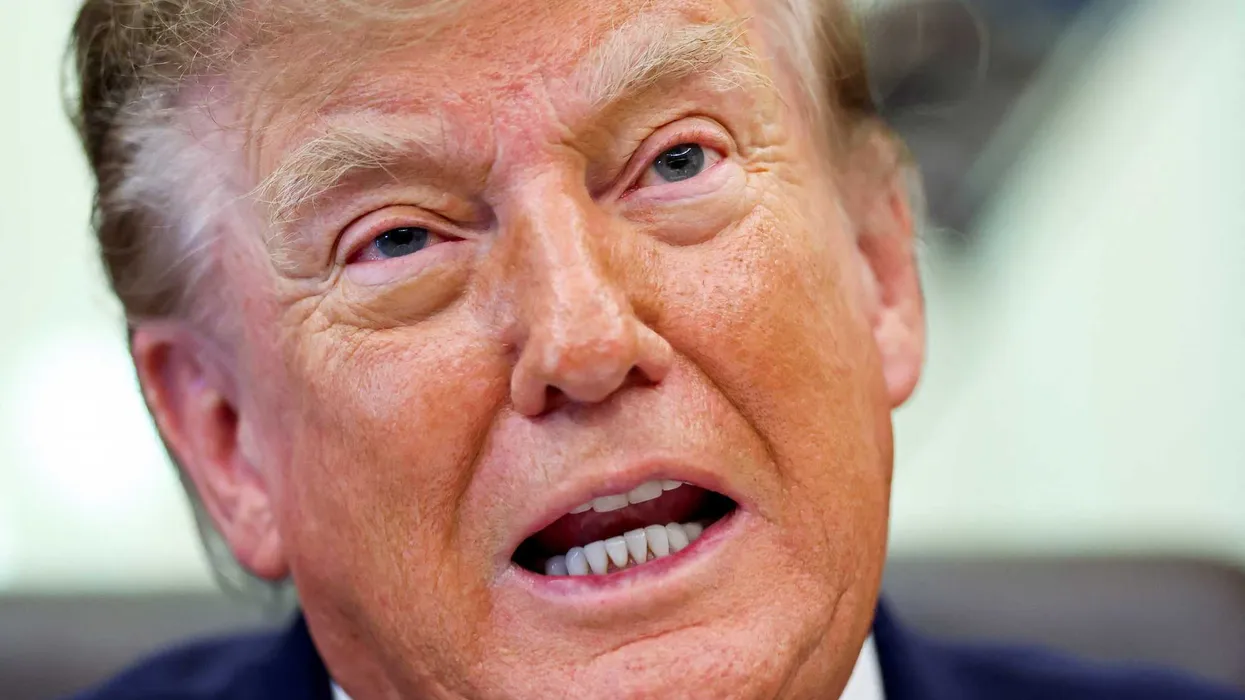
During his 2024 campaign, President Donald Trump pledged to eliminate the entire U.S. national debt within a single term, insisting he do so without cutting "one penny" from Social Security or Medicare. Instead, he suggested the debt could be wiped out through economic growth, cryptocurrency, and tariffs. Writing in The Atlantic and highlighted in a report by Alternet, columnist David Frum argues that those plans amounted to little more than "absurd" "fantasies" — and that the bill has now come due with potentially disastrous consequences.
Frum's core argument, laid out in his Atlantic column, is that "Basic budget math contradicted Trump's fantasies."
"The United States imported about $3.3 trillion in goods in 2024," he writes. "The budget deficit for that year was about $1.8 trillion. To imagine that tariffs could eliminate the budget deficit required believing that the Trump administration would impose a 55 percent tariff on all imports — including oil, natural gas, and electricity — and that consumers would pay this tariff without altering their buying behavior at all. That was all obviously absurd."
Frum describes Trump's "Plan B" as an effort to have Elon Musk balance the budget through the Department of Government Efficiency (DOGE), which promised to slash $2 trillion from federal spending. That venture, he argues, "not only likely violated the Constitution but also almost certainly worsened the deficit. DOGE reduced the IRS auditing staff by nearly one-third. The Yale Budget Lab estimates that the ensuing collapse in federal enforcement efforts will cost the Treasury more than $860 billion in revenue over the next decade."
The scale of the problem comes into focus in historical context: the U.S. debt reached $10 trillion for the first time during the 2008 financial crisis, a level once regarded as a crushing burden. Frum observes that Trump's "fiscal recklessness" has now tacked on another $10 trillion in just four years.
In Frum's accounting, the drivers are straightforward. Trump's tax cuts will reduce government revenues by $4.5 trillion over the next decade, while his cuts to food stamps and Medicaid trim spending by just $1.1 trillion. Taken together, his budget plans net out to $3.4 trillion in direct costs over the decade ahead — a figure that climbs to $4.1 trillion once the rising cost of debt service in the Trump era is factored in. Debt service — the interest owed on the government's accumulated borrowing — compounds the total, since each year's shortfall enlarges the balance on which interest comes due.
The administration's central remedy — substituting tariffs for other government revenue — proved not only economically unrealistic but also illegal, Frum writes. "Tariffs are taxes, and taxes must be voted for by Congress, according to the Constitution," he explains. "Congress delegated some emergency tariff authority to the president, but not enough to create a permanent new scheme of revenue. The Supreme Court confirmed this basic rule in February 2026."
Looking ahead, Frum warns that "The situation will continue to get worse." Trump's war on Iran has cost at least $45 billion so far, and the Pentagon has requested hundreds of billions of dollars more. The president's fiscal 2027 budget seeks $1.5 trillion for the U.S. military, an increase of 44 percent from pre-Iran-war levels.
Meanwhile, Trump's One Big Beautiful Bill Act reduced income taxes on Social Security benefits, and inflation on Trump's watch has driven increases in the program's cost-of-living adjustment. As a result, the Social Security trust fund — the reserve that supplements the program's ongoing tax revenue — is now projected to be exhausted in 2032, the point at which incoming revenue alone would fall short of scheduled benefits, forcing either major tax increases or deep benefit cuts.
For Frum, all of this leads to one unavoidable conclusion: Trump "has managed to wreck the country's finances worse than any government in U.S. history."

