Trump's Washington Makeover Projects Have 'No Precedent in US History,' Says NYT's Maggie Haberman
Key Takeaways
- •Maggie Haberman and Jonathan Swan interviewed President Trump at the White House in March for their new book examining his second presidency.
- •Haberman stated that Trump appeared more focused on Washington renovation projects than on the Iran war during their March visit, which occurred roughly two weeks after the conflict began.
- •Trump's proposed projects include a new White House ballroom, a triumphal arch near Arlington National Cemetery, and placing his brand on the Kennedy Center.
- •Haberman characterized the scope of Trump's self-named projects as unprecedented for a sitting U.S. president.
- •Polls indicate that voters are primarily concerned about the economy, inflation, and the Iran war with the 2026 midterm elections less than three months away.
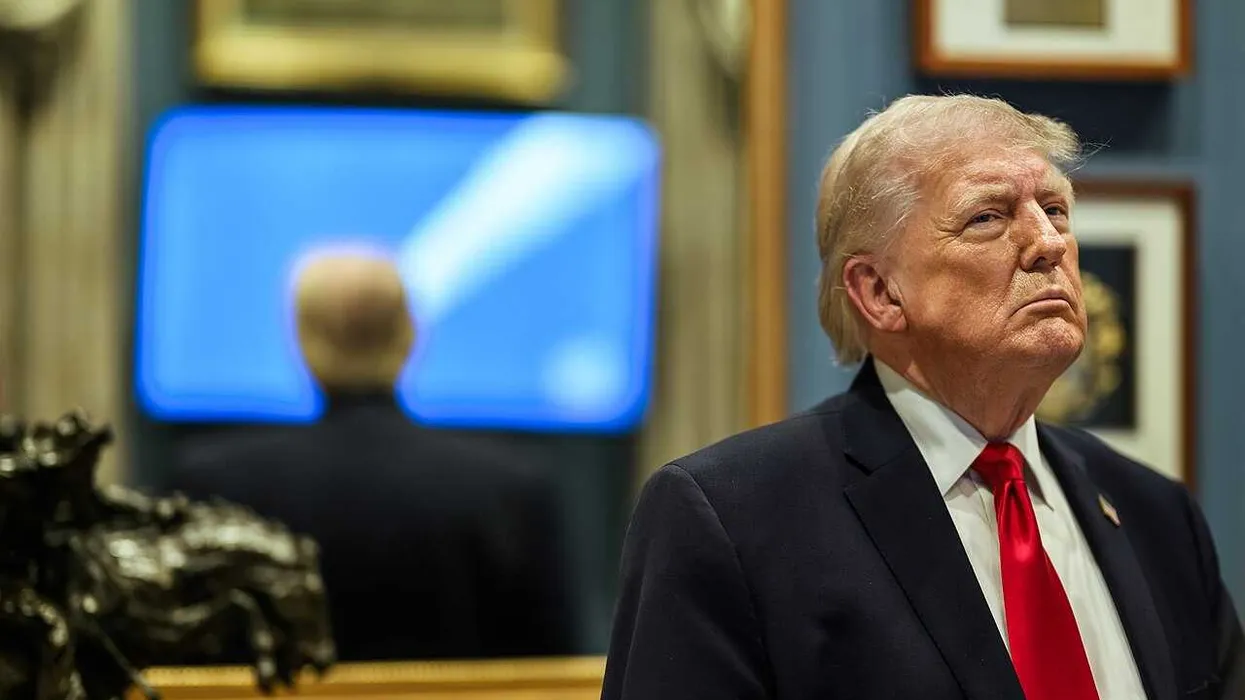
With the 2026 U.S. midterm elections under three months away, polls indicate that voters are most concerned about the economy, inflation, and the Iran war. Yet according to New York Times reporter and author Maggie Haberman, President Donald Trump is devoting considerable attention to something far removed from those voter priorities: makeover and renovation projects across Washington, D.C.
Haberman laid out her observations during an interview with Axios' Mike Allen, part of a broader media tour promoting her new book, "Regime Change: Inside the Imperial Presidency of Donald Trump," co-authored with fellow journalist Jonathan Swan. The book offers an in-depth examination of Trump's second presidency.
"He is spending a huge amount of energy, mental and otherwise, on these renovation projects, beautification projects around Washington, and then monuments to self," Haberman told Allen. "(There) is no precedent in U.S. history of a sitting president devising such endeavors in their own name…. What interests him are things that you can see and touch."
Haberman and Swan interviewed Trump at the White House in March for their book. She stressed that, during that visit, the D.C. renovation projects appeared to rank as a higher priority for the president than the Iran war, which had been launched in late February.
"It was very clear what his mind was on while we were there. And what it was not really on was the war…. He didn't really want to talk about that," Haberman recounted. "He didn't really want to talk about policy specifics. He wanted to describe himself as winning. And he wanted to show us how he had remade Washington."
Trump's proposed projects in and around the capital span a range of ambitions, from a new White House ballroom to a "triumphal arch" near Arlington National Cemetery. He has also made it a priority to imprint his brand on the Kennedy Center. The scale and visibility of those plans help explain why they have drawn attention beyond architectural taste: they would place a sitting president's name and preferences directly onto federally significant spaces that are already tied to institutional history and public symbolism.
Describing the March Oval Office interview to Swan, Haberman recalled: "You would think that on the 17th day of the war, that he would have maps of the Middle East or maps of troop deployments — who knows. He picks up these pictures, and (they're) of maple trees. And he says: 'I am choosing maple trees for the White House. I am good at picking trees.'"
"I'm paraphrasing here, but that is pretty much what he said," she added. "Under that were designs of the ballroom. And he starts talking to us about the columns and how some of the columns are evocative of Rome. And then on the other side, the columns are evocative of Athens. And he's happy that they are a little bit either wider or more spaced apart or both than the columns at the Supreme Court. And that was like the first 15 minutes of this hour that we had."
Those details underscore the central contrast Haberman is drawing in her book: while Trump continues to project a focus on winning and visible change, the White House renovations and related projects have become part of the public record around how he is choosing to use presidential attention and time during his second term.

