Architecture Critic Paul Goldberger Warns Trump's Proposed 'Arc de Trump' Would Permanently Alter Washington DC
Key Takeaways
- •Pulitzer Prize-winning architecture critic Paul Goldberger condemned the proposed "Arc de Trump" in a New York Times opinion piece, calling it a gaudy structure that would destroy a historic open vista connecting the Lincoln Memorial to the Civil War dead.
- •The Trump administration is seeking to revise Section 106 of the National Historic Preservation Act to give federal agencies exclusive discretion over whether public participation is deemed useful in historic preservation decisions.
- •Despite receiving tens of thousands of predominantly negative public comments, the Commission on Fine Arts and the National Capital Planning Commission approved both the ballroom and arch projects.
- •The failed Reflecting Pool reconstruction was assigned to the manager of one of Trump's golf clubs rather than a qualified engineer or architect, and Prosecutor Jeannine Pirro later acknowledged the evidence pointed to incompetence rather than the sabotage Trump had alleged.
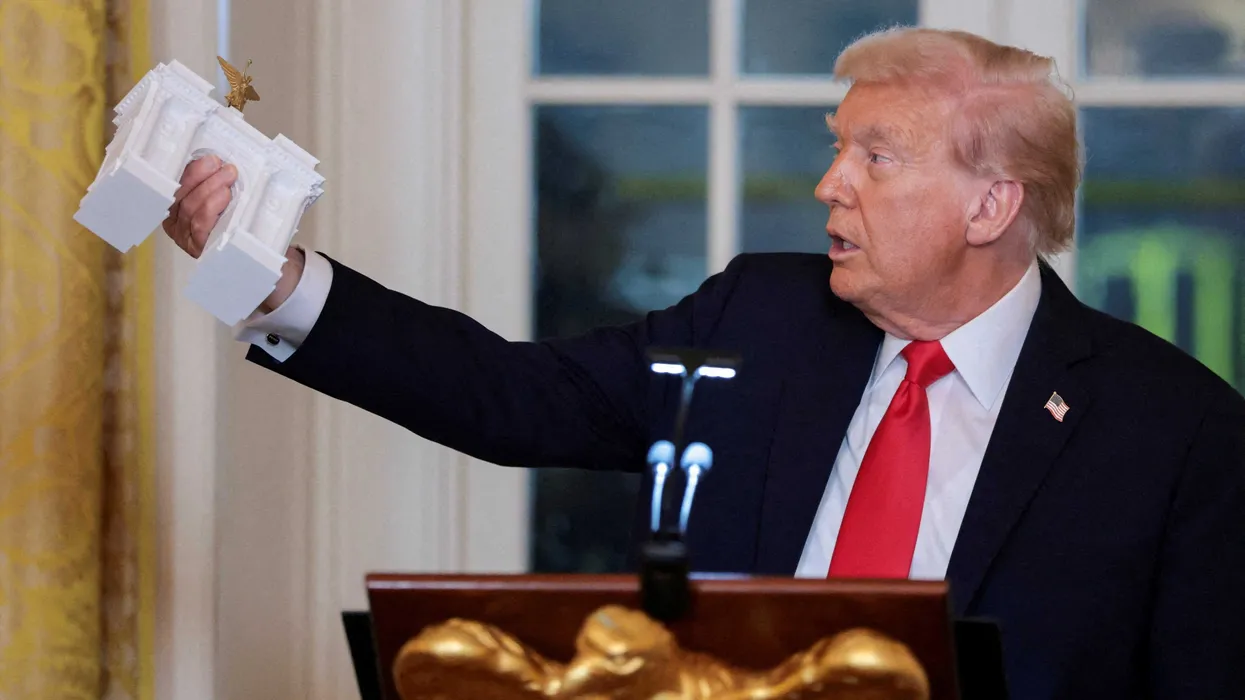
President Donald Trump's series of Washington DC renovation projects has generated significant controversy, ranging from the demolition of the White House's East Wing and West Wing Colonnade to the failed reconstruction of the Reflecting Pool. Now, a prominent architecture critic is raising alarms about further planned alterations to the nation's capital — changes that, despite widespread public opposition, may prove exceedingly difficult to reverse.
In an opinion piece published Sunday in The New York Times, architecture critic Paul Goldberger — a Pulitzer Prize winner and former dean of the Parsons School of Design who has long been considered one of America's leading voices on architecture and urbanism — offered a sharp assessment of the proposed monument. "The proposed 'Arc de Trump' in Washington is less a monument than a gaudy construction the height of a skyscraper — a travesty that, if built, would dramatically change the landscape of the nation's capital," Goldberger wrote.
Goldberger suggested that the urgency behind the project is strategic. "This is probably why President Trump is so eager to get it made as fast as he can. It would be an unavoidable monument to a presidency and a man whom many Americans would rather not honor so conspicuously, if at all. He understands that once it is there, it will be hard to for anyone to make it go away."
At the center of the controversy is the Trump administration's effort to revise Section 106, a provision of the National Historic Preservation Act of 1966 that requires federal agencies to consider the effects of their undertakings on historic properties and to afford the public a voice in decisions affecting Washington DC's monuments and landmarks. The administration is seeking to make these revisions through the Advisory Council on Historic Preservation, an independent federal agency that oversees the Section 106 process, and a board Goldberger says has been stacked with Trump's supporters.
"The Trump administration's revised version of Section 106 replaces 'the views of the public are essential to informed Federal decision making' with a statement that says the government will have 'exclusive discretion to determine the usefulness of public participation' — in effect saying that federal agencies can do as they please," Goldberger wrote.
He noted that despite overwhelming public opposition, the projects moved forward. "The Commission on Fine Arts, the National Park Service and the National Capital Planning Commission received tens of thousands of public comments on the ballroom and the arch, almost all of which were negative. The commissions approved both projects anyway." The Commission on Fine Arts and the National Capital Planning Commission have served for over a century as the primary bodies charged with safeguarding the architectural integrity of the capital's monumental core, a role rooted in the early-20th-century McMillan Plan that established the National Mall's sweeping open vistas.
Goldberger detailed the damage he says has already been inflicted on the capital's architectural heritage. "The proposed arch will destroy the vista connecting Lincoln to the Civil War dead, a space that for more than a hundred years has been kept open as one of the capital's most subtle acts of monumental beauty. There is also the wreck that has been made of the Reflecting Pool in front of the Lincoln Memorial and the bronze statues that have been painted in gold, using funds taken from the National Park Service budget."
He also criticized the decision to repaint the Eisenhower Executive Office Building. "And let's not forget Mr. Trump's insistence on painting the gray granite Eisenhower Executive Office Building a stark white to have it 'match' the White House. The building is arguably the greatest work of architecture of the Second Empire style left in the United States, but when the mansard roofs and columns and terraces are all bright white it will look cheap, and worse, it will be effectively ruined. Granite is not porous, so it does not hold paint. I doubt that you can find a single painted Second Empire building in Paris, and for good reason. Does anyone think the Paris Opera would look better with a coat of white paint?"
Goldberger warned that the stakes extend well beyond any single project. "If the Trump administration succeeds in making its proposed changes to Section 106, it will take a wrecking ball to the historic preservation movement in the United States. And its effects will be felt across the country for generations." The National Historic Preservation Act, of which Section 106 is a part, has served for nearly six decades as the foundation of federal preservation policy, shaping how agencies consult with states, tribes, and local communities on projects affecting sites listed on or eligible for the National Register of Historic Places.
Another controversial dimension of the renovation efforts involves the assignment of the Reflecting Pool project. Rather than being entrusted to a professional with engineering or architectural qualifications, the work was given to the manager of one of Trump's golf clubs. When the renovations failed, Trump sought to blame vandals, naming Olympic athlete David Hearn among those allegedly responsible.
The case against Hearn never reached court. Prosecutor Jeannine Pirro acknowledged that the evidence pointed to incompetence rather than sabotage.
