Trump Administration's Court Filing Frames 250-Foot Triumphal Arch as National Security Project
Key Takeaways
- •The administration's court filing argues the proposed 250-foot Washington arch is a national security project rather than a commemorative work, a framing that would exempt it from the Commemorative Works Act's requirement of congressional approval.
- •The filing relies on the act's grandfather clause for works authorized by laws enacted before January 3, 1985, and claims the arch could help protect the National Capital Region from threats posed by small unmanned aircraft systems.
- •Final design plans submitted for the National Capital Planning Commission's November 5 meeting contain no military components, with no sniper positions, and the cafe Trump has promised is also missing from the drawings.
- •U.S. District Judge Tanya Chutkan issued a temporary 14-day block on the project about an hour after the most recent hearing, leaving undecided whether the arch requires an act of Congress.
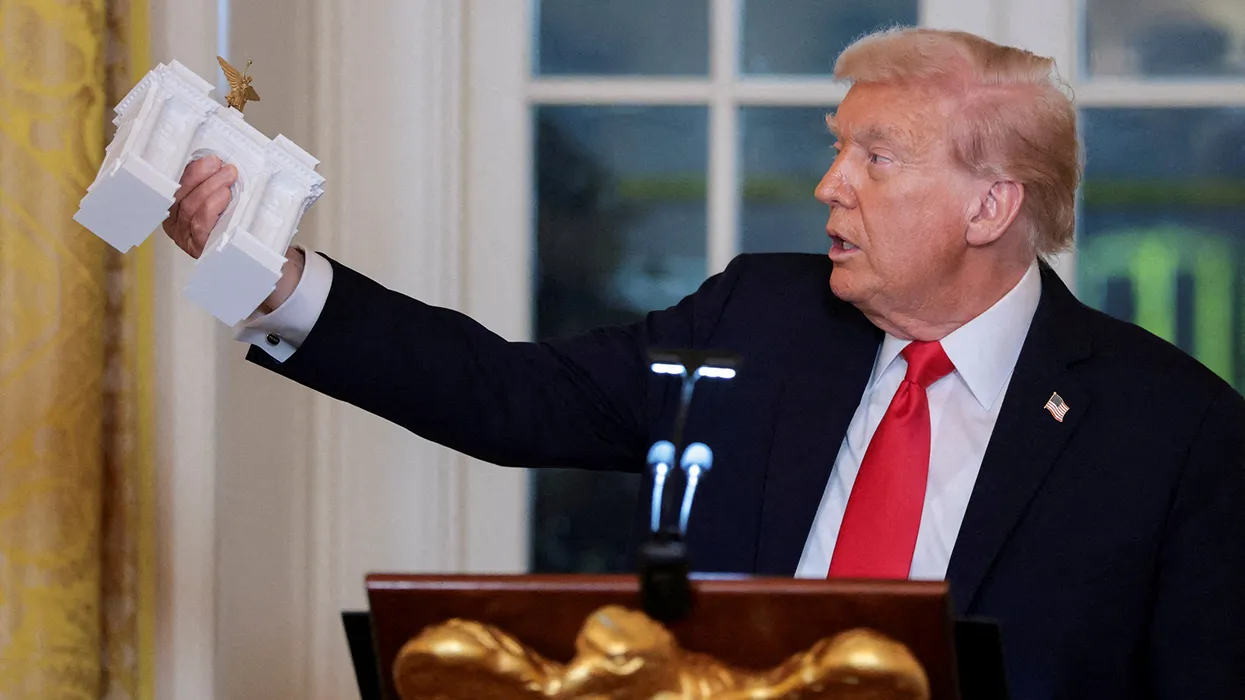
A new court filing from the administration of President Donald Trump is defending his proposed 250-foot triumphal arch in Washington, D.C. as a matter of national security — deploying new language that appears designed to sidestep federal restrictions on commemorative construction.
Roger Parloff of Lawfare noted on social media that the Justice Department appears to be attempting to "circumvent the Commemorative Works Act." The government contends that while the arch "celebrates 250 years of independence," its design is "forward-looking" rather than "backwards-looking to commemorate something." The distinction carries weight: triumphal arches as a monument form trace to ancient Rome, where they were erected to commemorate military victories.
The Commemorative Works Act requires an act of Congress to authorize commemorative works on National Park Service and General Services Administration land in Washington and nearby areas. With congressional approval considered unlikely, the administration instead argues that the arch should not fall under the act at all. Enacted in 1986, the law has governed federal memorials in the capital for decades, and how the court resolves that definitional argument could determine whether the project can move ahead without the congressional authorization it would otherwise need.
Central to that defense is a grandfather clause in the law, which reads: "This chapter does not apply to commemorative works authorized by a law enacted before January 3, 1985."
The filing concludes by presenting the arch as a kind of security barrier. "Therefore, the government has the authority to build a Military Triumphal Arch, something which will help fortify Washington, D.C. and the surrounding area and will represent a beautification of D.C. that should not be forfeited. Scores of cities around the world have Triumphal Arches, and Washington, D.C. should have one. The Nation deserves an Arch that inspires its Successes and Triumphs," the conclusion states.
The security framing drew skepticism online. One of Parloff's followers quippped: "I am no military engineer, but I had always understood an arch to be a wall with the middle left out. As a fortification, it wants something."
The government, however, does not appear to use "fortify" in the conventional sense. The filing instead suggests the structure could help shield Washington from drones: "National security agencies have considered that the Arch can be incorporated into their ongoing efforts to defend the National Capital Region from evolving threats, like those posed by the proliferation of small, unmanned aircraft systems (UAS)."
While drones have appeared over Washington, the most recent concern involved sightings at Washington DCA airport — a location too far from the arch site for the structure to make a difference. Rather than citing documented examples of threats, the filing points to "growing" dangers, including potential "uses by criminals or extremists." It also returns to its aesthetic case, restating that scores of world cities have triumphal arches and that "The Nation deserves an Arch that inspires its Successes and Triumphs."
The security claims contrast sharply with the design plans themselves. An earlier CNN report found that the final plans submitted for the Nov. 5 meeting of the National Capital Planning Commission — the federal agency that reviews major construction in the Washington region — contained no military component, despite the administration's public descriptions of drones, ammunition and sniper positions. The design presented when the planning committee met likewise showed no military additions.
"The applicant updated the transportation plans and lighting plans as necessary. No other plan elements have changed," the meeting notes said.
The "final monumental arch rendering" does not indicate military fittings anywhere in the drawings, and there is no observation deck or "nest" for sharpshooters. The plans do, however, go into great detail on the "twin 20-style lighting" posts, which include a walk/don't walk sign and two light fixtures.
Trump has also said the arch will include a cafe, but that feature has not appeared in the designs either.
About an hour after the most recent hearing, U.S. District Judge Tanya Chutkan issued a temporary block on the project lasting 14 days — a short-term order that sends the dispute back to court quickly, with the central question of whether the arch requires an act of Congress still unresolved.

