Trump Meme Coin Dinner Draws 130 Wallets as Qualifying Holdings Fall 94%
Key Takeaways
- •Only 130 wallet addresses qualified for Donald Trump's November 22 cryptocurrency dinner, fewer than the 185 invitations organizers advertised.
- •Qualifying wallets held about $8.6 million in TRUMP, roughly a 94% decline from the approximately $147.6 million in time-weighted holdings across the top 220 wallets at the token's first holder dinner.
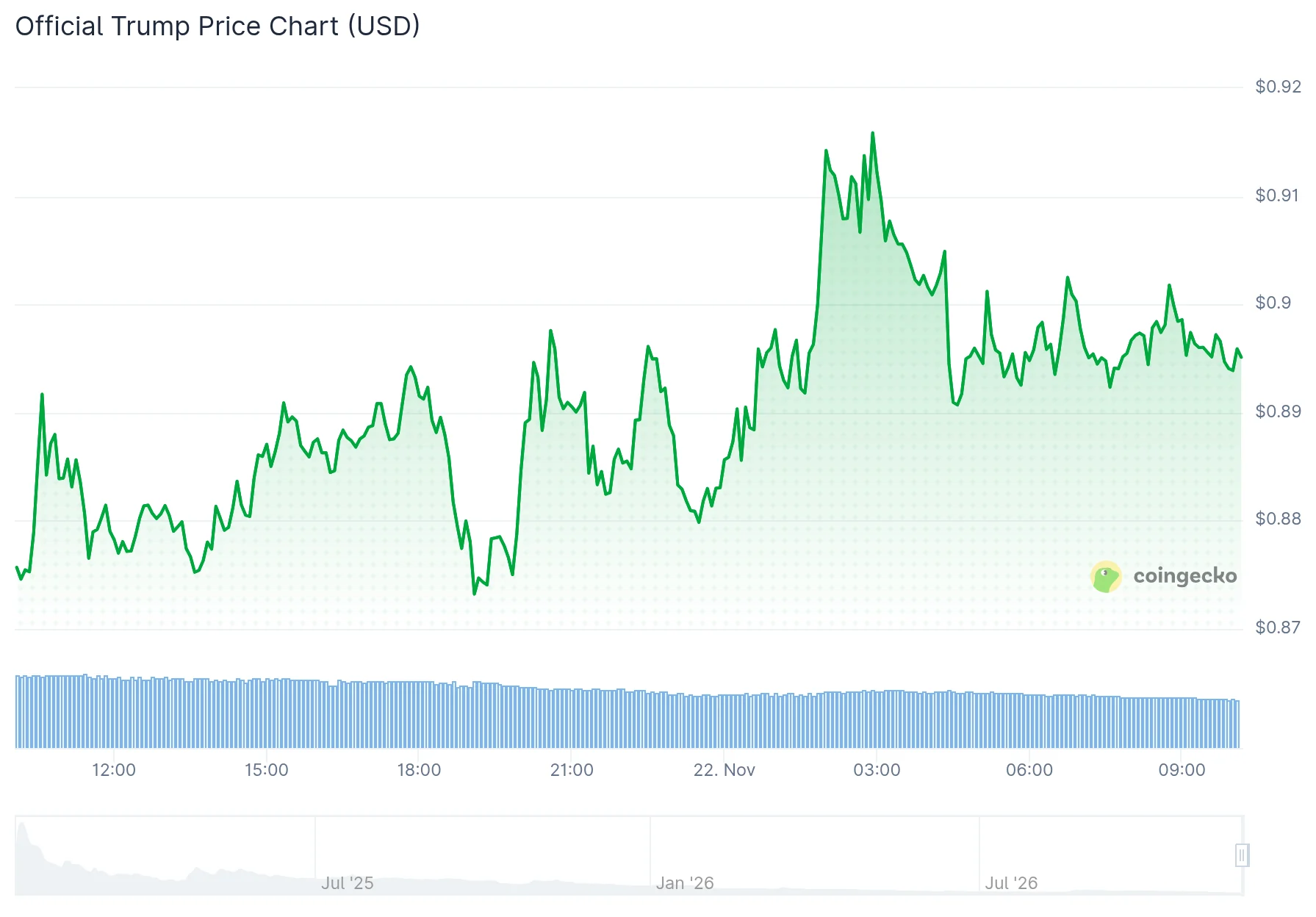
- •TRUMP traded near $0.92 when the leaderboard closed on November 16, down about 98.8% from its January 2025 peak above $74.
- •A single person can control multiple wallet addresses, so the leaderboard count does not confirm the identity, number, or nationality of actual attendees.
- •Democratic lawmakers continue to raise concerns about presidential access through token-holder gatherings and how foreign participation is assessed, questions the public leaderboard data does not answer.
Donald Trump's November 22 cryptocurrency dinner drew just 130 wallet addresses to its qualifying leaderboard, despite organizers advertising 185 invitations. The qualifying wallets held about $8.6 million in TRUMP, a roughly 94% decline from the total recorded at the token's first holder dinner. Reuters reported the figures after reviewing the official leaderboard, which closed on November 16.
The event combined weaker leaderboard participation, a sharply lower token price, and continuing questions about access to the president. TRUMP traded near $0.92 when the leaderboard closed, far below its January 2025 peak above $74. The final count offers one measure of activity, while the price decline shapes the headline dollar comparison, and public wallet data does not identify attendees or their nationalities. Lawmakers' questions about who can attend, and how foreign participation is assessed, remain unanswered by the public data.
130 Wallets Qualify for 185 Invitations
Eligibility for the dinner rested on TRUMP balances measured from September 30 through November 16. Rankings across that scoring period determined invitations, with the top 29 participants also eligible for an exclusive VIP reception. When the leaderboard closed, 130 wallet addresses had appeared on it — 55 fewer than the 185 places advertised.
That gap does not prove organizers left 55 seats empty. A person can control several addresses, and a wallet address cannot by itself confirm a participant's identity, so the wallet count is not a direct tally of unique attendees. Still, fewer addresses qualified than the event had invitations for, and rankings were based on balances across the full scoring period rather than a single closing-day snapshot. The ranking method meant a participant's standing depended on balance behavior across the entire measurement window, not just holdings on the final day.
The muted interest drew attention on social media the evening of the dinner:
Almost NOBODY is fighting for a seat at Trump's memecoin dinner tonight, with one buyer getting in for just $518. The first $TRUMP gala required at least $55,000 in coins, per The Washington Post. Over 5,000 holders who could have qualified didn't even sign up, even after a… pic.twitter.com/G700CIaoF3
— Coin Bureau (@coinbureau), November 22, 2026
Reuters compared the latest leaderboard with roughly $147.6 million in time-weighted holdings across the top 220 wallets at the first dinner, a difference of approximately 94%. The event was the token's second holder dinner, and that first-dinner total serves as the benchmark for the comparison. That comparison measures the dollar value of qualifying holdings, not the number of tokens participants sold. It also reflects a much lower TRUMP price, alongside fewer listed wallets and any differences in scoring between events.
Earlier this year, a separate Mar-a-Lago promotion offered invitations to 297 qualifying holders. That higher count suggests interest in the events has varied from one promotion to the next, although the available figures do not show whether the same people participated. The dinner's leaderboard therefore cannot be read as a direct count of unique supporters or attendees.
TRUMP Price Decline Shapes the $8.6 Million Holdings Figure
TRUMP's market price supplies essential context for the dollar comparison. The token reached a peak above $74 in January 2025, then stood near $0.92 on November 16 — a fall of about 98.8% from the high. The slide means dollar-denominated comparisons across the two dinners are not like-for-like measures of activity. With each token worth less, an unchanged balance would carry a smaller dollar value than before, meaning a lower leaderboard total can occur without a matching drop in token quantities. That sensitivity is characteristic of memecoins as a category: tokens of this kind trade chiefly on sentiment and attention rather than cash flows or utility, so dollar-valued rankings can swing with the market even when wallet balances stand still.
Reuters' figures do not establish how many tokens participants retained, transferred, or sold during the scoring period. The holdings fell in dollar terms, but the headline number alone cannot identify holders' actions or separate price effects from participant behavior.
That distinction matters when judging demand. Fewer wallet entries and lower aggregate value point to reduced participation on the published leaderboard, but they do not show why each person joined, or whether eligible holders chose not to register. The results indicate engagement with the event, yet they cannot measure public opinion or political support.
Lawmakers Question Access and Foreign Participation
Political scrutiny continues alongside the event's market performance. Democratic lawmakers have raised concerns about whether token-holder gatherings could provide access to a sitting president, and have questioned how organizers assess foreign participation when wallet addresses can conceal the people behind them.
Those concerns remain separate from the leaderboard's wallet count and reported holdings. The available figures do not identify participants or establish their nationalities, so the published list offers no direct answer to questions about who attended or how access was arranged. Reuters reported 130 qualifying wallets, but its public report did not identify the people behind them. Until such detail surfaces from sources beyond the blockchain record, the questions lawmakers have raised about access and foreign participation remain open.

