Trump Calls U.S.-South Korea Military Exercises a 'Totally Inappropriate and Hostile' Signal to North Korea
Key Takeaways
- •Trump reportedly said U.S.-South Korea joint military exercises send a "totally inappropriate and hostile" signal to North Korea.
- •The reported remarks did not specify which exercises he was referring to or whether he intended any policy changes.
- •Joint drills have long been part of the U.S.-South Korea alliance and are meant to improve coordination and readiness.
- •North Korea has repeatedly criticized the exercises and has at times conducted missile tests around the periods when they are held.
- •The article says the comments do not amount to an official announcement of changes to scheduled military activities.
U.S. President Donald Trump has characterized joint military exercises between the United States and South Korea as sending a "totally inappropriate and hostile" signal to North Korea, according to remarks reported by BRICS News in an X post. The reported statement did not provide additional details about which specific exercises Trump was referring to, or whether he was proposing any changes to the military activities.
The remarks add to the ongoing debate over the role of joint military drills on the Korean Peninsula, where Washington and Seoul have long maintained a security alliance. The exercises are conducted as part of the broader military cooperation between the two countries.
Trump Criticizes U.S.-South Korea Military Exercises
Joint military exercises have long been a component of the U.S.-South Korea alliance. The drills are intended to support coordination and readiness between the two militaries and have periodically drawn criticism from North Korea.
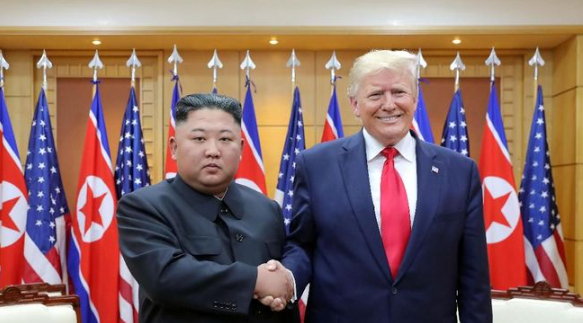
Trump's criticism of the exercises also has precedent from his first term. After his June 2018 summit with North Korean leader Kim Jong Un in Singapore, Trump announced that the United States would halt what he referred to as the "war games," describing the drills as provocative and expensive. Large-scale exercises such as the springtime Foal Eagle maneuvers and the late-summer Ulchi Freedom Guardian command-post drill were suspended, and the allies later resumed combined training under revised names and scaled-down formats.
Against that backdrop, Trump's latest statement characterizes the exercises from a similar perspective, arguing that they convey an inappropriate and hostile message to North Korea. The wording focuses specifically on the signal that the military activities send to Pyongyang, rather than on their operational objectives.
The statement does not indicate whether Trump was referring to a particular exercise, a broader series of military drills, or joint exercises in general. It also does not specify whether his position represents a proposed change in U.S. military policy toward South Korea. Without further details, the reported comments offer a limited indication of Trump's view of the exercises but do not establish any specific policy decision.
Military Drills Remain a Sensitive Issue on the Korean Peninsula
Military exercises involving the United States and South Korea have historically been a sensitive issue in relations with North Korea. Pyongyang has frequently viewed such activities as threatening, describing them over the years as rehearsals for invasion, while Washington and Seoul have described their military cooperation as part of their efforts to maintain defense readiness. North Korea has at times conducted missile tests in periods surrounding the drills, which has reinforced the competing interpretations and made military exercises an important issue in discussions surrounding security on the Korean Peninsula.
The drills can involve personnel from both countries and are designed to improve their ability to operate together. Their scale, timing and format can vary depending on the objectives of individual exercises.
The original X post does not provide information about the size or nature of the exercises referenced by Trump. It also does not include any response from South Korean authorities, the U.S. military or the North Korean government.
Implications for U.S.-South Korea Security Cooperation
Trump's characterization of the exercises raises questions about how Washington views the role of joint military activities in managing tensions with North Korea. However, the reported statement alone does not establish a change in the U.S.-South Korea security relationship.
The alliance between Washington and Seoul has included military cooperation for decades, anchored by the 1953 Mutual Defense Treaty signed after the Korean War armistice, with roughly 28,500 U.S. troops stationed in South Korea as part of that commitment. Joint exercises form one element of that relationship. Any change to those activities would require additional official information to determine its scope and implementation.
The allies have previously adjusted the scale, timing and names of their combined drills, including during earlier periods of U.S. criticism, which makes official responses from Seoul's defense authorities and the Pentagon, along with the status of scheduled combined training, the concrete points to watch following the reported remarks.
The comments also come against the backdrop of longstanding tensions between North Korea and the United States and South Korea. Military signaling remains particularly significant in the region because actions by one side can be interpreted differently by the other.
For now, the central point of the reported statement is Trump's assessment that joint military exercises between the United States and South Korea send a "totally inappropriate and hostile" signal to North Korea. The available information does not indicate any accompanying policy announcement or specific changes to scheduled military activities.
Source: Hokanews

