Trump Administration Invokes Dick Cheney Precedent to Withhold Kennedy Center Records
Key Takeaways
- •The Justice Department told U.S. District Judge Christopher Cooper that Rep. Joyce Beatty's discovery requests regarding Trump's Kennedy Center renaming efforts should fail 'across the board.'
- •The DOJ cited the Supreme Court's 2004 decision in Cheney v. United States in the opening paragraph of its filing to argue that discovery involving the president raises separation-of-powers concerns.
- •The 2004 ruling arose from demands for records of Dick Cheney's energy task force under President George W. Bush and held that discovery touching a sitting vice president must weigh the burdens placed on executive branch deliberations.
- •Trump has previously insulted Dick Cheney, describing him as 'irrelevant,' even as his administration now relies on the Cheney precedent to shield presidential deliberations from disclosure.
- •A 2025 New York Times op-ed by Ron Suskind argued that Cheney's expansion of executive authority created a playbook that Trump has extended, citing actions such as the Iraq invasion, mass surveillance, and emergency declarations.
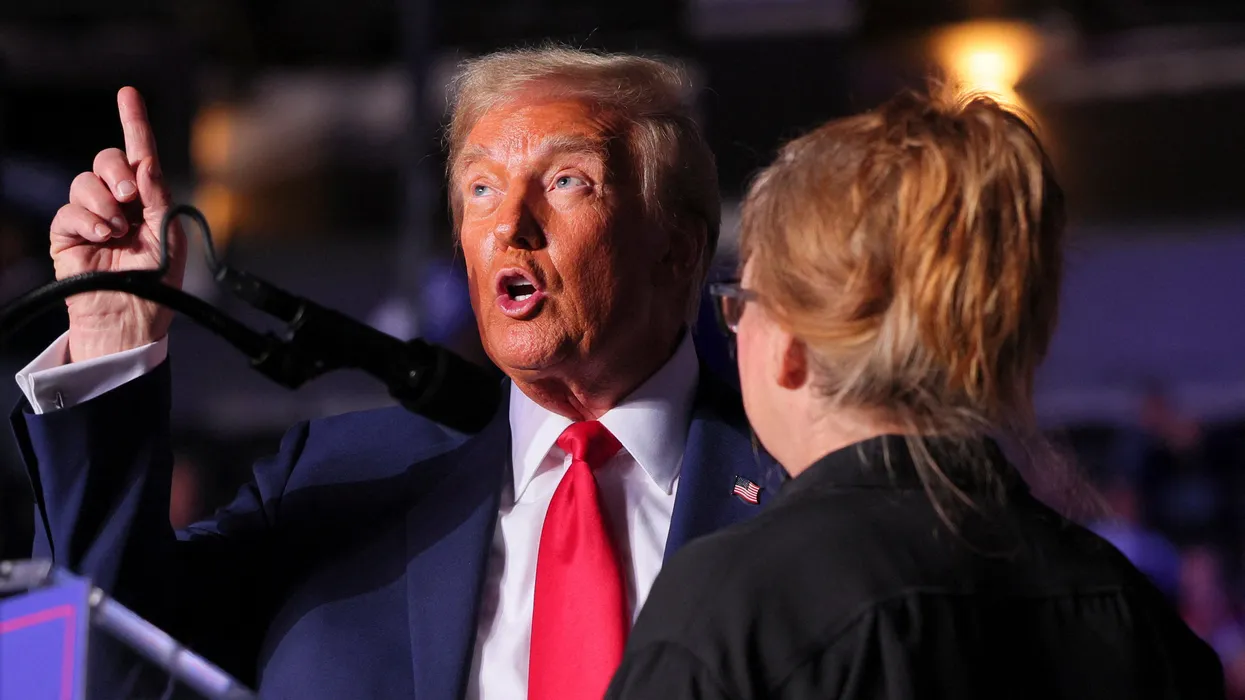
President Donald Trump has so far struggled to get what he wants in the dispute over the Kennedy Center: the building does not bear his name, and the courts have not intervened on his behalf. Now, in a possible move to avoid further scrutiny, the Trump administration is drawing on a legal precedent set by a past vice president he has previously insulted.
That vice president is Dick Cheney — whom Trump once described as "irrelevant" and said he was "not a fan" of, and whose supporters have openly reviled him. Cheney set a precedent stating that certain executive bodies did not have to comply with the Federal Advisory Committee Act, which requires otherwise-sensitive records to be made available to the public. Enacted in 1972, the law governs the openness of federal advisory panels that counsel the government. Trump's lawyers are now that same precedent to argue that he should not be forced to disclose information about his efforts to rename the Kennedy Center.
According to Law and Crime's Matt Naham, the Justice Department told U.S. District Judge Christopher "Casey" Cooper on Wednesday that the requests of Kennedy Center board of trustees member Rep. Joyce Beatty, a Democratic lawmaker who moved to compel discovery, should fail "across the board." Naham noted that the DOJ cited Cheney v. United States in the opening paragraph of the filing. How Cooper weighs that argument will help determine whether documents about the president's renaming efforts are ever produced in the case.
In the filing, the Trump administration argued that "requests for discovery that pertain to the President of the United States are no ordinary matter. Instead, they raise distinct separation-of-powers concerns. Both the Supreme Court and the D.C. Circuit have recognized as much time and again." It continued: "Thus, a plaintiff may not serve overbroad discovery requests on the President and expect a line-by-line response. See Cheney v. U.S. Dist. Ct. for D.C., 542 U.S. 367, 388 (2004)."
The citation reaches back two decades: the 2004 ruling arose from demands for information about the energy task force Cheney led under President George W. Bush, in which the Supreme Court held that discovery touching a sitting vice president had to account for the burdens it placed on executive branch deliberations. The Justice Department's filing now applies that framework to shield the president's Kennedy Center deliberations from Beatty's document requests.
This is not the first time that Cheney's legacy of expanding the power of the executive branch has helped Trump implement his own agenda. In a 2025 op-ed for The New York Times, Ron Suskind argued that "[Cheney] wrote a playbook of how to exercise executive authority beyond constitutional boundaries and the rule of law. Donald Trump has added pages and is working on a sequel."
Suskind pointed to Cheney's record — invading Iraq despite questionable evidence, establishing mass surveillance throughout the United States, and declaring emergencies to achieve his goals through executive orders — as having made it possible for the executive branch to act on its own authority in ways not seen before.
"Disastrous as those all actions were, Mr. Trump has undertaken even more significant expansions of power and illegality, often under even more dubious claims of emergency," Suskind observed. "... Mr. Cheney made it possible."

