Catholic Support for Trump Declines Sharply While Born-Again Protestant Backing Holds Steady
Key Takeaways
- •Trump's approval among Catholic voters dropped from 54 percent in January to 43 percent by June 2026, while his support among born-again Protestants increased from 56 percent to 61 percent over the same period.
- •The sharpest decline in Catholic support occurred between April and May 2026, coinciding with a public clash between Trump and Pope Leo XIV over immigration and refugee policy.
- •A May 2026 Public Religion Research Institute survey found that 56 percent of Americans held a favorable view of Pope Leo XIV, compared to 34 percent for Trump.
- •Catholics accounted for approximately 20 percent of the electorate in 2024, and Trump carried the group by a 12-point margin over Democrats.
- •Republicans need to regain nearly 10 percentage points of Catholic support within 90 days to maintain their coalition heading into the November midterm elections.
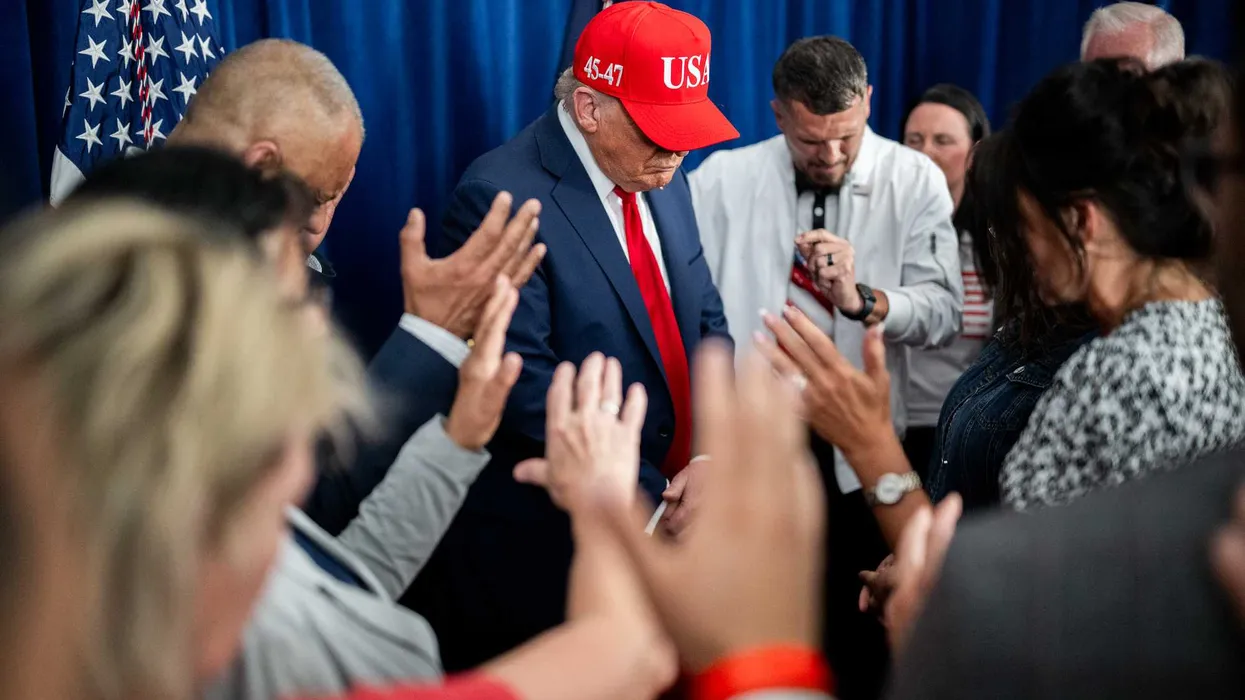
President Donald Trump's backing among Catholic voters has experienced a significant decline, creating a growing rift within the coalition that propelled him to victory in 2024.
According to Rolling Out, Catholic support for Trump is in free fall "and shows no sign of slowing down." While Catholic voters joined with born-again Protestants to help deliver Trump's election win, the two groups have since diverged — born-again Protestants are increasing their support while Catholics are pulling away.
A Newsweek analysis comparing January and July polls found that Trump's approval among born-again Protestants rose from 56 percent to 61 percent. Over the same period, his support among Catholics dropped from 54 percent to 45 percent, opening a 30-percentage-point gap between the two groups. The divergence underscores a long-recognized dynamic in American electoral politics: Catholics, a historically swing-oriented bloc that includes both white ethnic communities and a growing Latino population, have never aligned as solidly with the Republican Party as born-again Protestants.
"That is not a minor shift in polling. It reflects a meaningful realignment within communities that together represent a substantial share of the American electorate," wrote Shekari Philemon.
The steepest decline occurred between April and May of 2026, coinciding with a public clash between Trump and Pope Leo XIV. The dispute centered on the pope's expressions of empathy for immigrants and refugees, at a time when Trump ramped up police deployments to arrest them. Trump's opposition to the first American pope came at a moment when most Americans held a favorable view of the pontiff, making the confrontation politically risky with a constituency that maintains strong institutional ties to the Vatican. Protestant approval, by contrast, barely shifted during that window, moving from 42 percent to 40 percent.
A May survey by the Public Religion Research Institute found that 56 percent of Americans viewed Pope Leo favorably, while only 34 percent viewed Trump favorably.
In 2024, Catholics accounted for roughly 20 percent of the electorate, and Trump carried the group over Democrats by 12 points. A divide persists within the Catholic electorate, however, as Latino Catholics have largely backed Democratic candidates. The gap between Catholic and Protestant support has only widened since the papal feud.
Catholic approval fell further in June, reaching 43 percent. Philemon assessed that Trump's faith coalition is not merely weakening but "under the strain of collapse."
White House spokeswoman Taylor Rogers defended the president's record: "There has never been a greater president for Christian Americans than President Trump, and his strong record proves it." She also accused Democrats of having "shamelessly weaponized the full weight of the federal government against people of faith."
Newsweek noted that Catholic voters are "less reliably Republican than born-again Protestants," a dynamic that will carry significance into 2028. In the nearer term, Republicans will need to hold together as much of Trump's previous coalition as possible in November's midterm elections. To do so, Trump must recover nearly 10 percentage points among Catholic voters in fewer than 90 days — a challenge complicated by the fact that the papal clash that accelerated the decline has shown no signs of resolution.
Sources: Rolling Out, Newsweek

