Constitutional law expert rejects fears that Trump can rig the 2026 midterms
Key Takeaways
- •Levitt said seizing ballot boxes would require warrants from federal judges in the relevant districts, and that deploying the military to occupy American cities would be wildly illegal and contrary to the armed forces' stance.
- •A Nevada case showed a Department of Homeland Security list of 15,903 alleged noncitizens was ultimately reduced to zero, and only state and local officials hold authority to conduct voter purges.
- •A 2022 report by eight conservatives examined 64 court challenges filed after the 2020 election and found Trump's side prevailed in only one case, which involved too few votes to change the outcome.
- •Levitt stated that the House clerk has a nondiscretionary statutory duty to recognize members presenting state-certified election results, and no majority in either chamber is willing to reject such certificates.
- •Pew research conducted since at least 2018 shows that 90% to 92% of Americans, consistent across party lines, trust their local elections to be free, fair, and well run.
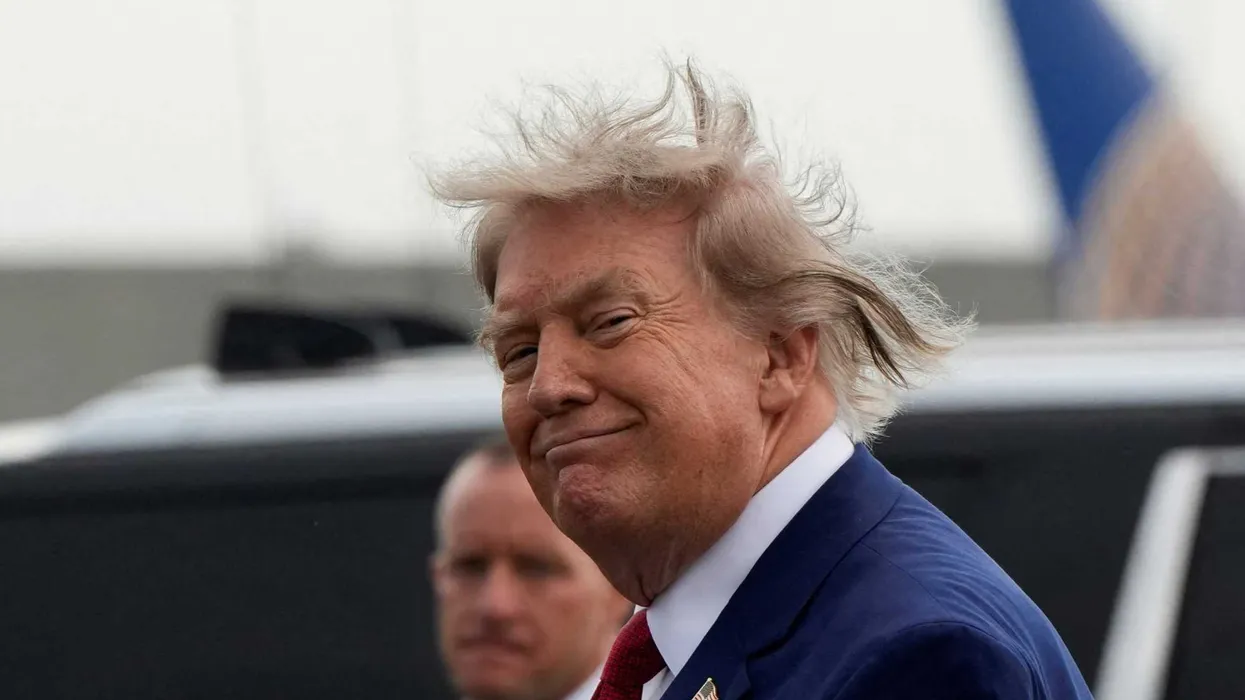
Justin Levitt, a constitutional law professor at Loyola Law School and former Obama and Biden administration official, argues that President Donald Trump is trying to project electoral power he does not possess.
"Treat the president the same as the guy screaming by the freeway exit," Levitt said in an interview. The comparison may sound alarming because Trump has immense power in other areas, the interviewer wrote. His administration has terrorized immigrants, persecuted transgender people, laid off thousands of federal employees, weakened the nation's scientific establishment, damaged the environment and international relationships, transformed the Republican Party into a personality cult and enriched Trump by roughly $2 billion.
But Levitt said Trump does not control the systems that administer elections. He argued that the greatest danger to the 2026 midterms is that voters will believe Trump's claims of limitless power, become intimidated and alter their own behavior by staying home or lowering their expectations.
The interview, conducted by journalist Alex Rozsa, was lightly edited for clarity, context and length.
Ballot boxes and the possibility of military force
Rozsa identified five possible ways Trump might try to prevent Democrats from taking control of Congress: purging voters from registration rolls, seizing ballot boxes, sending law enforcement or supporters to intimidate voters, filing frivolous lawsuits and persuading Congress to reject the results.
Levitt said none of those measures would succeed, although Trump might attempt one or several of them. He said the president is trying to persuade the public that he controls forces capable of carrying out such actions, even though he does not control the election systems.
On the possibility of seizing ballot boxes by declaring a national emergency, Levitt said anyone attempting to take them would need a warrant issued by a federal judge in the relevant district. Election officials would not hand over ballot boxes to someone who merely arrived and demanded them.
Levitt said the seizure of old election materials, rather than current or active materials, in Fulton County and Riverside County had made judges more aware of the controversy surrounding such warrants. Even if some judges were willing to approve them, he argued, those judges would not necessarily sit in the districts where seizing ballot boxes could affect large numbers of Democratic voters.
Rozsa cited attorney Peter Ticktin, whom The Atlantic recently quoted as saying, "Our armed forces are a lot bigger than they are." Ticktin was referring to protesters who might resist an attempt to seize ballot boxes by force.
Levitt replied that Ticktin was imagining a military operation rather than a legal seizure. He said mobilizing the Army, including the 101st Airborne, to occupy New York City or other American cities would be wildly illegal. The military knows that, he said, and does not want to be deployed domestically. He also noted that the chairman of the Joint Chiefs of Staff had said the military would not go near polling places.
"What you're describing is a military coup," Levitt said. "What you're describing is the military occupying America."
He added that such an operation would require controlling approximately 350 million Americans, despite the country's size and the military's lack of interest in carrying out a coup. Even if Ticktin imagined such a scenario, Levitt said, it was not a fantasy the military would accept.
Rozsa noted that Defense Secretary Pete Hegseth had purged roughly 80 generals and replaced them with loyalists. Levitt responded that the question was whether sergeants and other personnel would willingly occupy Brooklyn, Chicago or Los Angeles.
Levitt referred to a National Guard deployment in Los Angeles more than a year earlier. The Guard, he emphasized, was a supplemental rather than a primary force. The troops occupied two blocks of downtown, and 99.9 percent of Angelenos did not notice them, although the deployment appeared on television. The geography of the United States and the number of personnel required would make a nationwide operation logistically unfathomable, he said.
Voter purges and Department of Homeland Security lists
Rozsa then raised concerns that the Supreme Court had authorized the Department of Homeland Security to purge voters it considered noncitizens, despite the possibility of false positives.
Levitt rejected that description. He said the court had allowed DHS to use a deeply flawed list to identify potential noncitizens, but had not given the department authority to remove voters from registration rolls. Only state and local election officials can carry out voter purges, he said.
DHS can provide lists to local officials and try to persuade them to act, Levitt said, but the lists are so unreliable that local officials have little reason to trust them. He cited a Nevada case involving a list that purportedly contained 15,903 alleged noncitizens. When Nevada officials asked DHS to explain the data and methodology behind the number, the department indicated that it was only a starting point and had not yet completed the analysis.
The list was eventually reduced to 185 potential noncitizens whom officials initially considered certain. Levitt said it was later reported that all 185 were citizens, reducing the list from 15,903 to 185 and then to zero. He described the DHS lists as worthless and said state and local officials already understood that.
Rozsa cited Pooja Chaudhuri, senior counsel and deputy legal director at Democracy Defenders Fund. Chaudhuri, who previously worked as a voting rights attorney at the Lawyers' Committee and staffed the Election Protection Coalition, said voters sometimes arrive at polling places and discover that they are not registered or do not appear in the poll book. In many states, it is too late to register on Election Day, meaning a voter who was wrongly removed could be disenfranchised.
Levitt acknowledged that mistakes occur during voter-list maintenance and that some people are purged. But he again distinguished those actions from federal purges, saying that state and local officials conduct the process.
When Rozsa suggested that state and local officials might act at Trump's direction, Levitt questioned which jurisdictions would do so. He said officials in Nevada, California, Illinois and New York were unlikely to comply automatically, while acknowledging that Texas had problems, though he said those problems were not necessarily caused by DHS.
Levitt said voters should check their registration and make sure they are registered at the correct address. List maintenance is never perfect, he said. Under federal law, systematic purges generally cannot occur within 90 days of an election, while voter-registration deadlines may be no earlier than 30 days before an election and are shorter in many states. The appropriate time to check registration, he said, is now, and most states provide an online system for doing so.
However, Levitt maintained that Chaudhuri's warning did not demonstrate that DHS had the authority or ability to conduct purges or persuade local officials to do so. He said local officials could disenfranchise citizens if they wanted to, but most do not.
Levitt cited Pew research conducted every two years since at least 2018 showing that between 90% and 92% of Americans trust their local elections to be free, fair and well run. He said the figure was consistent across party lines and represented an unusually high level of confidence in an institution.
Law enforcement at polling places
Rozsa asked whether Trump could send ICE agents, local police or supporters to polling places to intimidate voters. She noted that the Justice Department had said it would send monitors to observe elections.
Levitt said a force of 1,000 monitors would be too small to disrupt elections. It could be appropriate for observing federal wrongdoing, but he suggested the monitors might instead be used after the election as a visual prop when Trump claimed misconduct had occurred. Local officials could remove monitors who caused disturbances, he said.
ICE presented a more serious concern, Levitt said, because the agency had operated relatively lawlessly. Restrictions on sending armed individuals to polling places have existed since the Civil War, and many states have similar prohibitions. Local law enforcement can arrest an armed federal agent at a polling place, he said.
Levitt said he believed a small-scale incident could occur because there were not enough ICE officers to cover the tens of thousands of polling places in individual states or the hundreds of thousands across the country. He speculated that officials might select one suburban polling place, send 10 to 20 people there, film the operation and attempt to make viewers believe it was happening nationwide.
Trump, Levitt said, is a marketer and communications figure. If his administration could create the impression of widespread intimidation without actually deploying people everywhere, that would be preferable from a political standpoint. Sending 20 people to one polling place is logistically possible, but 99.999% of Americans would not encounter such an operation, he said.
Lawsuits and election challenges
Rozsa cited conservative commentator George F. Will and the 2022 report "Lost, Not Stolen," prepared by eight conservatives: two former Republican senators, three former federal appellate judges, a former Republican solicitor general and two Republican election-law specialists.
The report examined 187 counts in 64 court challenges filed in multiple states by Trump and his supporters after the 2020 election. Twenty cases were dismissed before hearings on the merits, while Trump and his supporters voluntarily dismissed 14 before hearings. Of the 30 cases that reached hearings on the merits, Trump's side prevailed in only one, in Pennsylvania, and that decision involved too few votes to change the state's result. Will described Trump's record as a batting average of .016.
Rozsa said the record showed that courts had stopped Trump but also demonstrated that he had tried to overturn the election. She asked whether he was likely to pursue frivolous litigation again.
Levitt said Trump would probably do so because litigation was one of his customary tactics. But he said it was even less likely to succeed. Filing a lawsuit without provable facts showing a constitutional or statutory violation, Levitt said, was "just a tweet with a filing fee."
He predicted that Trump would lie on Truth Social about whether he had won elections, but said such statements would not change the official results. Levitt agreed with Will's statistics, while emphasizing that the one ruling in Trump's favor had not affected the outcome. He said there might have been a second minor victory involving the distance at which election observers could stand while watching absentee-ballot processing.
Litigation cannot make millions of votes disappear, Levitt said. Courts resolve actual disputes, and where no factual or legal dispute exists, there is nothing for them to resolve.
Levitt said trial and appellate courts had generally behaved well over the previous two years by examining the law and evidence. He had not agreed with every ruling, but said he agreed with most of them. That included decisions by judges appointed by Trump, who had refused to entertain frivolous cases while taking serious claims supported by evidence seriously.
He was more critical of the Supreme Court, but said recent decisions involving a Missouri gerrymander and the Postal Service showed that even the conservative court was not prepared to rule automatically in Trump's favor. Levitt said there would undoubtedly be frivolous lawsuits, but voters should not change their behavior because of them. The lawsuits might keep lawyers busy, he said, but could not steal an election by themselves.
Congress and certification of the results
Rozsa asked whether Trump could persuade Speaker Mike Johnson or Senate Majority Leader John Thune to reject election results on January 3 if Democrats were about to take control of one or both chambers of Congress.
Levitt pointed to a Lawfare article explaining the process. He said the crucial moment would occur at noon, when the existing House ends as a legislative body. At 12:01 p.m., there would be no House and no Speaker Johnson. The clerk of the House would control the roll of potential members.
The clerk, Levitt said, has a clear, nondiscretionary statutory duty to recognize members who arrive with certificates of election certified by their states. Johnson would have no authority over that roll because the House would not yet exist.
For the scheme to work, Levitt said, the existing House and Senate would have to break the democratic process before the new House was seated. That would constitute a different kind of coup, not a military coup. He said several sitting House and Senate members, including Republicans whom Trump had opposed during campaigns, were unlikely to agree that the country no longer had a democracy.
Levitt criticized Congress for failing to pass affirmative legislation during the previous two years, but said that was different from refusing to recognize a certificate from a state official confirming that a candidate had won. He said there was no majority in either chamber willing to take such a step and referred to the failure of the SAVE America Act to become law as evidence.
Trump's response to a possible Democratic victory
Rozsa cited psychiatrist Bandy X. Lee, who previously taught at Yale University and had warned before the 2020 presidential election that Trump would be unable to accept a loss for psychological reasons. Lee wrote that a person who could no longer obtain adulation might turn to fear, and that an election loss could trigger destructive rage against a nation perceived to have failed him. She also wrote that such a person might see retreating into the status of a "loser" and a "sucker" as a form of psychic death.
Levitt said he was not a psychologist and therefore could not agree or disagree with Lee's diagnosis. He said Trump showed signs of being disturbed and untrustworthy, that he did not believe Trump was fit for office and that Trump was plainly obsessed with the 2020 election.
Levitt said it was impossible to know whether that obsession resulted from a mental-health problem or another cause, and that question should be left to psychological experts. The central issue, he said, was not Trump's desire or motivation but whether he had the capacity to steal the 2026 election.
Levitt argued that the election could fail to reflect the will of the people only if voters themselves imagined Trump to be all-powerful and responded to that image by allowing fear to shape their conduct. Trump could rant, rage and make claims, he said, but the people administering elections do not report to him and do not have to obey him.
Levitt distinguished election administration from areas where the president does have operational control, including tariffs and overseas deployments. In those areas, the question is whether Trump is exercising that authority lawfully, and Levitt said the answer has often been no. Elections, however, are run by state and local officials outside Trump's chain of command.
Comparisons with Adolf Hitler
Rozsa said that, before the 2024 election, she had interviewed scholars who compared Trump's rhetoric and views on democracy with Adolf Hitler's ideas. She quoted former campaign press secretary Karoline Leavitt, who responded after the second assassination attempt against Trump by saying that the media's renewed comparisons were "disgusting" and explaining what she described as Americans' lack of trust in the liberal mainstream media.
Rozsa asked whether Trump's behavior or desires were Hitler-like even if he lacked the ability to carry them out in the election system.
Levitt said he was not sure the comparison was accurate. He described Trump as having profoundly un-American desires and said Trump had the ability to realize some of them outside the election arena. But he questioned the value of comparing Trump with other deeply flawed leaders.
Rozsa said such comparisons were intended to raise an alarm. Levitt replied that portraying Trump as a supervillain could demotivate voters by making them believe he possessed powers he did not have.
He rejected the idea that voters were necessarily complacent. In primary and special elections, he said, voters had repeatedly shown that they disliked what Trump was doing to the country. Levitt said Trump appeared to be the least popular president at that point in his second term, with former President Richard Nixon possibly the only exception. Rozsa noted that Nixon had resigned in early August 1974 and therefore was no longer in office at the comparable point in his second term.
Levitt said Trump was in second place by that measure and that his popularity was falling sharply. He also noted that Nixon had not enjoyed the same level of congressional support that Trump had.
Americans should evaluate whom they want in charge, Levitt said, and understand that their preferences matter and that their votes will be counted as intended. Turning Trump into a figure such as Voldemort, however, could unnecessarily and unrealistically frighten people into believing that he controls how election results translate voters' preferences.
The source article is available from Alternet.

