Column: Trump's Trade War With Canada Risks a Multi-Generational Break With America's Closest Ally
Key Takeaways
- •Canada supplies three times more oil to the United States than any other nation, and disruptions to that flow quickly raise gas prices, particularly in the Midwest.
- •Miciak argues Congress must act quickly and in a unified way to stop the trade war, noting it has blocked Trump on trade before.
- •New cars have already become roughly $4,000 more expensive due to the deeply intertwined U.S.-Canada auto industry, in which parts often cross the border multiple times.
- •Canada is a major supplier of potash, a key fertilizer input with few U.S. domestic alternatives, straining farmers already facing diesel and fertilizer cost hikes.
- •Miciak warns the dispute could lead Western nations to build 'insurance policies' against U.S. tactics within two to five years, potentially worsening volatility in global stock markets.
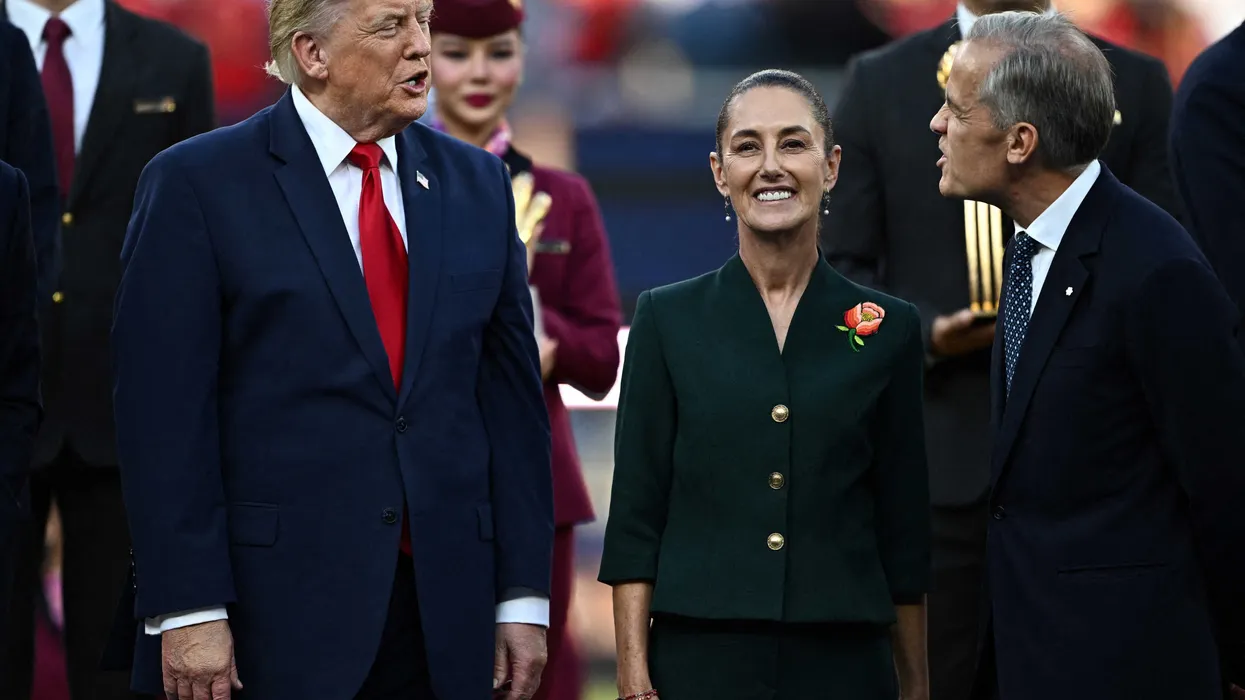
It appears to be actually happening: President Donald Trump has provoked Canada to a degree once thought impossible, setting the stage for a modern "Western War" — not one fought with guns, but what columnist Jason Miciak calls a "21st Century War against decent nations," in which the weapons are tariffs and the costs land directly in consumers' wallets rather than in abstract taxation.
If Trump struggled in trying to strong-arm Iran, Miciak writes, his trade war with Canada — which he dubs "Operation Snow Blind" — introduces an entirely new reality, one that Americans will blame squarely on the president. He points to a fact many Americans may not know: Canada sends three times more oil to the United States than any other nation, including Saudi Arabia and the Gulf states. That dependence runs deep: much of the crude U.S. refineries process — particularly in the Midwest — is Canadian heavy oil shipped through cross-border pipelines, which is why disruption to that flow shows up quickly at the gas pump rather than remaining an abstraction.
Congress May Need to Act — Fast
Miciak argues Congress needs to involve itself quickly or the situation will spiral, noting that Congress has stopped Trump on trade before. But Congress would have to do what it does worst: move fast and in a unified way. In his framing, the United States might win every "battle" — its economy is large enough to inflict more short-term damage on Canada than vice versa — yet still lose the war, because Canadians, deeply offended and rallied under the aggressive hockey slogan "Elbows Up," are far more willing to endure economic pain than Americans puzzled over what the conflict was supposed to accomplish beyond higher gas prices, cars costing $4,000 more, and sharply rising fertilizer costs.
Compounding the problem, in Miciak's view, is that Canada's Prime Minister, Mark Carney, is possibly the world's most respected former central banker. Carney became a de facto leader of the free world in Davos, Miciak writes, when — without naming Trump or expressly pointing to the United States — he said that "the middle countries" (meaning all but the U.S. and China) must band together to preserve their autonomy against bullies, proposing treaties across the Atlantic and around the Pacific Rim.
How Did We Get Here?
Miciak's answer: "Because Trump; that's why. No one can articulate any better reason." He notes that Trump's complaints about Canada robbing the United States in trade might sound slightly more legitimate if Trump himself had not implemented most of those agreements — a reference to the USMCA trade deal, the pact that replaced NAFTA and that Trump championed as a historic win for American workers — while asserting that Canada has not in fact been taking advantage of the United States. That history matters: the current friction pits the U.S. against a trading partner bound to it by an agreement Trump himself signed, not an adversary operating outside any rules.
An Isolated United States
As for how bad it could get, Miciak warns of a "multi-generational" problem. Just as with Iran, he argues, Trump will find no sympathetic allies — while virtually any country one points to would help Canada: Europe ("Check. Doing it already."), Mexico and most of South America (fearful they are next), plus South Korea, Japan, and Australia. In his view, that is how a nation with fewer people than California could eventually prevail against the United States by channeling global anger at Trump.
Even if America wins the major economic battles, Miciak writes, Canada can inflict significant damage on the very voters who once supported Trump. Canada supplies large amounts of potash — the key input in fertilizer, and a input for which the United States has few ready domestic alternatives — hitting farmers already strained by diesel hikes and elevated fertilizer costs from the Middle Eastern conflict. The auto industry, meanwhile, is so intertwined with Canada — with parts flowing from Detroit through Windsor near Toronto, often crossing the border multiple times before a finished vehicle rolls off the line — that new cars have already become roughly $4,000 more expensive.
Economic and Political Fallout
Miciak has repeatedly argued that everything Trump has gotten away with occurred during a stable economy, and that his poll numbers have sunk as the economy has worsened. Trump's staff, he writes, is already deeply concerned about approval numbers hitting the high 20s — and that was before the president got serious about a trade war with Canada. Miciak notes Trump remains president, but argues he is nowhere near as powerful when polling below 29%, a level he hit shortly after January 6.
The columnist also points to Trump's stated intent to rename Lake Ontario "Lake America," noting that "Ontario" is a First Nations name from the Iroquoian language used on both sides of the border, and that the "Gulf of America" renaming remains contested. While the U.S. initiates its trade offensive, he writes, Canadians will respond with their own "Northern Blizzard." Trump keeps insisting Canadians want to become the 51st state; Canadians, he writes, respond that they are willing to fight and pay higher prices to make the United States "go away."
Miciak suggests the dispute could become a tipping point at which the Western world concludes it can no longer rely on the United States and builds "insurance policies" against such tactics — an international effort he estimates would take two to five years to get going — and that global stock markets, focused on the here and now, could shift from jittery to something far worse.
He closes with pop-culture metaphors: Canadians rewatching the end of Braveheart, Americans resigned like Leaving Las Vegas, and Trump watching Star Wars imagining himself as Luke Skywalker. "One suspects Canadians will get up from Braveheart, feeling pretty good about themselves," he writes — "and certainly on this one, they're right."
Jason Miciak is a Raw Story columnist, former editor of Occupy Democrats, an author, attorney, political consultant, and single girldad. He can be followed on Bluesky and reached at jasonmiciak@gmail.com.

