Trump's Canada Tariff Escalation Upends GOP Efforts to Calm Voters Ahead of Midterms
Key Takeaways
- •Trump threatened 50% tariffs on $20 billion worth of Canadian goods, and Canada responded with retaliatory measures.
- •Republicans say the trade fight is making it harder to address voter concerns about the cost of living before the midterms.
- •The dispute is seen as especially relevant in Senate battleground states such as Maine, Michigan, Iowa and North Carolina.
- •Sen. Thom Tillis said Republicans do not currently have a positive message for farm country and warned the side that owns the tension may pay a political price.
- •Sen. Susan Collins and former Sen. John Sununu both criticized the trade war for raising costs and disrupting trade with Canada.
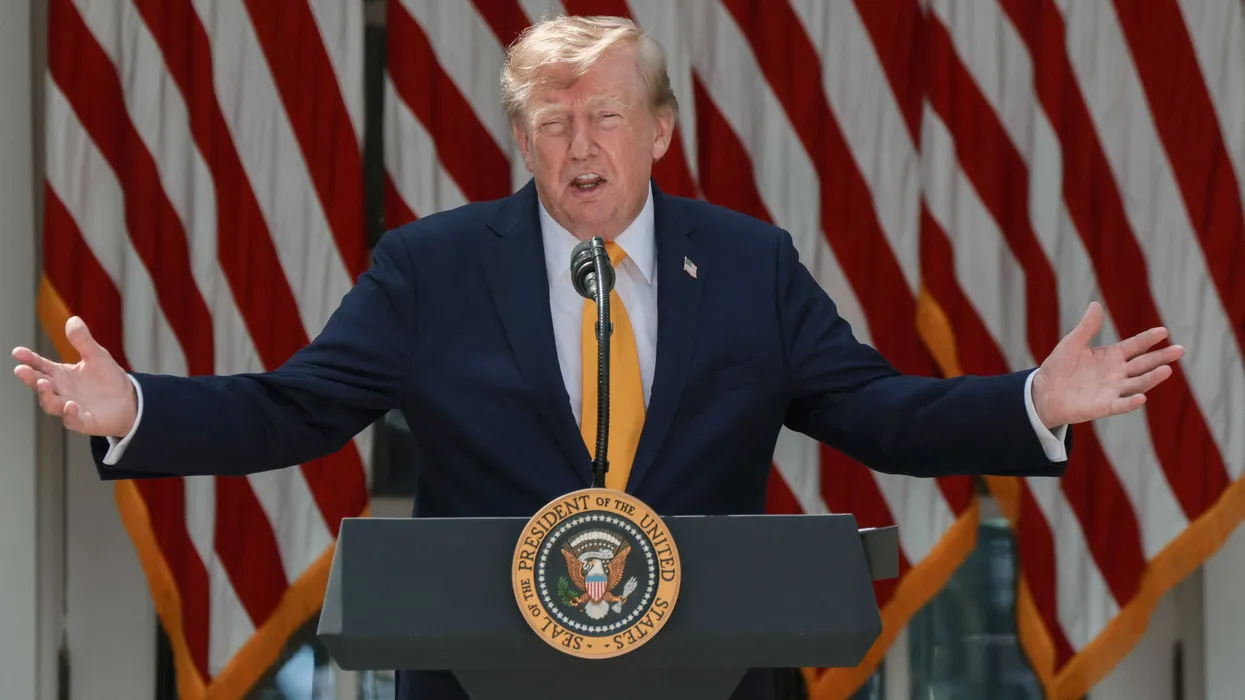
President Donald Trump's trade conflict with Canada shifted into overdrive this week, threatening Republican efforts to reassure frustrated voters and defend the majorities the GOP currently holds in both chambers of Congress.
Trump threatened Canada with new 50 percent tariffs, and Canada responded with retaliatory measures — some of which, according to Prime Minister Mark Carney, could reach as high as 50 percent. The escalation is complicating the party's midterm messaging, according to Politico.
"Republicans were already struggling to defuse simmering voter frustrations over the cost of living ahead of the midterms. Then, President Donald Trump rekindled his trade wars," Politico reporters Jordain Carney and Mia McCarthy wrote. "Trump's latest actions — especially his decision to impose 50 percent tariffs on $20 billion worth of Canadian goods, inviting retaliatory duties from America's No. 2 trading partner — has sparked new pushback from GOP lawmakers and candidates."
Carney and McCarthy note that Trump's "moves are set to reverberate especially hard in a handful of states crucial to the party's hopes of keeping their Senate majority" — including "northern border states such as Maine and Michigan" along with "agriculture-heavy battlegrounds like Iowa and North Carolina." That puts a spotlight on the gap between the White House's trade posture and the local economic concerns that typically shape campaign messaging in competitive states, where lawmakers are trying to talk about prices, supply chains, and exports at the same time.
Sen. Thom Tillis (R-North Carolina), who is not seeking reelection this year, is among the GOP lawmakers sounding the alarm about the trade war's potential impact on the 2026 midterms. Democrats, meanwhile, are feeling bullish about their centrist nominee in North Carolina's 2026 U.S. Senate race: two-term former Gov. Roy Cooper.
"We've got 71 days, and right now, we don't have a positive message to tell farm country," Tillis told Politico, discussing the midterms. He argued that Trump's trade war with Canada is creating "tension," adding, "The party that owns that tension is the party that will probably suffer the consequences in November."
Former Sen. John Sununu (R-New Hampshire), older brother of former New Hampshire Gov. Chris Sununu, told Politico that "it makes no sense to start a trade war with our closest neighbor."
"Canada is an important and valued trading partner for New Hampshire. As senator, I'd encourage both sides to continue to negotiate and keep trade flowing between our countries," Sununu said.
Sen. Susan Collins (R-Maine) told reporters, "We produce a lot in Maine — our blueberries, our potatoes, our lobster, our lumber — that is processed across the border. If it comes back with a huge tariff on it[,] that increases the cost of eating, building homes."
According to Carney and McCarthy, the trade war with Canada is giving Democrats anti-Trump talking points for the midterms, while forcing Republicans in border and farm states to defend policies that can carry immediate costs for producers and consumers before Election Day.
Democratic Senatorial Campaign Committee (DCCC) spokesman Tommy Garcia told Politico, "Americans are paying more for everything because GOP Senate candidates have served as a rubber stamp for Trump's chaotic tariffs at the expense of their states. Come November, voters will hold them accountable for making life more expensive."

