Trump's Bosnia Energy Strategy Centers on Opaque Pipeline Deal with Conflicts of Interest
Key Takeaways
- •The U.S. lifted sanctions on Milorad Dodik and several allies in October 2025 after months of negotiations with Republika Srpska officials.
- •AAFS Infrastructure and Energy LLC was incorporated in Wyoming on November 24, 2025, and was then positioned as the developer of Bosnia’s Southern Interconnection pipeline.
- •Bosnia amended its Southern Interconnection law in April 2026 to remove BH Gas from its prior role and place AAFS at the center of the project.
- •The pipeline crosses disputed state property, making the Office of the High Representative a key factor in resolving the project’s legal obstacles.
- •European allies have resisted the U.S. effort to replace Christian Schmidt, while Dodik has continued advocating secession and maintaining contacts with Moscow.
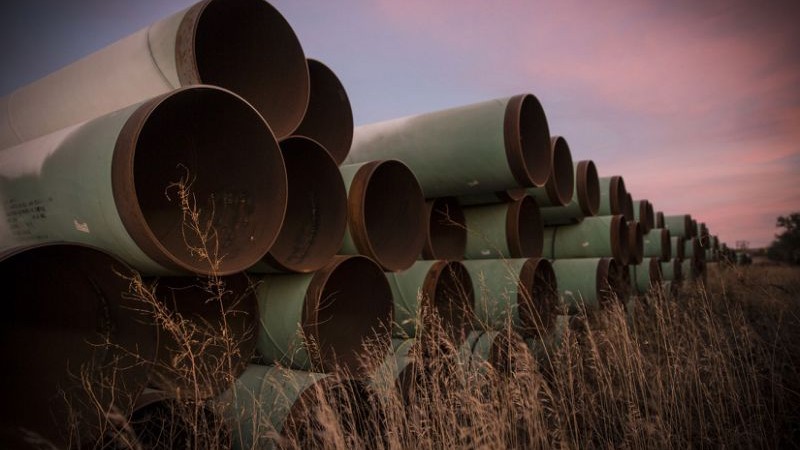
Bosnia and Herzegovina has become the latest target of U.S. President Donald Trump's disruptive foreign policy agenda, with an opaque energy deal fraught with conflicts of interest at its core. Since the second half of 2025, the Trump administration has been systematically dismantling longstanding U.S. policy toward the country, driven by a desire to secure a pipeline from Croatia capable of delivering American liquefied natural gas (LNG). The deals have been brokered in part by a little-known company run by Trump loyalists.
The administration has moved into a country that has maintained fragile stability since the 1995 Dayton peace agreement ended the Bosnian War. That agreement created a highly decentralized state composed of two entities—the Federation of Bosnia and Herzegovina and Republika Srpska—plus a small district, with weak central institutions designed to balance competing ethnic interests. Those structural weaknesses have made the country a persistent arena of contention among domestic political actors and outside powers, including Russia, which has long used energy dependency and political influence to maintain leverage in the Western Balkans. Central to the strategy is a gamble that Washington can unleash—and then control—Milorad Dodik, the Bosnian Serb strongman who has spent years challenging the authority of the Bosnian state and threatening its constitutional order.
The Step-By-Step Dismantling of Bosnia
The blueprint emerged through a lobbying contract between Republika Srpska—Bosnia's Serb-majority entity—and RRB Strategies, headed by former Illinois governor and Trump ally Rod Blagojevich. Blagojevich himself was convicted on federal corruption charges in 2011, including for attempting to sell the U.S. Senate seat vacated by Barack Obama, and had his sentence commuted by Trump in 2020. Parallel efforts were underway through the Gold Institute for International Strategy, where Michael Flynn worked to connect Dodik with "decision-makers and influential figures in Washington." Flynn, Trump's former national security adviser, is a retired lieutenant general who pleaded guilty in 2017 to lying to the FBI about contacts with Russia before receiving a presidential pardon in 2020. He later became a prominent election-denial activist, and his brother now fronts the company slated to develop the pipeline to Croatia.
Step 1: Rehabilitate Milorad Dodik
Dodik has dominated Republika Srpska while repeatedly threatening secession and attempting to strip Bosnia's central institutions of authority. The U.S. first sanctioned him in 2017 for obstructing the Dayton agreement. The Treasury sanctioned him again in January 2022 for attacks on Bosnian state institutions and corruption, accusing him of using patronage, bribery, and government contracts to enrich himself and his associates.
Washington later extended sanctions to Dodik's children, Igor and Gorica, and companies tied to the family. The Treasury said in 2023 that Dodik had directed government contracts and monopolies to private companies overseen by family members and associates. A further round in 2024 targeted companies in Igor Dodik's financial network, including Prointer ITSS, Infinity International Group, Kaldera, Sirius 2010, Elpring, and Nimbus Innovations.
The groundwork for Dodik's rehabilitation began months before the formal delisting. In March 2025, Republika Srpska hired RRB Strategies to lobby the Trump administration. The stated mandate included lifting U.S. sanctions on Republika Srpska officials, opposing High Representative Christian Schmidt, pushing for the elimination of the Office of the High Representative (OHR), and establishing "intensive and personal contacts" with senior State Department officials.
By fall 2025, Washington was negotiating directly with Dodik's government. Republika Srpska subsequently reversed several measures challenging Bosnia's state institutions and accepted Dodik's departure from the entity presidency. The State Department characterized these reversals as the fruit of U.S.-led crisis diplomacy—diplomacy addressing a crisis Dodik himself had created.
The payoff for Dodik was swift. The U.S. Treasury removed four Dodik allies from the sanctions list on October 17. Twelve days later, on October 29, OFAC removed Dodik himself, along with his children, senior Republika Srpska officials, and dozens of associated individuals and companies. Reuters reported on the delisting, but the Treasury offered no detailed public explanation for the mass removal.
Step 2: The Overnight Emergence of a Pipeline Deal
The pipeline in question—the Southern Interconnection—is designed to bring American LNG into Bosnia and reduce the country's reliance on Russian gas, a reliance that Europe embraced for decades. Since Russia's 2022 invasion of Ukraine, the EU has made reducing dependence on Russian energy a top strategic priority, accelerating efforts to diversify gas sources and expand LNG import infrastructure across the continent. The Southern Interconnection fits within that broader push. The EU, including Schmidt, long supported and facilitated the project.
The pipeline itself is not controversial in Brussels. The EU welcomes the concept—but not at the cost of destabilizing the Bosnian state, and not when placed in the hands of an opaque company created overnight by figures close to the U.S. president, without any competitive tender process.
The chronology reveals the nature of the arrangement.
Just 22 days after sanctions were lifted from Dodik and his family—and before the American company AAFS even existed—U.S. officials were already moving to secure pipeline development for themselves. On November 20, 2025, U.S. Chargé d'Affaires John Ginkel met leaders of the five main political parties in Bosnia's Federation entity and proposed a new model for the Southern Interconnection: an American private company would develop, build, and manage the pipeline. Federation leaders agreed in principle. The U.S. Embassy stated that American investment would accelerate construction and provide Bosnia with "affordable and reliable" U.S. LNG. The company was not identified at the time.
Four days later, on November 24, AAFS Infrastructure and Energy LLC was incorporated in Wyoming.
AAFS was not entirely new. Sarajevo businessman Amer Bekan had registered a Bosnian company under the same name in 2021. Described by an international consultant based in the U.S. and Sarajevo as a lobbyist and fixer working behind the scenes for the highest bidder, Bekan was identified in a 2019 industry biography as CEO of Karimpol Group for Bosnia, Serbia, and Croatia, and "one of the largest lobbyists for foreign investments in Bosnia and Herzegovina." He founded his own political party, Prva Stranka, in Sarajevo in 2014 and ran for mayor of the Centar municipality in 2016, finishing last. The party's financial records listed its headquarters at Splitska 12 in Sarajevo—the same address later used by the original Bosnian AAFS.
Bekan was also accused of selling votes to Dodik. During the 2020 local elections, former Srebrenica mayor Camil Durakovic publicly accused Bekan of selling Prva Stranka's positions on Srebrenica polling boards to Dodik's SNSD party. Durakovic said he had evidence, citing a message he attributed to an SNSD member indicating the positions had been paid for. Bekan denied the accusation and threatened legal action. No subsequent court rulings have been recorded.
The new AAFS was formed when Bekan was brought into the American venture by Trump's personal lawyer, Jesse Binnall, and Michael Flynn's brother, Joe Flynn. Binnall has represented Trump in challenging the results of the 2020 election and in other post-presidency legal matters. Bekan was recruited not for any experience in energy infrastructure—he has none—but for his connections, lobbying abilities, and influence over government contracts.
By January 2026, Washington was openly backing AAFS. Binnall and Flynn arrived in Sarajevo and, with Ginkel at their side, began meeting Bosnia's political leadership. On January 12, they met Foreign Minister Elmedin Konakovic. The following day they met Dragan Covic, leader of the largest Bosnian Croat party and deputy speaker of the House of Peoples. The U.S. Embassy said the meetings would explore how "American capital and resources" could develop and operate the Southern Interconnection.
AAFS has no infrastructure development experience or resources of its own. It functions as a middleman: it proposes to secure the concession and financing, then rely on other companies for engineering, construction, and operational expertise. AAFS has not identified who would engineer or build the Southern Interconnection, who would operate it, or which investment funds would provide capital. It has not disclosed all of its shareholders. Binnall and Flynn are acknowledged owners, while Bekan has confirmed others exist without naming them.
The question of why Bosnia permitted this arrangement—without a tender—is significant.
The Southern Interconnection had already been under development for years by BH Gas and Croatia's Plinacro, the established gas-transmission operators on either side of the border. The two companies signed a cooperation agreement covering the route in 2017 and continued joint development work, including the interconnection point between Croatian and Bosnian transmission systems. Under the original plan, BH Gas would develop and operate the Bosnian section, while Plinacro handled the Croatian side.
There was also no shortage of established American companies capable of participating. Bechtel representatives arrived in Sarajevo in January to discuss the Southern Interconnection. Bechtel has decades of experience delivering major pipelines and energy infrastructure. Yet no tender was held to determine whether Bechtel, another international pipeline developer, the existing transmission operators, or any qualified consortium could offer better terms.
AAFS was simply inserted into the project.
By April, parliament had amended the Southern Interconnection law to remove BH Gas from its previous role and place AAFS at the center. A company incorporated in Wyoming less than five months earlier—with no comparable project history and no disclosed engineering, construction, or operating partners—was now positioned between Bosnia and the firms that would actually build and operate its strategic gas corridor.
Bechtel could still end up building the pipeline while AAFS controls the deal. Bechtel emerged as a potential construction partner in January and was still being discussed alongside AAFS in March, but no final construction contract has been publicly announced. Had the goal been simply to involve an experienced American firm, Bosnia could have contracted directly with an EPC company like Bechtel, or tendered a concession requiring bidders to disclose financing, contractors, and operators.
Such a process would have eliminated the middleman position for Bekan, Flynn, and Binnall.
Because there was no competitive tender, Bosnia never required AAFS to compete on the qualifications ordinarily used to award such projects: technical experience, financing, proposed contractors, operating expertise, price, and terms. The opacity extends well beyond AAFS's ownership. Bosnia does not publicly know all the individuals behind the company, the sources of its funding, which companies will perform the work, or how much of the project's value AAFS and its shareholders will retain.
High Representative Christian Schmidt ultimately resigned over the deal process—not over the pipeline concept itself.
The total proposed investment across the Bosnian projects has reached approximately €1.5 billion.
AAFS's ambitions extend well beyond the pipeline. The company has proposed three gas-fired power plants and has sought control of Bosnia's key international airports. AAFS proposed a 30-year concession to operate Sarajevo International Airport, with an option extending an additional 20 years, and a separate 30-year concession for Mostar Airport. Mostar's city council approved proceeding with the concession process in June. Sarajevo has not awarded AAFS an airport concession.
This represents an extraordinary trajectory for a company whose American incarnation did not exist when Trump returned to office. Within months, AAFS became the preferred investor in a strategic international gas pipeline, the prospective developer of three power plants, and a bidder for decades-long control over two international airports. Its acknowledged owners include the president's personal lawyer and the brother of Michael Flynn. Its other shareholders, financing, and technical partners remain undisclosed. Throughout this expansion, the U.S. Embassy has been at its side.
Binnall has called the Southern Interconnection a "priority" of the Trump administration—a statement that carries particular weight given that he is simultaneously Donald Trump's personal lawyer and a shareholder in the company positioned to profit from that policy.
Step 3: Dismantle the Office of the High Representative
The Southern Interconnection pipeline crosses an international border and requires decisions at the Bosnian state level. It also runs into one of the country's most explosive unresolved postwar disputes: state property. Roughly one-third of the proposed route crosses land classified as state property, ownership of which Bosnia has never settled.
Dodik has spent years fighting over this issue from the opposite direction, asserting that public property within Republika Srpska belongs to the entity. Bosnia's Constitutional Court has repeatedly rejected Republika Srpska's attempts to claim state property. For Dodik, control over state property is central to his effort to transfer power and assets from Bosnia's central institutions to Republika Srpska.
Washington therefore needed cooperation from the same politician it had sanctioned for years. Dodik complied. In April, he announced that the Republika Srpska government had approved the Southern Interconnection, framing it as primarily a Federation project. His support came with a condition: Republika Srpska's own projects should no longer be blocked.
One such project is particularly significant. Republika Srpska has been pursuing its own €500-million Eastern New Interconnection, which would connect the entity directly with Serbia and maintain access to the Russian gas system. As recently as June, Dodik was in St. Petersburg for talks involving Gazprom while Republika Srpska continued preparations for that pipeline.
The result is a striking arrangement: Washington promotes the Southern Interconnection as the project that will sever Bosnia's dependence on Russian gas, while the country's most powerful pro-Russian politician supports it on the condition that Republika Srpska be allowed to pursue its own pipeline for Russian gas.
The unresolved state-property question presented another obstacle. The High Representative—the international official in Bosnia with extraordinary powers—could intervene in such disputes. The position was created under Dayton and vested with the so-called Bonn powers, which allow the office to impose legislation, dismiss elected officials, and enforce decisions when Bosnia's domestic institutions cannot agree. Schmidt held the authority to use the Bonn powers to impose legislation without waiting for Bosnia's political institutions to agree. But Schmidt refused to impose a permanent division of state property.
That refusal was inconvenient for Washington, because a settlement could have solved two problems simultaneously: clearing the land needed for the AAFS pipeline and giving Dodik something he had demanded for years—Republika Srpska's control over state property within the entity. Schmidt had previously used his powers to block Dodik from achieving precisely that. In 2022, he suspended a Republika Srpska law claiming state property for the entity, maintaining that Bosnia—not Republika Srpska—held authority over its disposal.
Washington needed a High Representative willing to act where Schmidt would not. Removing or weakening the OHR would create a direct path for Dodik and American officials to act unilaterally.
In May 2026, Schmidt announced his resignation under intense U.S. pressure. Washington then backed veteran Italian diplomat Antonio Zanardi Landi as his replacement, with Trump-aligned officials stating the pipeline would be resolved once Landi took over—without explaining how. An AAFS representative told senior Bosnian parliamentarians that the state-property issue would be settled once Landi assumed the role. Landi's own platform did not address state property.
The EU has not acquiesced. France, Germany, and Britain have resisted Landi's appointment, backing French diplomat René Troccaz instead.
The High Representative is selected through the Steering Board of the Peace Implementation Council (PIC), where the U.S. campaign has encountered resistance from European allies. France nominated its Western Balkans envoy Troccaz, with Germany and Britain supporting him. The United States backed Landi, joined by Italy, Turkey, and Japan.
The first attempt to choose Schmidt's successor on June 4 ended without agreement after hours of negotiations in Sarajevo, despite American pressure to appoint Landi that day. Washington then escalated, demanding Schmidt's immediate departure rather than allowing him to remain through Bosnia's October elections, as an earlier compromise with Germany had envisioned.
At the next PIC meeting on June 30, Washington succeeded in forcing Schmidt out immediately—but could not secure Landi's installation. The meeting ended without agreement on a successor, leaving Schmidt's American deputy, Louis Crishock, temporarily in charge. The PIC failed again on July 14, leaving Crishock in charge indefinitely. No date has been set for another attempt.
This contest is not merely about who replaces Schmidt; it is about who controls an office empowered to settle the state-property dispute that stands in the way of the AAFS pipeline. Europe has thus far prevented Washington from completing that element of the plan.
Crishock has effectively become the pipeline kingmaker, though his public statements and his background as a career diplomat at the OHR since 2024 do not indicate he is actively seeking to cooperate with Trump on using the Bonn Powers to resolve the state-property question.
Unleashing Dodik
Since Trump lifted pressure on Dodik, the outcome has not unfolded as Washington anticipated. Dodik has proven difficult to control.
Within weeks of the sanctions relief, Washington's gamble was already unraveling. By January, Dodik was again openly advocating secession and defying Bosnia's Constitutional Court. By February, he used a U.S. visit to call Sarajevo the "enemy of Republika Srpska" and demand the expulsion of the High Representative. By March, a bipartisan group of U.S. lawmakers urged the Trump administration to reimpose sanctions, warning that the delisting had emboldened him. By May, Dodik was back in Moscow meeting with Putin. By June, Republika Srpska was deepening talks with Gazprom and pursuing the €500-million pipeline that would preserve the very Russian gas relationship Washington claims it is trying to dismantle.
By Charles Kennedy for Oilprice.com
