Trump Could Expand Federal Bitcoin Custody, but Not Create a Predictable Multibillion-Dollar Buyer
Key Takeaways
- •Federal Bitcoin holdings usually come from enforcement actions such as seizures, forfeitures, and fraud recoveries rather than direct market purchases.
- •The March 2025 order focuses on coins the government already controls instead of requiring ongoing accumulation.
- •The White House can influence custody practices, but Congress controls appropriations for fresh Bitcoin purchases.
- •Without statutory backing and funding, the government cannot become a reliable multibillion-dollar Bitcoin buyer.
- •Market reactions may overstate the policy impact because a reserve based on existing custody does not guarantee new capital entering Bitcoin markets.
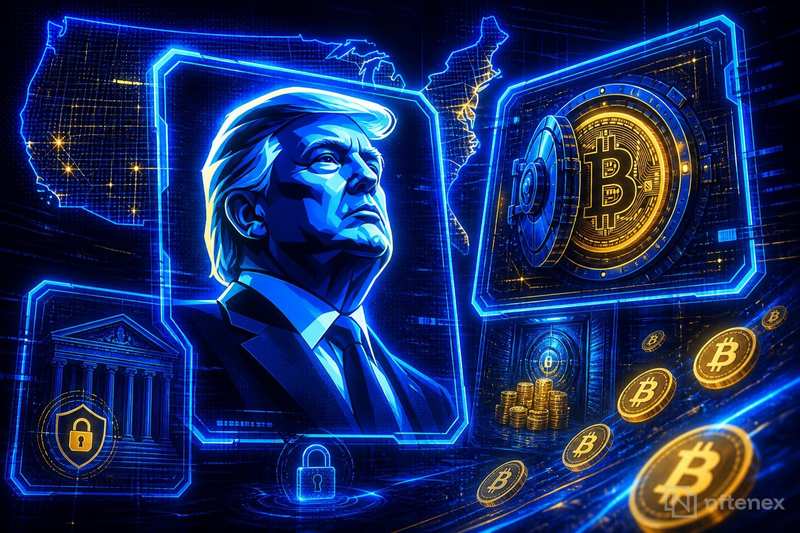
What Trump Could Actually Change About Federal Bitcoin Custody
There is a practical gap between Bitcoin that already ends up in government hands and Bitcoin acquired proactively in markets. The March 2025 presidential action centers the reserve on coins the government already controls rather than on a standing order to accumulate. For related coverage, see Warren Presses Commerce Department Over Bitmain Security Risks and Trump Crypto Ties.
Custody balances can grow through enforcement, forfeiture, seizure, and agency handling decisions. In practice, federal Bitcoin has typically entered government hands through criminal cases — dark-web marketplace proceeds, fraud recoveries, and similar seizures — with agencies such as the Department of Justice and the U.S. Marshals Service managing the assets and, in past cycles, auctioning them rather than holding. Those inflows are largely a matter of administrative interpretation and process, which an administration can influence more readily than it can create new authority to buy. For related coverage, see Warren Presses Commerce Department Over Bitmain Security Risks and Trump Crypto Ties.
That distinction matters because headline readers may confuse a larger federal stack of coins with an intentional buying strategy. Bigger holdings can accumulate on federal balance sheets without any market-facing buy order behind them.
TLDR KEY POINTS
- Custody inflows such as seizures and forfeitures are not the same as direct market purchases of Bitcoin.
- Executive power can widen how coins enter federal custody, but it cannot guarantee sustained buying.
- A durable, multibillion-dollar buyer requires funding and statutory backing that Congress controls.
Why the White House Cannot Turn That Into a Predictable Multibillion-Dollar Buyer
Asset custody authority and appropriated spending authority are different powers. Reporting on the order stressed that while the White House can direct how existing Bitcoin is held, Congress controls the wallet when it comes to spending fresh money.
A predictable buyer requires durable funding, procurement logic, or statutory backing. Executive power is not the same as congressional authorization, and coverage of the order questioned whether it delivered on the promise of a strategic reserve or mostly formalized holdings already in hand. The pattern is familiar from other federal stockpiles: long-standing reserves such as the Strategic Petroleum Reserve were established and funded by statute, whereas executive actions that lack new appropriations remain vulnerable to being narrowed, challenged in court, or rescinded by a successor administration.
Predictability is what markets price, not one-off symbolic actions. When policy tools are discretionary, temporary, or open to legal challenge, the expectation of a repeatable multibillion-dollar buyer breaks down, even if the government continues to hold coins.
What This Means for Bitcoin Markets and Investor Expectations
Traders can overprice policy headlines that sound stronger than the authority behind them. A reserve built on existing custody is politically meaningful, but it does not guarantee fresh capital entering Bitcoin markets. The debate over whether Washington should fund purchases has surfaced elsewhere, including when the U.S. Treasury dismissed using gold reserves to buy Bitcoin.
Political signaling can still move sentiment even without a formal buying program, which is part of why the reserve drew attention despite its limited market mechanics. The same crypto-policy crosscurrents run through disputes like Senator Warren’s scrutiny of the administration’s crypto ties, and they surface at the state level in fights over Kentucky’s Bitcoin ATM regulation.
The asymmetry is the takeaway: an administration can plausibly widen how Bitcoin enters federal custody, but it cannot on its own promise the market an assured, ongoing giant buyer. For readers watching how this develops, the observable signals sit largely in Congress — budget lines or authorizing legislation for acquisitions, oversight of how forfeited coins are stored or sold, and any litigation testing the order’s reach. Without statutory backing, the reserve’s footprint remains tied to enforcement outcomes rather than policy-driven buying, and investors weighing the reserve should separate narrative impact from executable federal demand.
Disclaimer: This article is for informational purposes only and does not constitute financial or investment advice. Cryptocurrency and digital asset markets carry significant risk. Always do your own research before making decisions.

