Trump Backs Embattled FIFA President Infantino Amid Global Football Revolt
Key Takeaways
- •President Trump declared it would be a terrible mistake for FIFA to replace Infantino, praising his management of the most successful World Cup to date.
- •Infantino was forced to shelve a proposal to raise $4 billion by selling a 20% stake in FIFA Forward Enterprise after fierce opposition from major confederations.
- •Three of FIFA's four largest confederations have withdrawn their trust in Infantino, while he continues to hold support from Africa and South America.
- •UEFA accused Infantino of attempting to enrich himself after it was revealed that Joshua Kushner, brother of Trump's son-in-law, was among the proposed investors.
- •FIFA projects revenue of $15 billion for the 2023-26 cycle, driven by the upcoming World Cup featuring the highest ticket prices in the tournament's history.
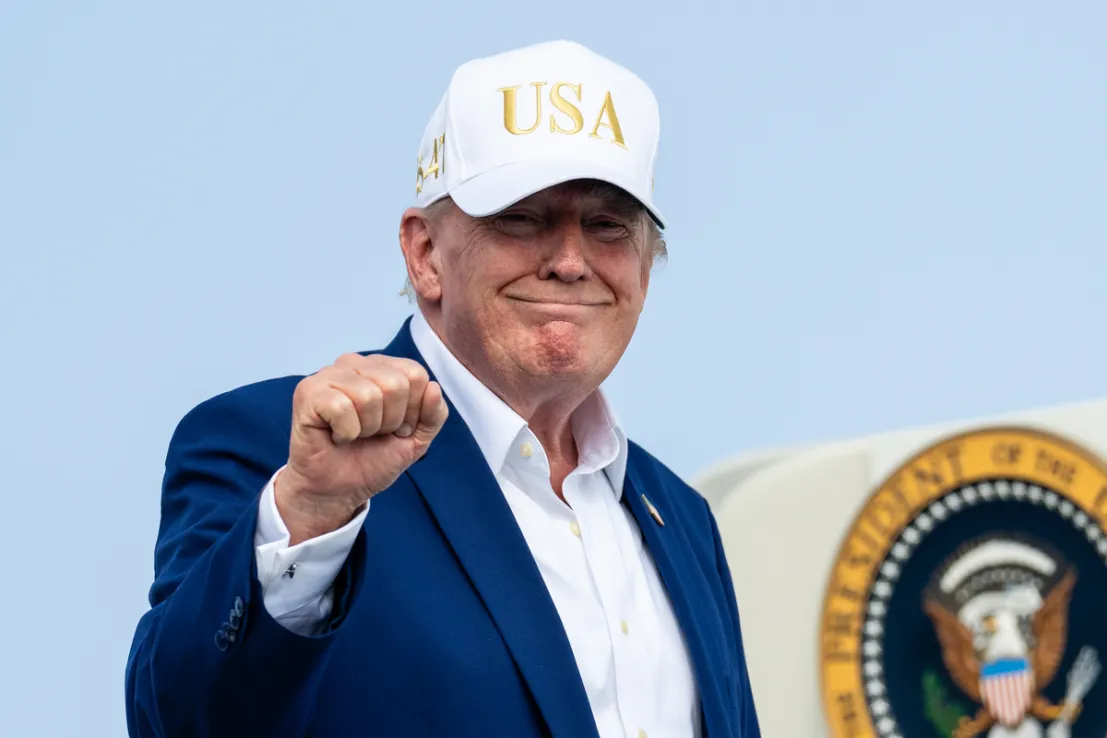
US President Donald Trump has publicly thrown his support behind FIFA President Gianni Infantino, declaring it would be "a terrible mistake" to replace the under-fire leader as three of FIFA's four largest confederations withdraw their trust.
Infantino is battling to retain his position after a backlash over a proposal to sell stakes in a newly created company that would hold the commercial rights to the World Cup. The controversy erupted two weeks ago and has since intensified, with opposition mounting from Europe's UEFA and other major confederations.
In a social media post, Trump wrote: "Fifa would be making a terrible mistake if, for any reason, they even considered replacing President Gianni Infantino. He is fantastic, having just presided over the most successful World Cup, by four times, ever presented. If he is gone, it will never be as successful or profitable again!"
The US President developed a close relationship with Infantino as the United States prepared to host the 2025 Club World Cup and the 2026 World Cup. Last year, Infantino awarded Trump the inaugural FIFA Peace Prize.
Infantino continues to hold the backing of Africa and South America heading into next year's elections. That support reflects FIFA's one-member-one-vote system, in which each of the 211 member associations has an equal vote regardless of size or revenue, giving smaller federations that benefit from FIFA's development programmes significant influence in presidential elections. FIFA strongly denied last week that Infantino had sought Trump's support.
Expansion and Friction
During Infantino's decade as president, FIFA has expanded both the men's and women's World Cups and transformed the Club World Cup into a 32-team tournament held every four years. The expanded Club World Cup, set to debut in the United States in 2025, represents a new commercial product whose revenue potential remains untested. However, that expansion has generated friction with regional confederations — chiefly UEFA — as well as domestic leagues, clubs, and players who have voiced frustration over what they see as unilateral decisions affecting the global football calendar. Player welfare groups, including the global players' union FIFPRO, have separately warned about the growing strain on athletes from an increasingly congested schedule.
The breaking point came with Infantino's plan to establish a spin-off commercial entity, FIFA Forward Enterprise, and raise $4 billion by selling a 20 per cent stake to private investors. The proposal came amid a broader wave of private capital flowing into global sports, with leagues and federations across football, golf, and other sports exploring similar partnerships. One of those proposed investors was Joshua Kushner, brother of Trump's son-in-law Jared Kushner, a detail that amplified the backlash and prompted UEFA to accuse Infantino of attempting to enrich himself and his associates.
The fierce opposition forced Infantino to shelve the proposal.
Infantino Resists Calls to Step Down
FIFA has defended the now-shelved plans as a means to increase financial distributions to all member nations and equalise resources across the sport. Critics have countered that the organisation could accomplish that goal without external investment, given that it sits on billions of dollars in reserves.
This summer's World Cup is projected to push FIFA's revenue to $15 billion for the 2023–26 cycle, bolstered by the highest ticket prices in the tournament's history.
Opponents within the confederations are hoping to pressure Infantino into stepping down, but he has shown no indication of resigning since the crisis erupted. With elections scheduled for 2026, the coming months will determine whether the confederation revolt galvanises a viable challenger or whether Infantino's base of support among member associations holds firm.
