Trump Family Crypto Firm Works With AI Platform Offering Chinese Models US Called Security Risks
Key Takeaways
- •WorldClaw accepts World Liberty Financial’s USD1 stablecoin for access to its AI models, and the companies are working to expand that use.
- •WorldClaw offers 90 AI models, including 43 developed by Chinese companies and models from OpenAI and Anthropic.
- •Several Chinese developers on the platform, including Z.ai, Alibaba, and Baidu, have faced U.S. government restrictions or designations.
- •The financial terms of the World Liberty-WorldClaw relationship have not been disclosed, intensifying conflict-of-interest scrutiny of the Trump family’s crypto ventures.
- •Anthropic has accused some Chinese AI firms available on WorldClaw of large-scale model distillation and has urged tighter export controls.
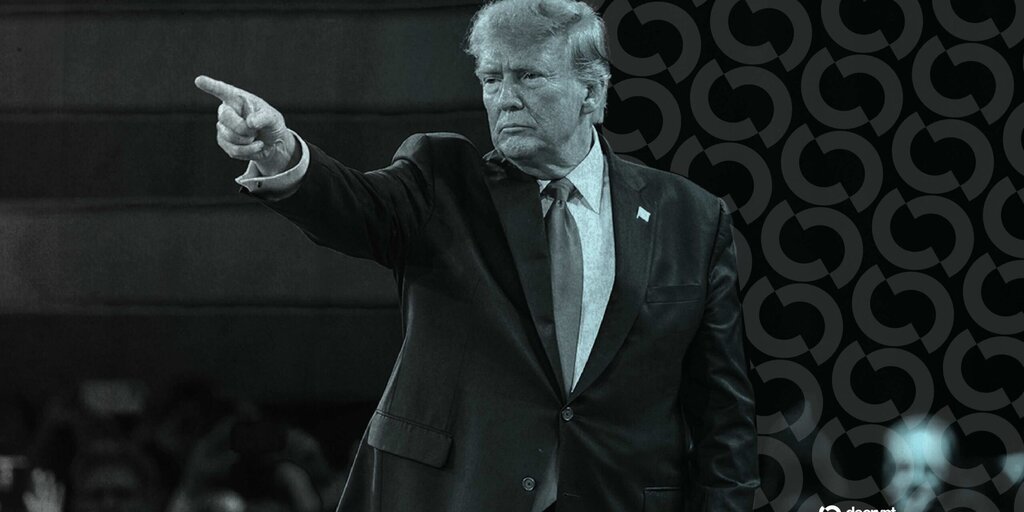
World Liberty Financial, the crypto venture backed by President Donald Trump's family, is working with an AI company whose platform offers models from Chinese tech firms that his administration has flagged over national security concerns, Reuters reported Monday.
According to Reuters, the companies are collaborating to expand the use of World Liberty's USD1 stablecoin, which WorldClaw accepts as payment for access to its AI models. USD1 is a dollar-pegged token the firm launched in March 2025, months before Trump signed the GENIUS Act establishing the first federal regulatory framework for payment stablecoins. World Liberty executive Ryan Fang also serves as an adviser to WorldClaw.
Hong Kong-based WorldClaw offers access to dozens of AI models. Of its 90 models, 43 were developed by Chinese companies, including Alibaba, Baidu, Z.ai, DeepSeek, and Moonshot. The platform also offers models from OpenAI and Anthropic.
World Liberty spokesperson David Wachsman said WorldClaw is independent, noting that major U.S. firms also offer both Chinese and American AI models. "This is a common and widely accepted approach," Wachsman told Reuters. Multi-model aggregator platforms that route user requests across many providers' systems have become an established part of the AI industry, with services such as OpenRouter offering comparable breadth across vendors.
Several of the Chinese developers whose models appear on the platform have been the target of U.S. government restrictions. In January 2025, Z.ai—formerly Zhipu AI—was added to the Commerce Department's Entity List, restricting its access to U.S. technology. In June, the Pentagon designated Alibaba and Baidu as "Chinese Military Companies Operating in the United States" (PDF), a designation that bars the Defense Department from doing business with them.
"Alibaba is not a Chinese military company nor part of any military-civil fusion strategy," an Alibaba spokesperson told Reuters, calling the designation "arbitrary and capricious" and saying the company would sue to have it removed.
The financial dimensions of the arrangement remain undisclosed: it is unknown how much the Trump family has earned from WorldClaw or what the financial terms are between the companies. The lack of disclosed terms adds to the conflict-of-interest scrutiny that has followed the family's crypto ventures since Trump took office, with ethics watchdogs and Democratic lawmakers repeatedly raising concerns about his ongoing financial ties to the businesses. Alongside Ryan Fang's advisory role, Donald Trump Jr. and Eric Trump have promoted the platform publicly, with Trump Jr. announcing WorldClaw's WorldRouter launch on X in May.
Big news: @WorldClawAI just launched WorldRouter, settled in USD1 with @worldlibertyfi . 300+ AI models, one router, cheaper inference. Solana and BNB Chain. Pay in USD1 or lock $WLFI for top tiers. 👉
Top tier gets: • Premium WorldClaw hardware to run AI…
— Donald Trump Jr. (@DonaldJTrumpJr) May 5, 2026
The news comes as several Chinese AI firms available on WorldClaw have also been accused of distillation attacks against U.S. AI developers. In February, Anthropic—whose own models are among those WorldClaw offers—accused DeepSeek, Moonshot AI, and MiniMax of using roughly 24,000 fraudulent accounts to generate more than 16 million Claude exchanges through model distillation, a technique in which one AI model learns from another's outputs. In June, Anthropic urged Congress to tighten export controls and penalize large-scale model extraction.
"We believe combating the threat of illicit distillation requires coordinated action between government and industry, and we will continue working with Congress and the administration to maintain American AI leadership," an Anthropic spokesperson told Decrypt.

