Trump's Alleged Arms-Sale Pitch to Xi Jinping Exposes 'Incoherence and Incompetence,' Analysis Finds
Key Takeaways
- •U.S. Ambassador to China David Perdue said President Trump asked Chinese President Xi Jinping whether he would like to purchase American military hardware during a discussion of U.S. arms sales to Taiwan.
- •Trump said he had not heard about such an offer while adding that China would probably want to buy American equipment because the United States makes better hardware.
- •Official statements from the White House and the State Department did not dispute that Trump raised the idea with Xi but emphasized that no official offer is in place.
- •MS NOW reporter Zeeshan Aleem argued that selling arms to China would undermine the U.S. military advantage and its practice of supplying billions of dollars in defensive arms to Taiwan under the One China policy in place since 1979.
- •The controversy stems from Trump's hosting of a controversial state visit by Xi Jinping last week.
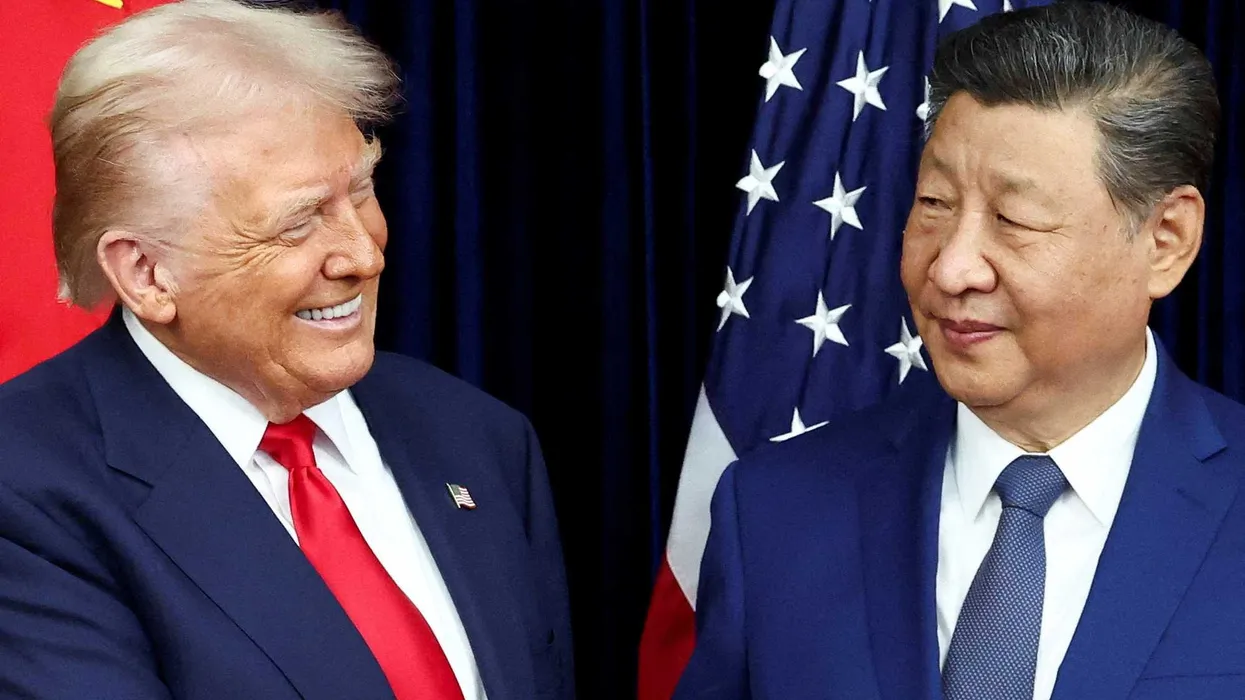
Recent claims emerging from the White House are "mind-boggling," according to a new analysis from MS NOW, which argues they further expose President Donald Trump's "remarkable combination of incoherence and incompetence."
The controversy stems from Trump's hosting of a controversial state visit by Chinese President Xi Jinping last week. In its aftermath, David Perdue, the U.S. ambassador to China, advanced the claim that the president had asked his counterpart whether he wanted to purchase American military hardware. Trump later said he had not heard about such an offer, but added, "they'd probably like to buy it because we do make better equipment than that, so maybe it's a good idea."
Perdue's account came as he described Trump's conversation with Xi about U.S. arms sales to Taiwan, a longstanding point of contention with China. As Perdue explained it, Trump sought to downplay the relationship, saying, "Hey, we sell arms to other people around the world," before he "actually asked President Xi, would he like to buy some at one point?" Official statements from the White House and the State Department did not dispute that Trump raised the idea with Xi, but stressed that no official offer is in place. That distinction means the episode, as described publicly, concerns an alleged conversation rather than a completed arms transfer or announced policy change.
"This scenario, if true, is mind-boggling," MS NOW reporter Zeeshan Aleem wrote. "And if Perdue's claims are not true and he was saying something false, that's a significant and confounding problem, too, because it would not just be a major lie, but a foolish one." He argued that because China is the only country in the world that threatens the U.S.' status as the world's preeminent military power — and because the U.S. takes great pains to guard its technological edge against rivals — selling highly coveted American arms to Beijing would undermine the U.S.' military advantage. "It is common sense to not empower a country that lands on the opposite side of a lot of global geopolitical jockeying," he wrote. "Given that, for example, Trump asked Xi to curb assistance to Iran, it would not make sense to boost Beijing's arsenal."
"If Trump made the offer, it would demonstrate total incoherence on China policy in the administration," Aleem added. Under the One China policy that has governed U.S. policy since 1979, the U.S. officially acknowledges China's position on Taiwan while maintaining informal diplomatic ties with the island and routinely supplying it with billions of dollars worth of defensive arms. "If the U.S. were to sell arms to China, it would undermine that entire calculation and would be akin to scoring an own goal," he wrote.
Aleem also observed that, despite the alarming nature of the alleged offer, it was on some level "not surprising at all" coming from Trump, given that "he lacks even a rudimentary knowledge of how things like trade and diplomacy work, and has an even poorer grasp of — or commitment to — U.S. traditions in those spheres." Such a move, he argued, would also fit Trump's well-established tendency to flout long-standing ties with democratic allies in order to better align himself with authoritarian states, whose leaders he openly admires.
"The capitals of the world are always watching Washington closely," Aleem concluded. "This episode shows a president who seems to have fewer and fewer wits about him — and a staff that lacks the competence or willpower to make up for it."

