White House Insiders Fear Trump's Approval Could Sink Into the 'Scary 20s' Before the 2026 Midterms
Key Takeaways
- •President Trump's approval ratings currently stand at 33 percent in a Reuters poll and 35 percent in a YouGov/Economist survey, while an American Research Group poll put his support at 30 percent.
- •White House insiders and Republican consultants reportedly worry that Trump's approval could sink into the high 20s, a level he has so far avoided in high-quality polls, and a senior administration official compared his trajectory to Herbert Hoover's 1932 unpopularity.
- •Private polls commissioned by Republican-aligned organizations reportedly show similarly weak numbers, with Trump's war on Iran cited by sources as a leading driver of the decline.
- •The president's party has lost House seats in every midterm election since World War II except 1998 and 2002, and Republicans hold narrow majorities in both chambers heading into November.
- •Approval ratings in the 20s are rare for modern presidents, with Gallup's record lows including Truman at 22 percent in 1952, Nixon at 24 percent in 1974, and George W. Bush at 25 percent in 2008; Trump's first-term Gallup low was 34 percent.
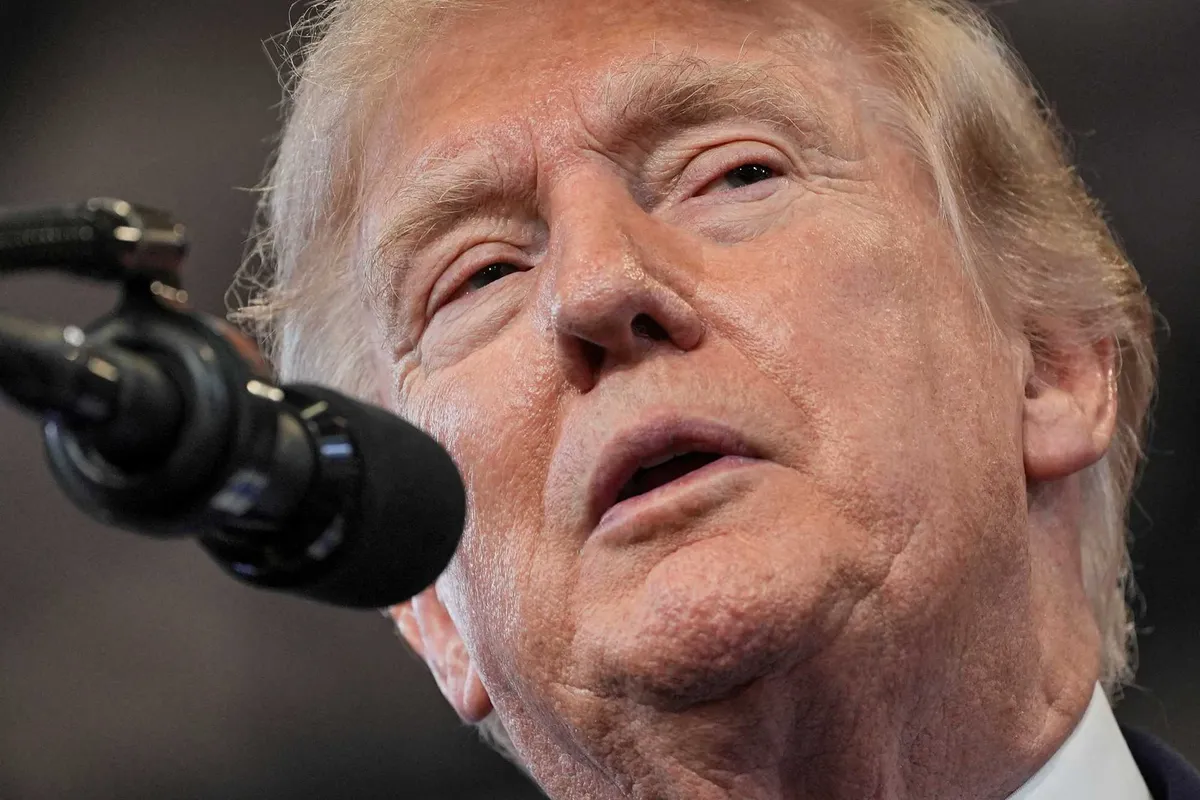
With the United States' 2026 midterm elections only two and a half months away, President Donald Trump continues to suffer from weak approval ratings in one poll after another — including 33 percent from Reuters and 35 percent from YouGov/The Economist. Control of both chambers of Congress is at stake in November, and Republicans hold narrow majorities in the House and Senate — a dynamic that has historically made the sitting president's approval rating a central factor in midterm races, since the president's party has lost House seats in every midterm since World War II except 1998 and 2002. But according to Zeteo's Asawin Suebsaeng, insiders in the Trump White House fear that his approval ratings could sink even lower in the weeks ahead — and that he could become as unpopular as President Herbert Hoover was in 1932.
Writing in his First Draft column for Zeteo (the outlet founded by former MS NOW host Mehdi Hasan), Suebsaeng lays out a complaint he says he hears constantly: "I have seen a lot of you making the same complaint, and it goes something like this: 'Donald Trump is such a horrendous U.S. president on so many different personal and policy fronts. I know his poll numbers are garbage right now, but how is it even possible that he's consistently clinging to more than 30 percent favorability in the polling? What does a doddering fascist have to do to crack the 20s?'"
The Zeteo columnist continues, "Well, in today's 'First Draft,' I may have a surprise for you: You're not the only ones wondering that. Some very well-connected consultants and Trump whisperers are thinking about the scary 20s, too — and they're not pleased about it. Plus, Trump's DOJ opens yet another absurd but frightening front in his war on his enemies, and the Iran stalemate keeps on stalemating hard."
The burning question surrounding Trump's approval ratings, according to Suebsaeng, is "how low can he go?"
Suebsaeng notes that a recent American Research Group poll found Trump's approval at 30 percent, although he cautions that ARG "doesn't have the reputation other pollsters do." That caveat matters: by Suebsaeng's account, what the consultants fear is precisely that the erosion could start showing up in the high-quality surveys that have kept Trump in the thirties.
According to Suebsaeng, "'Republican support for Trump has fallen as Democrats hold a big lead among enthusiastic midterms voters,' said the Economist and YouGov, noting that 'about one-third (35 percent) of Americans strongly or somewhat approve of Donald Trump's job performance as president.' Private polls commissioned by different organizations and arms of the Republican elite 'aren't much better,' I'm told by an operative close to the White House who has knowledge of data causing a sustained bedwetting from much of the party that President Trump is going to drag them down hard in the critically important midterms. Of course, one leading cause of these through-the-floor numbers is Trump's catastrophic war on Iran. The data, and common sense, tell you that."
Suebsaeng emphasizes that for all of his political vulnerabilities — from the Iran war to violent immigration ratings to the economy — Trump's approval ratings from major pollsters have stayed in the thirties, and he has avoided the twenties. The twenties are rare territory for modern presidents: Gallup's lowest recorded approval ratings include Harry Truman at 22 percent in 1952 during the Korean War, Richard Nixon at 24 percent in 1974 at the height of the Watergate scandal, and George W. Bush at 25 percent in 2008 amid the financial crisis. Trump's own low in Gallup's tracking across his first term was 34 percent.
"No matter how unpopular Trump has grown since early 2025," Suebsaeng writes, "conventional wisdom has held that he likely has a floor in the low-to-mid 30s, willing to stick by him through practically anything.… Not that many months ago, it was hard, even for someone like me, to imagine Trump ever again hitting the 20s in a high-quality poll. However mean, horrifying, and pathetic the Trump-Vance administration got, their leader seemed stuck in the low-to-mid 30s, riding a personality cult and a diehard conservative base that loves him or refuses to give liberals the satisfaction of defecting…. But today, keeping every caveat possible in mind, it does appear Trump is trending lower than before, with signs of ever-so-slightly-increasing erosion at the margins of his base."
Suebsaeng continues, "At this point, it is a mistake to brush off the possibility that he could plunge deeper, especially if his Iran war drags on and takes the economy with it ... Trump blundering back into the high 20s in any reputable poll was a prospect that had some practically rolling their eyes in disbelief, as recently as January."
Back in 1932, during the Great Depression, the GOP suffered one of its worst humiliations in U.S. history when President Herbert Hoover suffered a colossal defeat at the hands of the Democratic nominee: New York State Gov. Franklin Delano Roosevelt. Roosevelt carried 42 of the 48 states and won 472 electoral votes to Hoover's 59. Modern approval polling did not yet exist to measure Hoover's standing — Gallup was not founded until 1935 — so the Hoover comparison rests on results like those rather than on survey numbers. And a senior Trump administration official fears that, in terms of popularity, Trump is sinking into Hoover territory.
The official, interviewed on condition of anonymity, told Suebsaeng, "He keeps saying he doesn't want to become Herbert Hoover but then can't stop acting like he wants to be Herbert Hoover. He really could sink to the high 20s, I think. I would not have thought that last year."

