Trump Amplifies Debunked Claim About Justice Amy Coney Barrett's Voting Patterns
Key Takeaways
- •Trump shared a Truth Social post from podcaster Tim Pool alleging that Justice Barrett's voting alignment with conservative justices declined sharply after the Dobbs decision.
- •X's Community Notes fact-checking service flagged the claim as inaccurate, citing publicly available Supreme Court data showing Barrett votes with conservative colleagues at significantly higher rates than the post suggested.
- •Barrett was nominated to the Supreme Court by Trump in 2020, filling the vacancy left by Justice Ruth Bader Ginsburg's death and cementing a 6–3 conservative majority.
- •According to a USA Today analysis, the Supreme Court has ruled in the Trump administration's favor in a majority of cases, though several high-profile rulings went against the White House.
- •A sitting president publicly pressuring or critiquing justices he appointed is considered relatively unusual in modern political history.
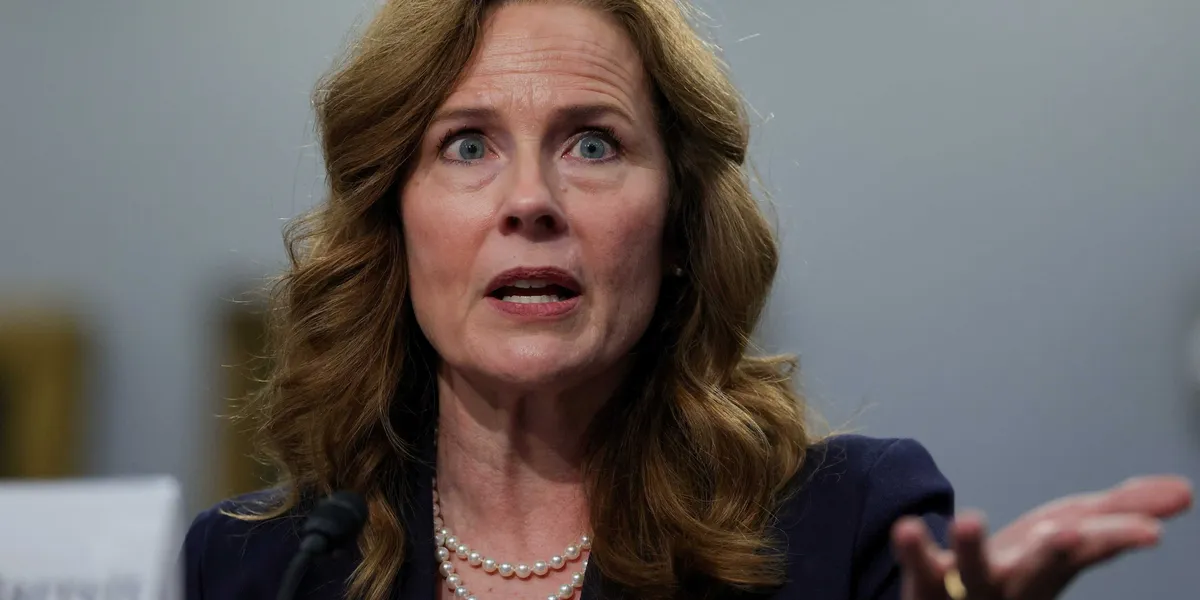
President Donald Trump shared a post on Truth Social from conservative podcaster Tim Pool suggesting that Supreme Court Justice Amy Coney Barrett is "clearly terrified of the left." The post, shared by Trump on Truth Social, echoed a viral claim that Barrett's voting alignment with other conservative justices had dropped from 81% to a range of 50–60% following the Supreme Court's ruling in Dobbs v. Jackson Women's Health Organization.
The underlying claim originated from an anonymous right-wing account on X and was amplified by Pool in a post on the platform. The account cited Barrett's alleged shifting voting patterns as evidence of ideological wavering, implying she had moved away from the conservative bloc on the bench.
However, X's Community Notes fact-checking service flagged the claim as inaccurate, citing publicly available Supreme Court data. According to the fact-check, Barrett has continued to vote with her conservative colleagues at significantly higher rates than the viral post suggested. Supreme Court agreement rates are tracked term-by-term through public voting records compiled by organizations such as SCOTUSblog and the Supreme Court Database, and aggregate alignment figures can vary substantially depending on which cases and timeframes are measured. The Dobbs decision, handed down in June 2022, overturned the constitutional right to abortion established under Roe v. Wade and was widely regarded as a landmark victory for the conservative legal movement.
Trump's amplification of the debunked claim reflects a pattern of growing public criticism directed at the Supreme Court, even as the institution has delivered numerous judicial victories for his administration alongside some notable defeats on his policy agenda. According to an analysis by USA Today, the Court has ruled in the administration's favor in a majority of cases, though several high-profile rulings have gone against the White House's positions. A president publicly pressuring or critiquing justices he appointed is relatively unusual in modern history and underscores the political stakes of the Court's remaining docket.
Data from SCOTUSblog on the 2025–26 term provides further context on the justices' voting alignments and agreement rates, which remain a subject of close public and media scrutiny.
Justice Amy Coney Barrett was nominated to the Supreme Court by Trump in 2020, filling the vacancy created by the death of Justice Ruth Bader Ginsburg. Her confirmation solidified a 6–3 conservative majority on the Court and was seen as one of the most consequential judicial appointments of Trump's presidency. Prior to her elevation, Barrett served on the U.S. Court of Appeals for the Seventh Circuit and was a law professor at Notre Dame, where her originalist interpretive approach drew strong support from conservative legal organizations.

