Trump Is Reducing the US to 'the Fall of Rome' at an Alarming Pace, Writes The i Paper
Key Takeaways
- •Nick Bryant, a former BBC correspondent, argued in The i Paper that Trump's policies are making the US increasingly friendless and evoke the decline of the Roman Empire.
- •Canadian Prime Minister Mark Carney has adopted a defiant, wartime-leader tone in the trade dispute, noting Canada supplies 85 percent of US electricity imports and 60 percent of crude oil imports.
- •Bryant cited the USS Abraham Lincoln scandals, depleted military stockpiles, reduced joint exercises with South Korea, and Israel's rejection of a Gaza peace plan as signs of America's waning influence.
- •European nations held a 'coalition of the willing' meeting on the Ukraine war without US participation, overseen by new UK Prime Minister Andy Burnham.
- •The piece notes the UK is resetting relations with Beijing while maintaining the special relationship, amid debate over whether the alliance strains are temporary or a lasting realignment.
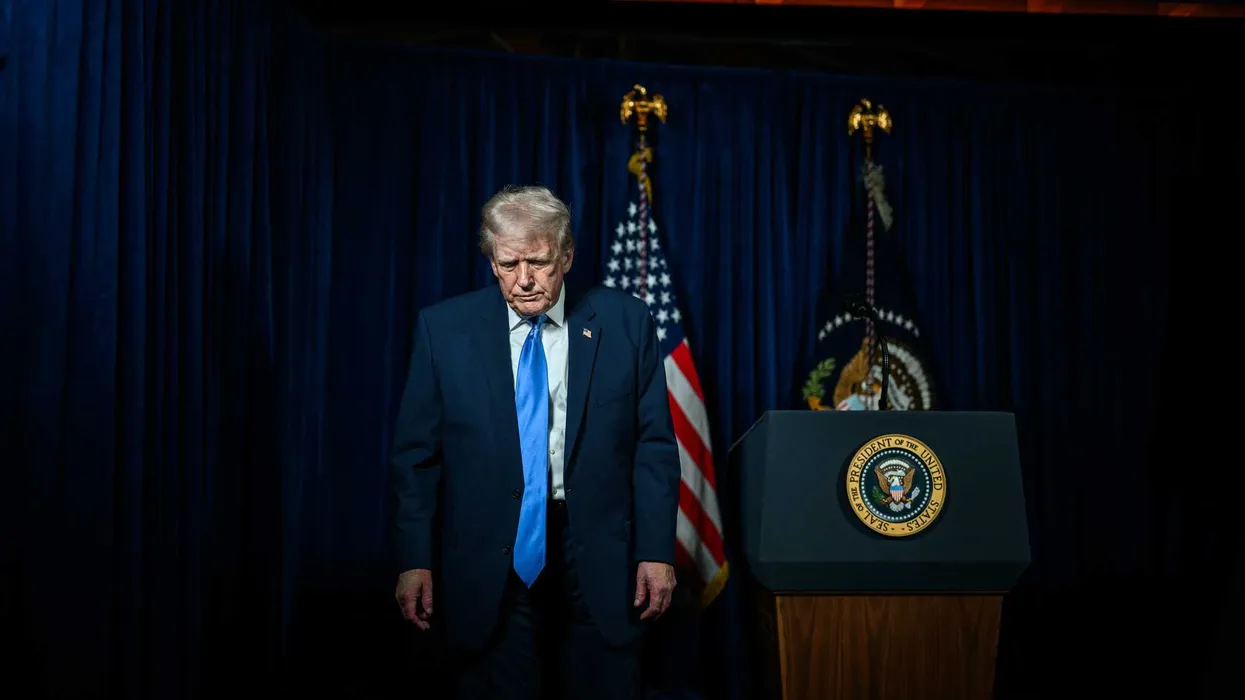
President Donald Trump is steering the United States toward something resembling the "fall of Rome" at an alarming rate, according to a new opinion piece from The i Paper, as his aggressive policies increasingly turn the nation into a "friendless" pariah. The piece is a columnist's assessment rather than a news report, but it lands amid a broader debate among allies and analysts about how Trump's tariff-driven approach to longtime partners is reshaping US relationships abroad.
Writing for the outlet on Saturday, reporter Nick Bryant — a former BBC correspondent who covered the United States for years — argued that the recent 250th anniversary celebrations in the United States had been transformed into something closer to "a season of national waning," even though Republicans had hoped the milestone would reinvigorate Trump and the party's electoral momentum. The "decadence" and "gold trappings" dominating Washington, D.C., and consuming Trump's attention, he added, evoke the "decline" and eventual collapse of the Roman Empire, a historical comparison that has circulated periodically in American political commentary but that Bryant applies to the current diplomatic climate in particular.
"Donald Trump's United States is becoming increasingly friendless," Bryant wrote. "American isolationism is conventionally thought of as an active choice by the United States itself. Now, as the age of America comes to an end, it is being imposed from outside by other countries, including long-standing allies. This week it was not the US President who was heralded as the leader of the free world, but the Canadian Prime Minister Mark Carney who adopted the tone of a wartime leader in the trade dispute with Washington. 'You're at war when you're attacked, and we got attacked,' said the former Bank of England governor, channeling his inner Churchill. Carney has dispensed with the deferential default adopted by so many Western leaders towards Trump and again opted for defiance."
Bryant continued: "A protracted dollar-for-dollar trade war would be more economically ruinous north of the border than south. But Canada has a significant economic arsenal. As Carney reminded his compatriots, it supplies 85 per cent of electricity imports, and 60 per cent of crude oil imports. It is also the largest customer for 26 US states, and a top three customer for 45. Trump, as well as threatening the destruction of the Canadian auto industry, has renamed Lake Ontario Lake America. Typically sophomoric, its the sort of stunt that again diminishes his office and his country."
Further "signs of America's waning have abounded" throughout Trump's harsh summer, Bryant noted, citing the bruising scandals involving the USS Abraham Lincoln, depleted military stockpiles, the pullback from joint exercises with South Korea, and Israel's rejection of a proposed Gaza peace plan. He also pointed out that several European nations recently convened a "coalition of the willing" meeting on the ongoing Ukraine war with no American involvement at all, with new U.K. Prime Minister Andy Burnham overseeing the proceedings — further evidence, in his view, of the country's diminished stature as a global leader. Such gatherings of European allies without US participation have drawn particular attention because European security cooperation has historically been organized around American leadership.
While the United Kingdom appears willing, for now, to sustain the "special relationship" with the United States, Bryant observed that it is simultaneously "diversifying diplomatically by resetting its relationship with Beijing," a signal of declining American influence.
"To say that 'America First' means America alone has become a cliché. More and more, it doubles as a truism," Bryant concluded. "Why, Trump is even thinking of rekindling his first term bromance with North Korean dictator Kim Jong-un. A summit between the two would highlight Trump's isolation: 'Little Rocket man' and an incredibly shrinking US president." The argument joins a growing body of commentary asking whether the current strain in US alliances amounts to a temporary rupture or a lasting realignment — a question likely to be tested by how the trade disputes with Canada and other allies develop in the months ahead.
