Trump Administration's Engagement with Alberta Separatists Raises Concerns Ahead of October Referendum
Key Takeaways
- •Treasury Secretary Scott Bessent publicly described Alberta as a "natural partner for the U.S." in January, citing the province's resources and noting discussions about a potential referendum on secession.
- •Only 30 percent of Albertans support secession, but experts warn that complacency among pro-union voters during the October referendum could inadvertently aid the separatist cause.
- •Any province-level vote on separation would be governed by Canada's Clarity Act of 2000, which requires a clear referendum question and a clear majority before the federal government would negotiate a province's departure.
- •The Alberta Prosperity Project is seeking a C$500-billion loan from the U.S. government to facilitate what it calls Alberta's seamless separation from Canada.
- •A former senior State Department official warned in February that the Trump administration's engagement with Alberta separatists is "irresponsible as hell" and could encourage behavior contrary to U.S. national interests.
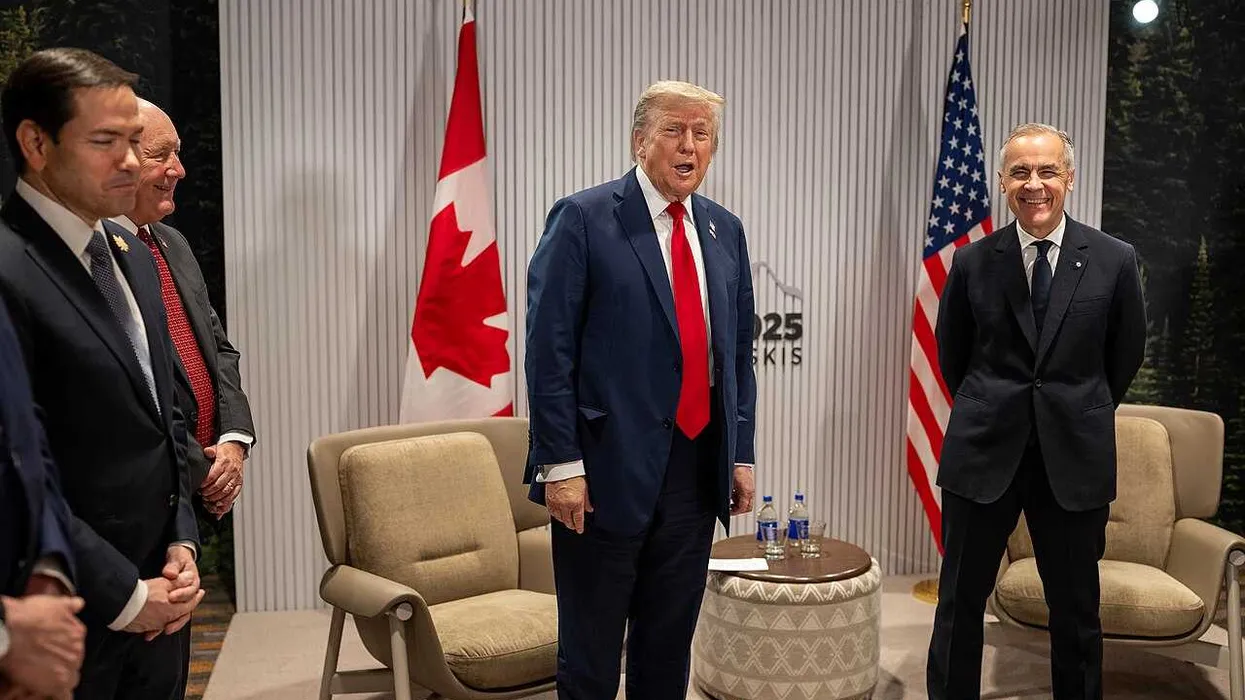
President Donald Trump's administration has continued to engage with right-wing separatist movements seeking Alberta's secession from Canada, a pattern that has persisted since the start of Trump's second term.
Politico's Mickey Djuric reported on Sunday that "the separatists have good reason to think the Trump administration could be an ally." In January, Treasury Secretary Scott Bessent called Alberta a "natural partner for the U.S." while referencing the province's "great resources," telling conservative podcaster Jack Posobiec: "People are talking. People want sovereignty. They want what the U.S. has got." (Politico)
Although only 30 percent of Albertans support secession, experts cited by Djuric expressed concern that pro-union voters could stay home during the October referendum out of overconfidence that secession would not succeed. Any province-level vote on separation would also face Canada's constitutional framework for secession, established by the Supreme Court of Canada's 1998 reference opinion on Quebec and codified in Parliament's Clarity Act of 2000, which requires a "clear question" and a "clear majority" before the federal government would negotiate a province's departure.
Among those supporters is Keith Walker, a resident of a small farming community in southern Alberta, who backs Trump's trade war against Canada and has described Prime Minister Mark Carney's administration as communism. Walker compared Trump's tariffs on Canada to his administration's measures against Cuba, Iran, and Venezuela, telling Politico: "that's why that's happening."
Another separatist told Djuric that "Trump is the only one that can save us." Djuric described an "Albertans' Day" gathering at the Whistle Stop Cafe — a venue that gained notoriety for defying pandemic-era restrictions and which former Alberta premier Jason Kenney calls "ground zero" for the province's rapidly expanding separatist movement. Attendees, Djuric reported, "have wrapped themselves in Alberta's flag, wave 'we're done' banners and wear 'Trump 2024' and MAGA — Make Alberta Great Again — ball caps."
While "resentment toward the federal government in Ottawa is longstanding in Alberta," Djuric wrote, the movement has been "supercharged" by "Trump and the increasingly toxic U.S.-Canada relationship." That resentment is rooted in decades of grievance over federal equalization payments — which redirect federal tax revenue from wealthier provinces to poorer ones — and federal climate policies that many Albertans argue constrain the province's energy-dependent economy. Separatists are reportedly angered by Carney's friction with Trump and the deterioration of cross-border ties, with some hoping the Trump administration may actively advance their cause.
Djuric noted that "many separatists believe Trump's presidency makes Alberta's independence possible, with the United States a ready customer for its oil and gas should they split from Canada." Alberta is Canada's largest oil and gas producer, home to the vast majority of the country's proven oil reserves, making its energy sector a central factor in both the separatist appeal and U.S. interest in the province. One organization, the Alberta Prosperity Project, is seeking a C$500-billion loan from the U.S. government to fund what it describes as the province's "seamless departure" from Canada. Casey Phillips, a separatist from Edmonton, Alberta, offered a simpler rationale: "I like freedom and less taxes."
In February, a former senior State Department official warned NBC News that Trump's cultivation of Albertan separatists is "irresponsible as hell," adding: "It's really irresponsible for the United States to be engaging with these kinds of people, because it just encourages behavior that cannot be in the U.S. national interest."
Bessent, by contrast, struck an encouraging tone in January. "I think we should let them come down into the U.S. and Alberta's a natural partner for the U.S. They have great resources. The Albertans are very independent people... [There is a] rumor that they may have a referendum on whether they want to stay in Canada or not," he said. He concluded: "People are talking. People want sovereignty. They want what the U.S. has got." (Alternet)

