Trump’s Rushed Qatari 747 Retrofit Left Out Major Air Force One Safety Features, NYT Reports
Key Takeaways
- •The Boeing 747-8 retrofit was accelerated to meet Trump’s requested timeline for readiness by the nation’s 250th birthday.
- •The Times reported that some security and safety features used on current Air Force One aircraft were not visible on the upgraded jet.
- •Taxpayers faced costs beyond the roughly $400 million in publicly acknowledged conversion expenses, including training and aircraft purchases.
- •The Pentagon reportedly used funds from a classified nuclear modernization budget, limiting visibility into the project’s full cost.
- •The Air Force leased a 747-8 for pilot training and later moved to buy two more aircraft for training and spare parts.
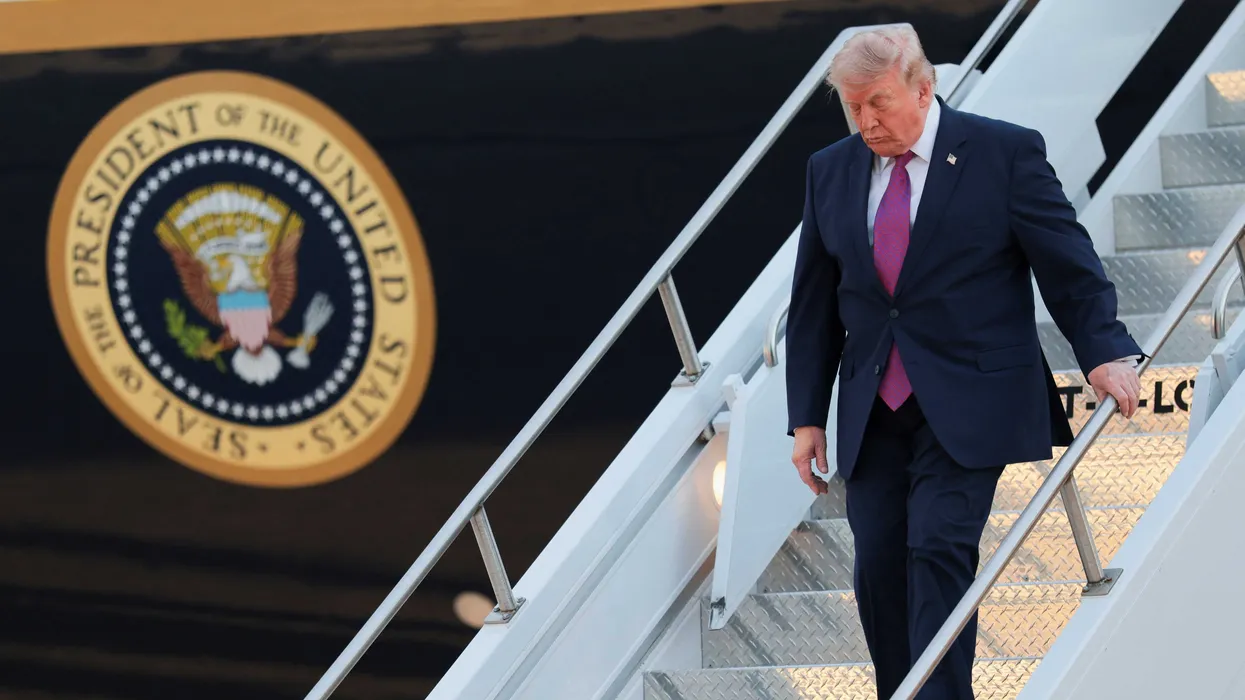
President Donald Trump was reportedly angry when reports first circulated that he had to change aircraft to avoid safety hazards linked to a luxury Boeing jet given by Qatar. The full extent of the upgrades needed for the Qatari royal family’s aircraft, and the costs associated with making it suitable for presidential use, were not publicly known at the time.
According to The New York Times, Trump’s February 2025 tour of the Qatari jet set off an urgent effort inside the White House and the Pentagon. “The administration sought to upgrade the plane in time to meet his demand for it to be ready by the nation’s 250th birthday this summer, with an accelerated retrofit,” the Times reported.
The Times investigation found that the president’s insistence on a rapid conversion of the luxury aircraft increased costs and forced trade-offs involving security and safety features, potentially leaving Trump and passengers aboard the Air Force One aircraft exposed to risks. The stakes are unusually high because presidential aircraft are not only long-range transport planes; they are designed to support secure communications, continuity of government and emergency operations while carrying the commander in chief.
“Several key security and safety features on the Boeing planes that have been used for decades as Air Force One are not visible on the upgraded jet, including a lower-level exit for high-risk situations, additional backup power capacity and an advanced antimissile system,” the Times reported, citing public Air Force records and photographs.
The Boeing 747-8 was overhauled on a compressed schedule of about eight months. Experts said a complete upgrade would normally require several years. The accelerated timeline required taxpayers to cover hundreds of millions of dollars in additional costs, including equipment to train pilots to operate the 747-8 quickly, on top of the approximately $400 million in upgrade costs that the administration had publicly acknowledged.
The Times also reported that the Pentagon attempted to obscure the full cost from Congress by drawing funds from a classified budget for nuclear modernization. That funding detail matters because classified programs can limit public visibility into spending decisions even when the underlying project involves a high-profile presidential aircraft.
“Hundreds of miles of electrical wiring and electronic components have to be shielded from an electromagnetic pulse, such as from a nuclear weapon detonation,” the Times reported. “The official planes also require a second small engine — known as an auxiliary power unit — to be installed near the rear of the jet to serve as a backup for communication systems and other vital electronics gear. They also need some of the most advanced communications equipment and what the Pentagon has called a ‘self-defense system.’”
The company responsible for the rapid outfitting schedule assigned as many as 400 employees to the project, with staff working around the clock across three shifts. Even with that level of staffing, the rushed retrofit resulted in costs beyond the roughly $400 million in taxpayer funds that the Air Force initially estimated would be needed for the conversion.
The Times reported that the accelerated process also meant some changes would not be made. Those limits included bulkhead adjustments and the absence of upgraded safety exits. The arrangement of seats also created its own safety concerns, according to the report.
“During that process, the Air Force had to accelerate training for its pilots, as the 747-8 has a different cockpit than the old jets. To do so, the Air Force leased an Atlas Air cargo 747-8 jet from October until February, a plane that costs hundreds of thousands of dollars a month, to use for ‘interim pilot qualification training,’” the Times reported. “The Air Force did not disclose how much it paid for the lease.”
Because of the deadline, the Air Force moved in December to buy another costly 747-8 to serve as a “dedicated trainer aircraft for aircrew,” allowing the Pentagon to maintain “immediate operational readiness,” the Air Force said in a statement. The service also purchased a second aircraft to provide spare parts.
“The total cost for both: another $400 million,” the Times reported, citing an anonymous Air Force official.

