Kaitlan Collins Flags Trump's Window Shade Remark After Decoy Plane Revelation
Key Takeaways
- •The Washington Post reported that an Iranian assassination threat triggered a covert operation to secretly relocate President Trump from Turkey on an alternate military aircraft.
- •Trump was moved from the original jet via an airport catering truck and flown out on a C-32A while journalists and some White House staff remained on a decoy plane operating under the Air Force One call sign.
- •Defense Secretary Pete Hegseth boarded the C-32A separately using external stairs in what appeared to be an effort to make the flight appear routine.
- •During a July 8 gaggle, Trump told reporters that lowering window shades may have been ordered due to danger, remarking, "But if I go, you go."
- •The episode has renewed scrutiny of the security of the Qatari-gifted Boeing 747-8 donated to the U.S. government earlier this year.
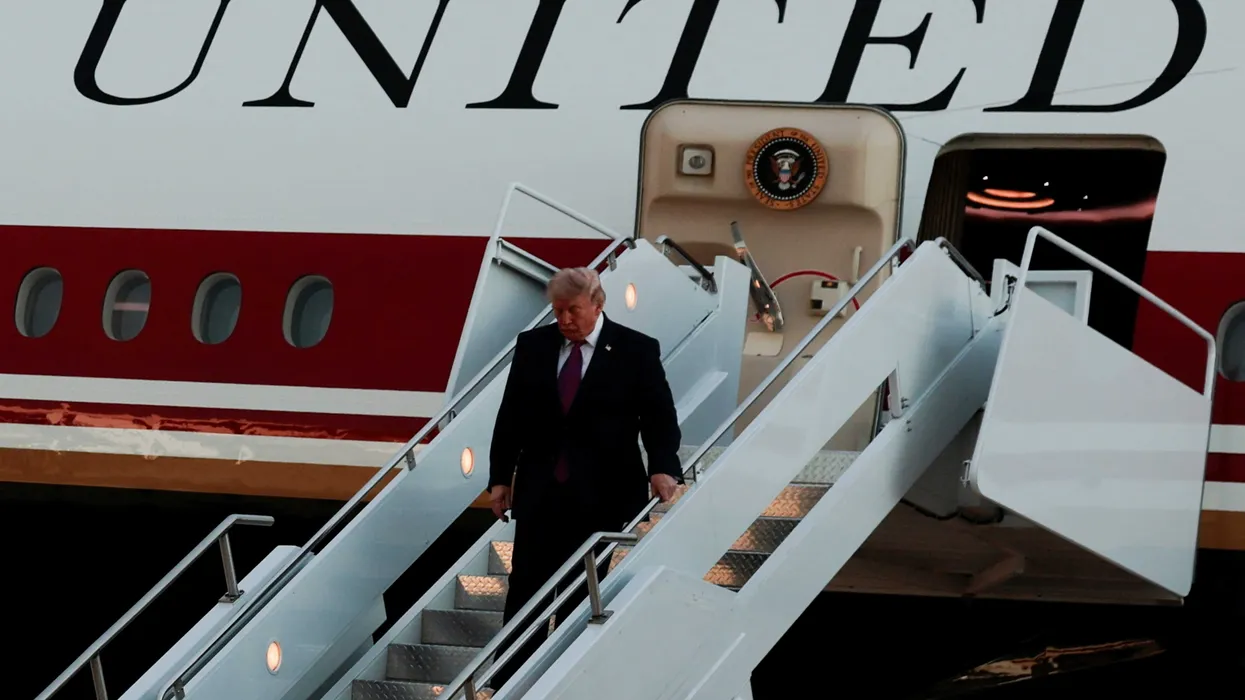
CNN anchor Kaitlan Collins on Monday revisited a July remark by President Donald Trump that has taken on new significance following revelations that he was not aboard the plane traveling with the press pool.
On her program "The Source," Collins replayed footage from a July 8 gaggle after Trump departed a NATO summit in Ankara, Turkey. Members of the press pool had been instructed to lower their window shades before takeoff — a departure Collins described as unusual — prompting reporters to question the president about the reasoning.
"It was when the president got back on this plane to fly home to the U.S., that he was asked by reporters why they had been told to lower their window shades on that first flight, which is extremely unusual and not typically something that happens for the press that sits on the right side of the plane, which is where that airport catering truck was now that you look back at that other video," Collins said. "But given what we know now, given the pictures that you can see now, it makes what the president told reporters in that gaggle afterward all the more noteworthy."
Collins then aired a clip of a reporter asking why security officials had ordered the window blinds closed. Trump offered a halting response.
"Well, yeah, because uh you're, you know, probably on a dangerous plane because of the sleazebags that we have to deal with," he said. He added: "Well, I mean, if they ask you to close your windows, probably they'd feel that way. They didn't ask me to close mine, but if they did, I would have done it."
When pressed on whether Iran posed a credible threat to the aircraft, Trump said he faces danger constantly and told the traveling journalists, "But if I go, you go." He suggested that some of them might want to consider a career change.
The exchange has drawn renewed attention after The Washington Post reported that an Iranian assassination threat prompted a covert operation in which Trump was secretly flown from Turkey on an alternate military aircraft while the White House maintained he was aboard Air Force One. The call sign "Air Force One" applies to any U.S. Air Force aircraft carrying the sitting president, a convention that allowed the decoy plane to maintain the designation even though Trump was no longer aboard. According to the report, Trump was removed from the older jet via an airport catering truck and flown out on a smaller Air Force C-32A, a Boeing 757-based aircraft typically used for cabinet-level and vice presidential travel. Journalists and some White House staff remained on the decoy plane.
Washington Post national security reporter Dan Lamothe, appearing on Collins's program, said the aircraft the press believed was carrying the president continued operating under the Air Force One call sign while Trump was elsewhere. Defense Secretary Pete Hegseth boarded the C-32A separately, using external stairs, in what appeared to be an effort to make the flight appear routine.
The episode has renewed scrutiny of the security of the newer Qatari-gifted jet, a Boeing 747-8 donated by Qatar to the U.S. government earlier this year, which the White House has defended. The swap operation also highlights the range of contingency measures available to the Secret Service and military planners when confronting credible threats against a traveling president.

