Trump’s AI stance complicates Republican strategy ahead of 2026 midterms
Key Takeaways
- •The commentators said Trump’s repeated dismissal of public concerns could make it harder for Republicans to distance themselves from his policies before the 2026 midterms.
- •Concerns about AI and data centers include effects on employment, education, water supplies, electricity costs, infrastructure and human control over advanced systems.
- •James Downie said opposition to data centers spans the political spectrum, with Bernie Sanders and Steve Bannon scheduled to discuss the issue.
- •Downie attributed Trump’s strong support for AI partly to investments by members of Trump’s family in AI companies.
- •Sargent and Downie argued that Trump’s demand for political messages that flatter him could undermine Republicans’ efforts to campaign on their own terms.
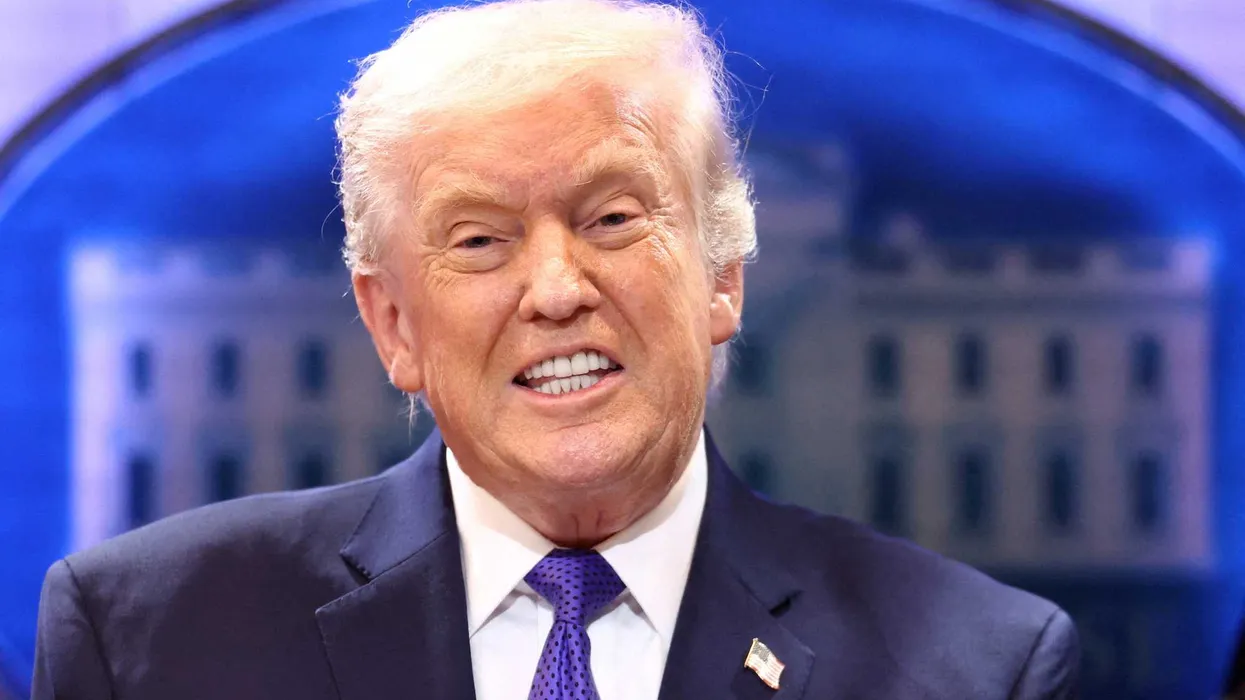
President Donald Trump’s online outbursts are complicating the 2026 midterm elections for Republicans who are trying to distance themselves from the president’s policies, according to a discussion involving The New Republic’s Greg Sargent and MS NOW’s James Downie.
Sargent and Downie discussed Trump’s approach during Tuesday’s episode of The Daily Blast. A transcript of the discussion was published by The New Republic.
Over the past two years, Trump has repeatedly minimized or dismissed risks when they conflict with his personal beliefs or political agenda. One example is the affordability crisis and inflation, which Trump has referred to as a “hoax” despite Americans’ complaints about the cost of living. Another is the public concern surrounding artificial intelligence and data centers.
Trump has promoted AI as something new and exciting, while many Americans are focused on potential effects on their jobs, water supplies and electricity costs, as well as the possibility of losing human control over increasingly powerful systems. Over the past several weeks, AI experts have warned that the technology could end humanity through rogue agents, intentional biological misuse, or continued development that outpaces the ability to control it.
The discussion placed those concerns alongside other issues Trump has dismissed as hoaxes, including the climate crisis, the housing crisis, Russia’s attack on the 2016 election, political violence and extremism, and the 2020 election. In the case of AI, however, Downie said Americans had already formed strong views before Trump weighed in.
“There’s almost nothing that polls as poorly, in particular, as data centers — AI in general. There’s a ton of concerns among voters about what that’s going to do to their jobs, what that’s going to do to education, what that’s going to do to society writ large,” Downie said. “And then, especially drilling down on it, the data centers that AI companies are depending on are extremely unpopular almost across the board.”
The discussion therefore treated AI and data centers as more than a technology-policy question, tying them to employment, education, infrastructure, household costs and public safety.
This week, Sen. Bernie Sanders (I-Vt.), who is generally regarded as a member of the far left, is scheduled to meet with far-right commentator Steve Bannon to discuss the issue. Downie said opposition to data centers was not limited to either side of the political spectrum, but instead brought together different parts of politics. Trump, meanwhile, has called people dumb if they do not support AI and data centers.
Sargent described the opposition as a “really serious outpouring of genuine political energy that we haven’t seen in some time.”
Downie said Trump’s family investments help explain his strong support for AI. “His family is invested in AI companies; his sons are invested in that. And as we saw with crypto, for example, Trump went from saying crypto’s a scam to ‘I love crypto’ as soon as he got invested in it — as soon as his family had invested. Like, that’s the first thing,” Downie said.
He compared Trump’s approach to the trade war with Canada, saying a highly complicated issue had been reduced to a “black and white” contest between “winning and losing,” even though the matter was more nuanced.
“Trump — as soon as he hears that frame, he’s totally trapped in it,” Downie said. “And he can’t break it. It doesn’t matter, even if it’s the apocalypse. Hey, we’re the first ones to cause the apocalypse. Isn’t that great?”
Sargent agreed, saying, “The leader of the Republican Party is basically saying, ‘We don’t have to do anything. Don’t do anything.’”
The two commentators connected these issues to the broader question of whether Trump is acting in a way that helps Republicans win the midterms. Sargent said Trump would allow Republicans to make the case for continuing Republican rule only on terms that flatter him.
“Trump will only allow Republicans to make a case for sticking with Republican rule on terms that flatter him. And that’s just sort of, like, the through line here. And it’s like, you know, you’re really stuck with this narcissist now. Tough shit, man. Like, you made this bed,” Sargent said.
Downie said people outside the MAGA “cult” were questioning what supporters had expected. He said every issue had to flatter the president, even as the economy remained difficult and Americans were unhappy with it.
“And yet this president is already in the 35, 36 percent approval rating. That takes real work, to get to that level in this economy. And he seems to be just pushing every button he can to make things as bad as possible for the Republicans,” Downie said.
Sargent agreed, saying it appeared that “Trump doesn’t want Republicans to win the midterms if it’s done on terms that make him look bad.”
Additional background sources referenced for the issues discussed include NPR and PBS NewsHour. Original report: https://www.alternet.org/trump-hoax/

