Trump Criticized for 'Truly Crazy' AI-Generated Post Exploiting DHS Secretary Mullin's Family Trauma
Key Takeaways
- •President Trump shared AI-generated images on Truth Social showing him comforting the teenage son of Homeland Security Secretary Markwayne Mullin in the Oval Office, alongside a depiction of Mullin crying.
- •The Bulwark reporters Sam Stein and Will Sommer criticized the post for exploiting a traumatic episode from Mullin's family life.
- •Mullin had previously said during his Senate confirmation process that Trump visited his son Jim after the boy suffered a traumatic brain injury at age 15 during the 2020 campaign.
- •The scenes depicted in the images never occurred, as the visits described by Mullin took place on the campaign trail rather than in the Oval Office.
- •Mullin himself was not quoted in the segment, leaving his public response to the post a pending development to watch.
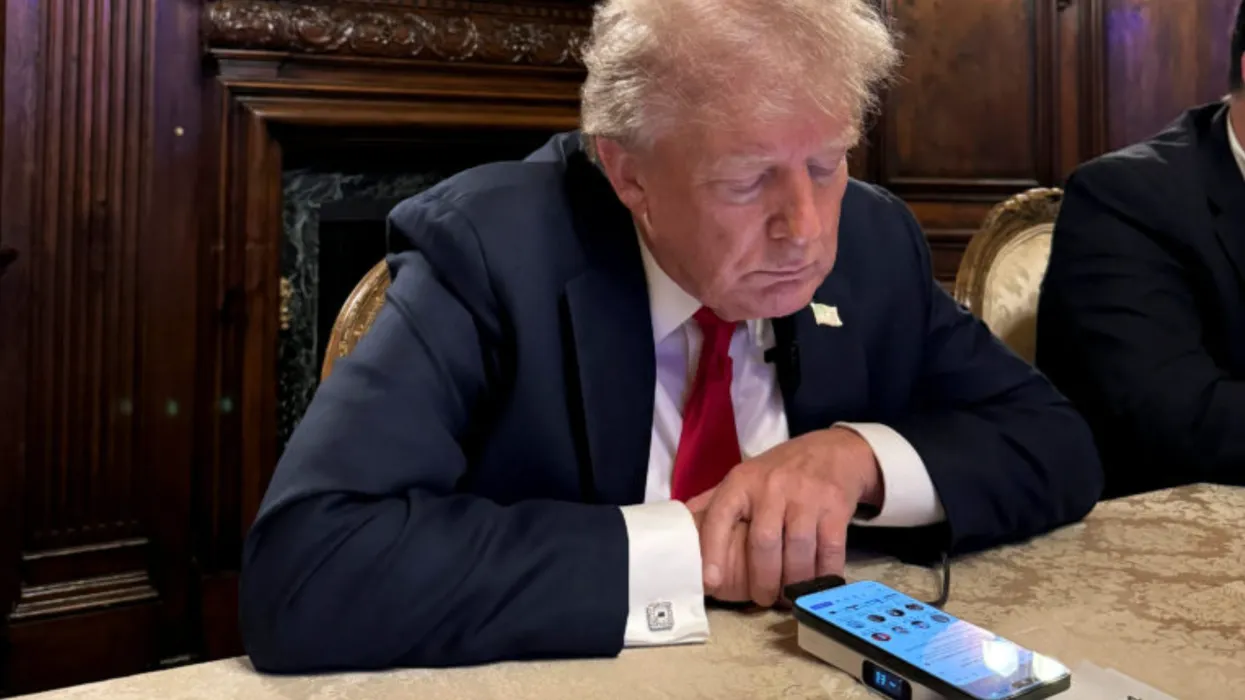
President Donald Trump cannot seem to break his habit of sharing artificial-intelligence-generated "fan-fiction" of himself, and one of his latest posts has drawn fresh criticism for exploiting the personal trauma of one of his own officials, according to a new breakdown from The Bulwark.
In one of the outlet's latest videos, Bulwark reporters Sam Stein and Will Sommer examined the latest strange happenings across the MAGA-sphere, eventually landing on a recent Truth Social post from the president that, like many items he now shares, was clearly created with generative AI — a format the segment treated as a recurring feature of his posting rather than a one-off.
In the images, Trump appears to caress the teenage son of his Department of Homeland Security (DHS) Secretary, Markwayne Mullin, inside the Oval Office. The post pairs that depiction with a second photo-style image of Mullin breaking down in tears.
As Stein and Sommer explained, the post appeared to tie into a story Mullin told about Trump during his Senate confirmation process earlier in the year. In that account, Mullin claimed that Trump, while on the 2020 campaign trail, frequently visited his young son, Jim, after the boy suffered a traumatic brain injury at the age of 15. Mullin offered the story as personal evidence that Trump is not as callous as he often appears.
The reporters felt the post seemed to imply that Trump had played a hand in helping Mullin's son heal. Stein said he would be "shocked" by the post if he were Mullin, calling it "genuinely insane."
Stein emphasized that the scenes depicted in the images plainly never occurred. The pictures place Trump in the Oval Office comforting what appears to be Mullin's 15-year-old son, who is shown wearing something like a blanket robe, while an AI-rendered Mullin sits in the background crying and holding back tears. In reality, Stein noted, the visits took place while Trump was on the campaign trail — not in the Oval Office. That gap between the fabricated scene and the documented one is, for the two hosts, what elevates the post beyond a mere oddity: it recasts a real family's medical crisis — and a 15-year-old who lived through it — as material for AI-generated self-portraiture, while presenting an event that never took place as though it had.
"You gotta have, like, a screw loose to think that this is appropriate to post," Stein said, adding that the post was deeply offensive to Mullin. "Taking advantage of this deeply traumatic moment in this man's life and then just regurgitating it — for what reason? I have no idea."
Sommer agreed, calling the post "truly crazy," and suggested there is no possible frame of mind that makes sharing such a thing acceptable. Either, he argued, Trump genuinely believes a fabricated event involving himself really happened, or he knew it was fake and decided it was fine to post anyway. Notably, Mullin himself is not quoted in the segment, leaving the two reporters' reactions as the only commentary on the post — and any public response from the DHS secretary as the thing to watch next.

