Trump Reaffirms Data Center Support as AI Chiefs Sign "Accord on Super Intelligence"
Key Takeaways
- •Executives from leading AI firms, including Elon Musk, Sundar Pichai, Jeff Bezos, and representatives of OpenAI and Microsoft, signed the voluntary Accord on Super Intelligence at a September 29 White House luncheon.
- •Because the accord's commitments are voluntary, compliance with internal and external development reviews rests with the signatory companies rather than any regulator.
- •Trump argued that heavy-handed government restrictions on AI could undermine American competitiveness against China, which is investing heavily in its own AI capabilities.
- •Data centers are projected to triple US energy demand by 2035, prompting Trump to call on companies to financially support local initiatives and prevent their energy use from raising electricity bills for nearby residents.
- •Opposition to data center construction spans both parties, uniting conservative landowners worried about property values with liberal environmentalists concerned about carbon emissions.
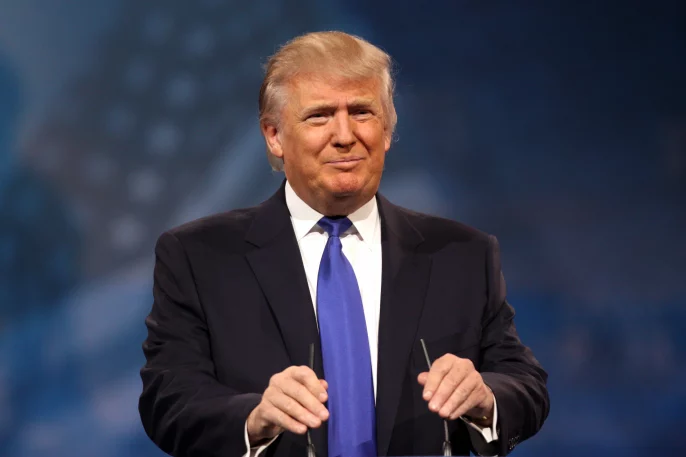
President Donald Trump hosted the chief executives of America's largest artificial intelligence companies for a White House luncheon on September 29, where attendees signed what the administration is calling the "Accord on Super Intelligence." The voluntary agreement commits tech firms to self-regulate their AI development processes through both internal and external reviews, and Trump used the occasion to double down on his support for data center expansion across the country.
The guest list included some of the most prominent figures in American technology: Elon Musk, Sundar Pichai, Jeff Bezos, and leaders from OpenAI and Microsoft all took seats at the table. What they left with was a handshake deal that Trump described as "morally binding." Because the commitments are voluntary, follow-through rests with the signatories themselves rather than with any regulator.
What the Accord Says
The Accord on Super Intelligence centers on voluntary commitments from AI companies to conduct rigorous reviews of their development pipelines, incorporating both internal and external assessments. Trump framed the agreement as a necessary alternative to heavy-handed government regulation, warning that imposing excessive restrictions on AI companies could hamper American competitiveness, particularly against China, which has been pouring resources into its own AI capabilities.
Beyond the self-regulation framework, the president pressed executives on community relations. He called on AI companies to financially support local initiatives in areas where they build data centers and to take concrete steps to prevent their massive energy consumption from driving up electricity bills for nearby residents. Data centers are projected to triple US energy demand by 2035, a projection that underscores the scale behind those community-relations asks.
Building on the Ratepayer Protection Pledge
The accord is not the first time Trump has corralled tech companies into making public promises about their energy footprint. In March 2026, Amazon, Google, Microsoft, and other major firms signed the "Ratepayer Protection Pledge," committing to build or fund their own power generation rather than simply plugging into local grids and letting communities absorb the cost. The September accord extends that same pressure from power generation to the broader relationship between data center operators and their neighbors.
Trump also floated two ideas that drew attention beyond the policy substance. First, he mentioned the possibility of appointing an "AI czar" to coordinate the administration's approach to the technology. Second, he proposed formally renaming artificial intelligence to "super intelligence." Both were raised as possibilities rather than decisions, leaving them among the items to watch as the administration's AI policy takes shape.
Why Communities Are Pushing Back
Data projects that once sailed through local approval processes are now facing organized resistance, with energy consumption sitting at the heart of the debate. A single large-scale data center can consume as much electricity as a small city, and the proliferation of AI workloads—which are far more power-intensive than traditional cloud computing—has accelerated the problem. That dynamic keeps the decisive fights over new facilities in local approval processes, even as the White House weighs in from Washington.
The bipartisan nature of the opposition makes the issue particularly tricky for the administration. Conservative landowners worried about property values and liberal environmentalists concerned about carbon emissions have found common cause in resisting unchecked data center growth. For an administration that has publicly backed data center expansion, whether voluntary pledges are enough to ease local resistance is the open question hanging over the buildout.

