Trump Says AI Could Be 'Bigger Than the Internet' as He Pushes Light-Touch Regulation
Key Takeaways
- •Trump called for light-touch AI regulation that allows the industry to keep leading, describing the technology as potentially bigger than the internet.
- •Trump revoked the Biden administration's 2023 executive order on AI safety on his first day back in office and identified China as the closest U.S. competitor in AI.
- •The Department of Energy's Lawrence Berkeley National Laboratory estimates data centers used about 4 percent of U.S. electricity in 2023 and could account for between 6.7 percent and 12 percent by 2028.
- •In March, Amazon, Google, Meta, Microsoft, OpenAI, Oracle, and xAI signed the White House's Ratepayer Protection Pledge, agreeing to pay for new electricity generation and infrastructure needed for their data centers.
- •Pennsylvania Governor Josh Shapiro signed an executive order requiring large data centers to cover grid costs, while lawmakers in 15 states have considered moratoriums on data center development.
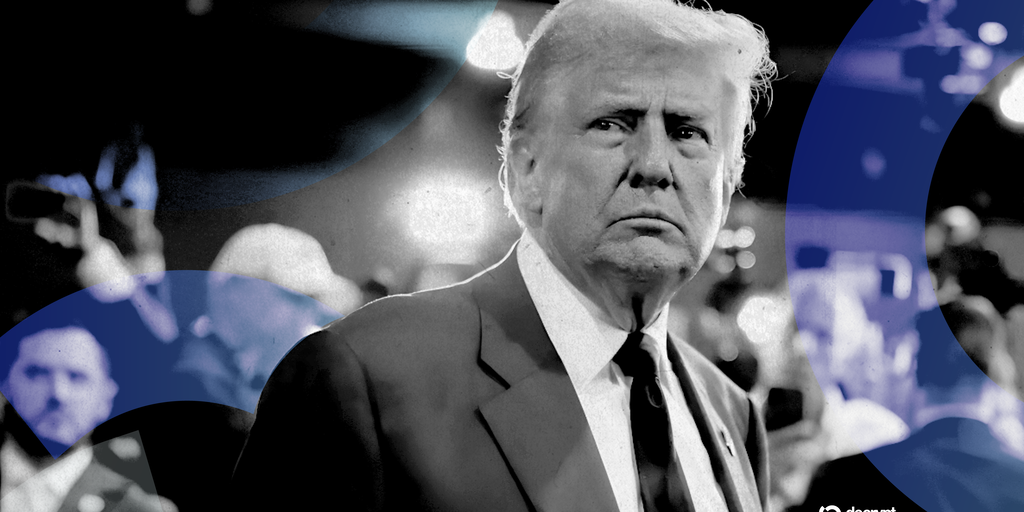
President Donald Trump said Wednesday that artificial intelligence could become "bigger than the internet," calling for regulation that allows the industry to keep leading rather than slowing it down, and defending the rapid buildout of data centers and power plants across the United States.
The remarks come as his administration works to preserve America's lead over China by accelerating AI infrastructure projects while resisting regulations it says could hinder development. The posture marks a sharp break from the Biden administration's 2023 executive order on AI safety, which Trump revoked on his first day back in office.
"We want to regulate, but we want to have regulation where they can continue to lead," Trump said during a White House gathering with crypto executives and financial regulators ahead of the CFTC's first Innovation Advisory Committee meeting. "That regulation is not going to stifle a very important industry. I think maybe bigger than the internet, bigger than anything anyone's seen." The CFTC, which regulates U.S. derivatives markets and shares oversight of digital assets with the Securities and Exchange Commission, created the committee as part of its engagement with emerging technologies.
Trump identified China as the closest U.S. competitor in AI and said the technology would likely be discussed when Chinese President Xi Jinping visits on September 24.
The president also touted efforts to let AI companies build power plants to supply their own data centers instead of relying on the existing electrical grid.
"Our grid is old and tired and weak, so they're building some of the greatest electric plants anywhere in the world," he said. "They're actually giving the excess electricity into the grid. We're not using the power from the grid—we're using brand-new power." The scale behind that concern is measurable: researchers at the Department of Energy's Lawrence Berkeley National Laboratory estimate data centers consumed about 4 percent of U.S. electricity in 2023 and could account for between 6.7 percent and 12 percent by 2028, a trajectory that has made AI's power demand a pressing issue for utilities and grid regulators.
In March, Amazon, Google, Meta, Microsoft, OpenAI, Oracle, and xAI signed the White House's Ratepayer Protection Pledge, agreeing to pay for the new electricity generation and infrastructure needed for their data centers.
Trump urged governors and mayors to welcome AI infrastructure projects, pointing to the construction jobs, tax revenue, and investment they bring.
"If I were the mayor of a town or the governor of a state, and I had a chance to get a big plant, an AI plant or a data center, I would absolutely want it," Trump said. "The jobs are enormous and the money paid, the taxes paid, are just enormous."
Still, Trump acknowledged that the industry "could use a little public relations help," as opposition to AI data centers grows over electricity costs, water use, and other environmental impacts.
At least 37 people have been arrested during data center protests this year, while lawmakers in 15 states have considered moratoriums on data center development.
On Tuesday, Pennsylvania Governor Josh Shapiro signed an executive order imposing new requirements on large data centers, aimed at making developers cover the costs they impose on the electrical grid. Banks and asset managers are also increasingly weighing community opposition when financing projects, with at least 75 data centers worth roughly $130 billion facing local opposition in the first quarter of 2026. State-level measures like Pennsylvania's have carried particular weight since the Senate stripped a proposed 10-year federal moratorium on state AI laws from a major spending bill in July 2025, leaving governors and legislatures to set much of the policy terrain themselves.
Source: Decrypt
