Trump administration ties college accreditation to “intellectual diversity” in new federal rules
Key Takeaways
- •Newly finalized Department of Education regulations will require accrediting agencies to assess how colleges promote intellectual diversity and the free exchange of ideas, with full implementation in the 2027–28 academic year.
- •Because accreditation controls access to more than $100 billion in annual federal student loans and Pell Grants, the new standards give the federal government substantial leverage over university operations.
- •The overhaul fulfills a 2023 campaign pledge by President Trump, who described the college accreditation system as his 'secret weapon' for reshaping American higher education.
- •In addition to ideological criteria, accreditors must evaluate quantitative outcomes such as graduation rates, retention, and post-graduation earnings, while lowered entry barriers are expected to expand the field of federally recognized accrediting bodies.
- •Critics point to the administration's failed attempt to have Columbia University's accreditation revoked as evidence that the ideological standards could be applied selectively against institutions out of favor with the White House.
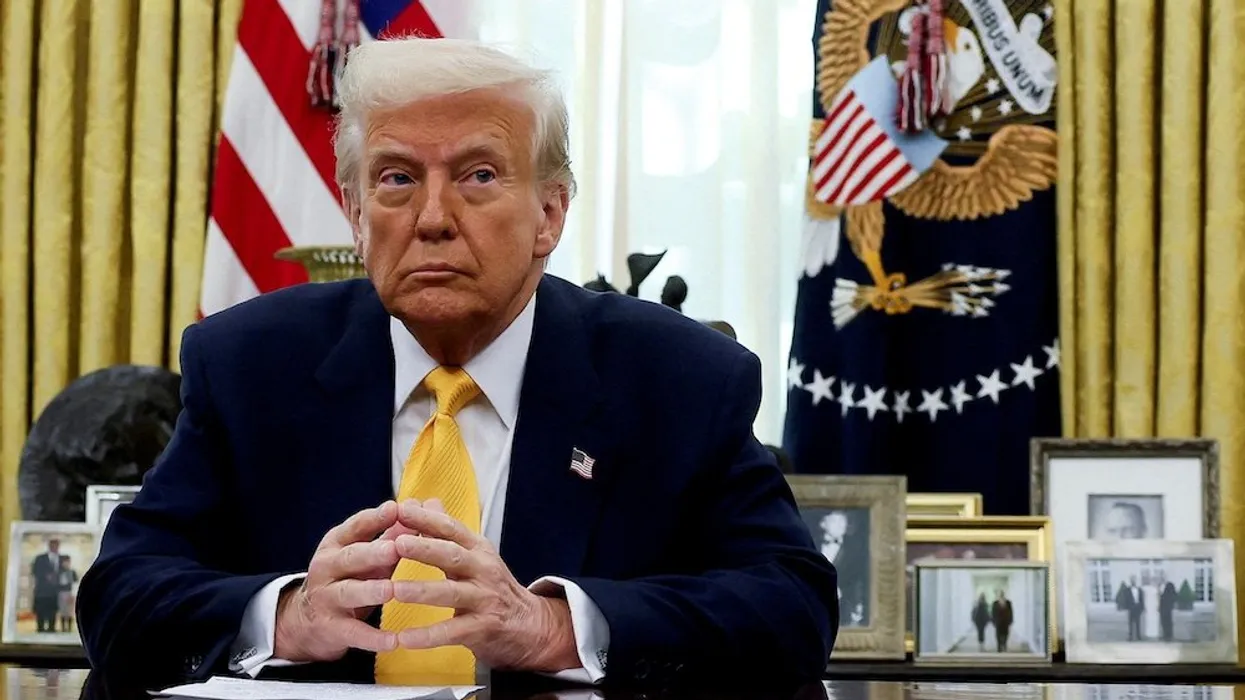
The Trump administration is advancing a sweeping overhaul of how American colleges and universities are evaluated — activating a strategy President Donald Trump once described as his “secret weapon” against higher education.
Newly finalized U.S. Department of Education regulations, set to take effect next year, will require college accrediting agencies to assess how institutions promote “intellectual diversity and the free exchange of ideas,” according to The Hill. Because accreditation serves as the gatekeeper to more than $100 billion in annual federal student loans and Pell Grants, the change hands Washington unprecedented leverage over how campuses operate. Accreditation itself is a nongovernmental review system: private agencies recognized by the Education Department periodically evaluate colleges for quality, and institutions that lose recognized status forfeit their students’ eligibility for federal aid.
Administration officials frame the rules as a necessary safeguard for free expression on campus. Higher education leaders counter that the vague standard opens the door to direct federal policing of curriculum, hiring, and campus speech.
“This rule opens up an entirely new avenue for the federal government to exert influence over institutional policies and practices that have historically been the purview of colleges and universities themselves,” Antoinette Flores, vice president for policy and research at the Council for Higher Education Accreditation, told The Hill.
The overhaul fulfills a pledge Trump made during his 2023 presidential campaign, when he singled out accreditors as a primary lever for reshaping American universities. “The time has come to reclaim our once great educational institutions from the radical left,” Trump said in a campaign video, as documented by Inside Higher Ed. “Our secret weapon will be the college accreditation system.”
The finalized regulations take full effect in the 2027–28 academic year, according to NPR. Beyond the ideological criteria, accreditors will also be required to judge institutions on quantitative student outcomes, including graduation rates, retention, and post-graduation earnings. At the same time, the rule lowers regulatory barriers for new accrediting bodies to win federal recognition — a change conservatives have long sought in order to break up traditional accrediting associations and create alternative pathways for schools. The runway to 2027–28 gives existing accreditors time to rewrite their review standards, and how the Education Department judges those revisions will shape the overhaul’s practical reach. The lowered entry barriers, meanwhile, point toward a more crowded accreditation field in a system historically organized around a small number of established agencies.
U.S. Department of Education officials have pushed back against accusations of political overreach, arguing that accreditors have drifted away from core academic standards. Officials pointed to survey data suggesting a majority of college students feel pressured to pretend they hold progressive views in order to succeed academically, and insisted the new framework merely ensures institutions respect open inquiry rather than imposing a federal speech code.
Still, university advocates fear the ideological criteria could be used selectively against institutions that fall out of favor with the White House. Critics point to an earlier flashpoint in which the administration formally notified the Middle States Commission on Higher Education that Columbia University was in violation of federal antidiscrimination law and urged the accreditor to revoke the school’s accreditation — a demand the body ultimately declined, per CBS News. Because the Education Department controls which accreditors are federally recognized, pressure aimed at an accrediting body carries tangible consequences for every institution it reviews.
This report is based on coverage by Alternet.

