Trump's Longstanding One-Sided Rivalry With Abraham Lincoln
Key Takeaways
- •Intelligencer senior editor Margaret Hartmann catalogued dozens of occasions on which Trump placed himself alongside Lincoln, whom he regards as the only exception to his claims of being the greatest president ever.
- •After losing the 2020 election, Trump told authors Carol Leonnig and Philip Rucker that without the pandemic, even a hypothetical ticket of George Washington and Abraham Lincoln would have had great difficulty defeating him.
- •At a 2018 Montana rally, Trump suggested his own legacy would eventually be vindicated in the way Lincoln's Gettysburg Address was, despite initially facing ridicule.
- •In June 2020, Trump entered what Hartmann described as a one-sided dispute with Lincoln over which president had done more for Black Americans, pointing to policies such as the First Step Act.
- •Columbia University historian Eric Foner explained that Lincoln promoted the free labor ideology, which held that labor is the source of wealth, that slavery denies the dignity of labor, and that workers' opportunities to rise are essential for a good society and economic growth.
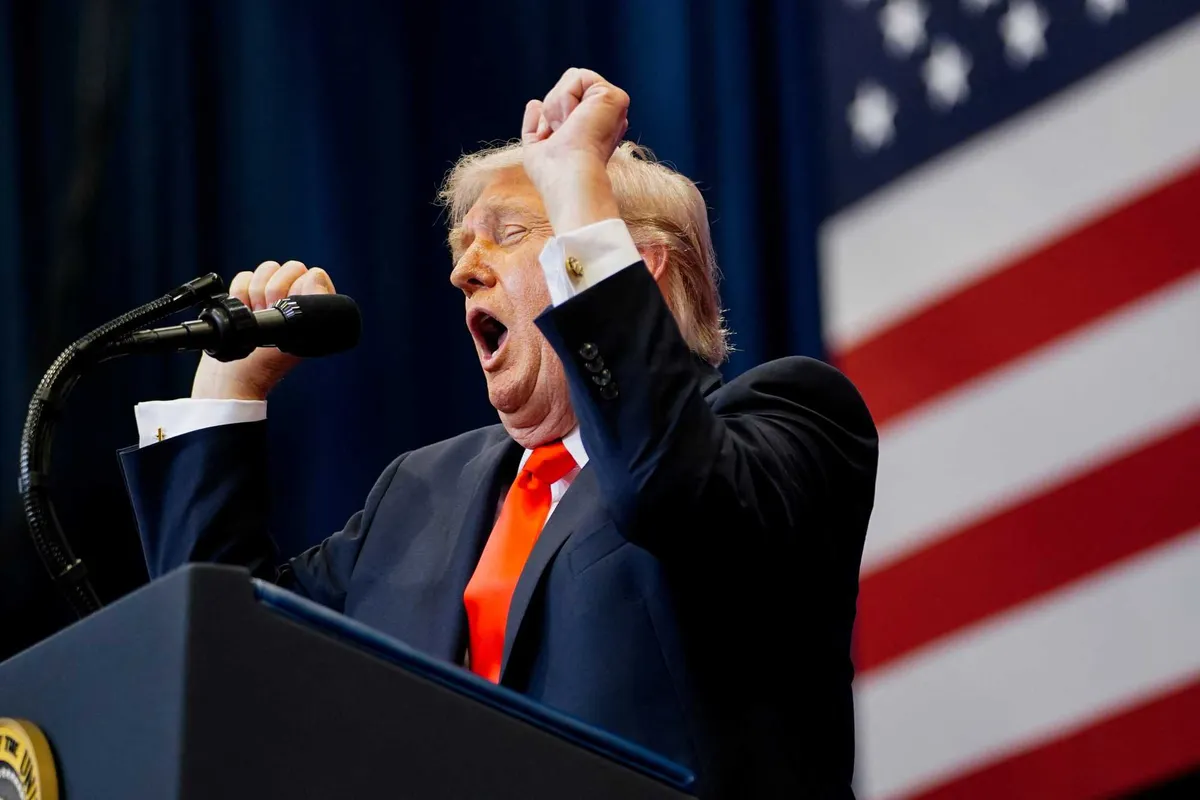
President Donald Trump has repeatedly compared himself to Abraham Lincoln, the first Republican president, and appears to genuinely believe that no one but him knows Lincoln was a Republican.
Lincoln, who led the Union through the Civil War as president from 1861 until his assassination in 1865, has regularly finished first in scholarly surveys ranking American presidents.
Although the two presidents have long been understood to differ on a range of foreign policy, social justice, and intellectual matters, Trump has consistently argued that he and Lincoln were kindred figures — and that, if anything, he was the superior of the two.
"That actually seems to be the root of it: In Trump's mind, Lincoln remains the one obvious exception to his claims of being the greatest president of all time," Margaret Hartmann, a senior editor at Intelligencer, wrote on Sunday. She noted that Trump declared in 2018, "I've always said I can be more presidential than any president in history, except for Honest Abe Lincoln when he's wearing the hat."
Hartmann catalogued dozens of occasions, large and small, on which Trump has placed himself side by side with Lincoln.
One example: Trump's refusal to accept his defeat to Joe Biden in the 2020 election marked the first violent rebellion against a presidential election result since — well, the one that accompanied Lincoln's first election in 1860, which was followed by Southern secession and the four-year Civil War. According to Hartmann, after losing the 2020 election, Trump spoke with Carol Leonnig and Philip Rucker for their book I Alone Can Fix It, bragging that if not for the pandemic, even two of America's greatest presidents could not have defeated him.
Trump's assessment: "I think it would be hard if George Washington came back from the dead and he chose Abraham Lincoln as his vice-president, I think it would have been very hard for them to beat me."
At a 2018 rally in Montana, Trump declared: "You know when Abraham Lincoln made the Gettysburg Address speech, the great speech, did you know he was ridiculed? Fifty years after his death, they said it may have been the greatest speech ever made in America … I have a feeling that's going to happen with us. In different ways, that's going to happen with us." Lincoln delivered the address on November 19, 1863, at the dedication of the Soldiers' National Cemetery in Gettysburg, Pennsylvania, roughly four months after the battle.
A year later, on the social media platform then known as Twitter, Trump wrote, as Hartmann pointed out: "[Newt Gingrich] just stated that there has been no president since Abraham Lincoln who has been treated worse or more unfairly by the media than your favorite President, me!" He added at the time: "At the same time there has been no president who has accomplished more in his first two years in office!"
"Up to this point, Trump's comparisons to Lincoln were largely silly and subjective," Hartmann continued. "Then, in June 2020, he got into a one-sided fight with Abe over which of them had done more for Black Americans. Initially, Trump exempted Lincoln from comments suggesting his policies, such as the First Step Act, were more significant than enforcing Brown v. Board of Education or passing the Civil Rights Act."
More broadly, Lincoln championed an early version of what would come to be regarded in the 21st century as economic justice ideology throughout his mid-19th century presidency. The Republican Party he carried to the presidency in 1860 had itself been founded in the mid-1850s in opposition to the extension of slavery into the western territories.
Speaking to Salon in 2021, Columbia University historian and Pulitzer Prize winner Eric Foner, author of "Free Soil, Free Labor, Free Men: The Ideology of the Republican Party Before the Civil War," explained that Lincoln both advocated for and, during his presidency, pushed policies to implement "what we call the free labor ideology — that labor is the source of wealth (a common idea in the 19th century, a society of small scale capitalism), that slavery denies the dignity of labor, and that opportunity for the laborer to rise in the social scale is essential for a good society and for economic growth."

